
Size
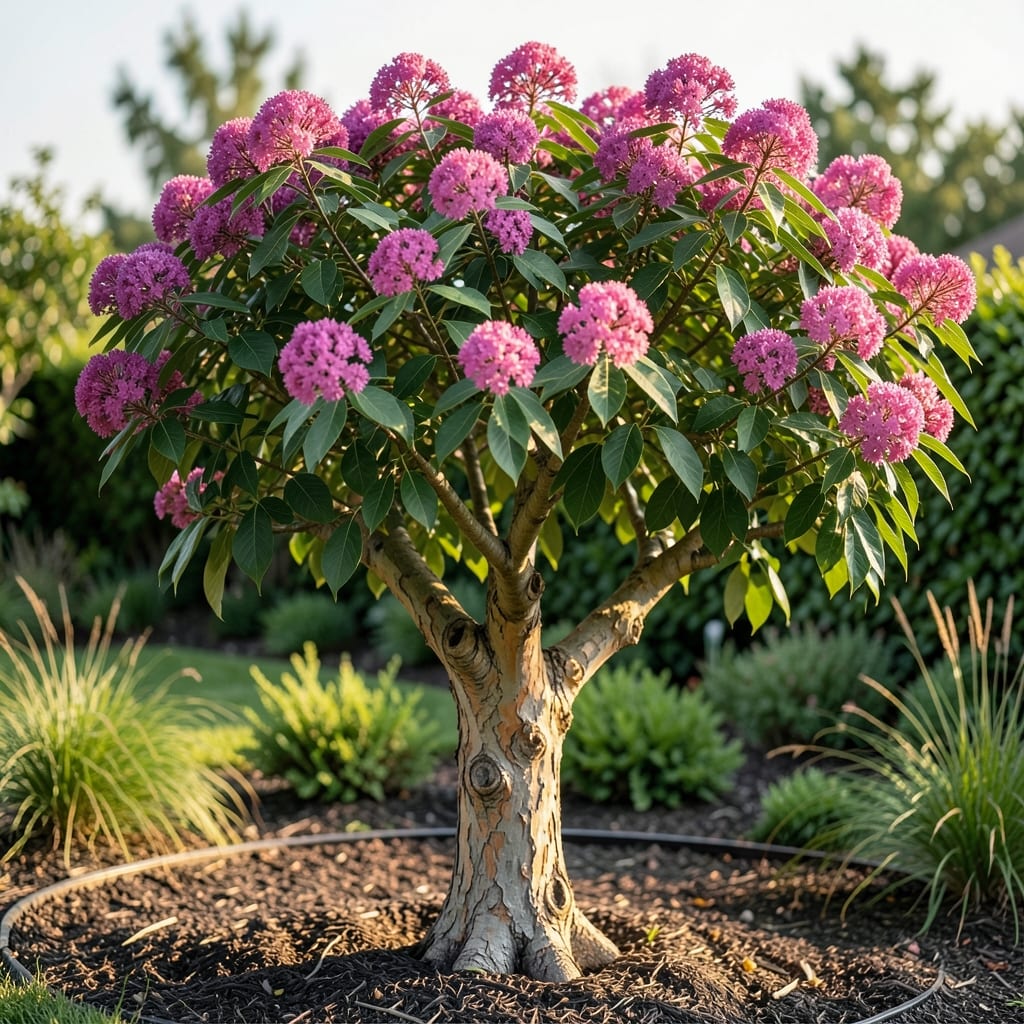
If you're wondering "crepe myrtle how tall do they grow", you're not alone—this stunning 🌸 tree can surprise even seasoned gardeners with its dramatic height range. Some varieties stay compact enough for small yards, while others shoot up like skyscrapers, reaching heights that could dwarf your garage door or even a two-story house!
But here's the game-changer: the right variety for your space makes all the difference. Whether you're dreaming of a 6-foot ornamental shrub or a towering 30-foot shade tree, we'll break down the exact height ranges you can expect from popular crepe myrtle types—plus how to keep them at your ideal size.
From dwarf varieties perfect for containers to standard types that need room to stretch their branches, understanding these growth patterns helps you plan your garden layout with confidence. Let's explore how these trees grow over time and what you can do to manage their height naturally.
You'll also discover the best pruning techniques to control growth, seasonal care tips, and how climate in USDA Zone 6a affects their development. Ready to turn your yard into a crepe myrtle haven without the unwanted surprises? Let's get started.


Crepe myrtle height by variety: growth charts for popular cultivars
Crepe myrtles (Lagerstroemia) offer a stunning range of heights, from dwarf varieties perfect for small yards to towering giants that dominate landscapes. The right choice depends on your space—whether you need a privacy screen, shade tree, or container-friendly shrub. Below, I’ve organized the most popular cultivars by their mature height, so you can plan your garden layout with confidence.
Most crepe myrtles reach their full height within 3-5 years, though growth slows significantly after year 3. Dwarf varieties like 'Natchez' stay under 6 feet, while standard types like 'Tonto' can soar to 25 feet or taller. The key? Choosing a variety that matches your property’s dimensions and your long-term vision for the space.
🌸
| Variety | Mature Height (ft) | Spread (ft) | Best For |
|---|---|---|---|
| 'Natchez' | 6-8 | 4-6 | Containers, small yards |
| 'Tonto' | 12-15 | 8-10 | Medium spaces, hedges |
| 'Muskogee' | 15-20 | 10-12 | Privacy screens, urban yards |
| 'Arapaho' | 20-25 | 12-15 | Large landscapes, shade |
| 'Sioux' | 25-30 | 15-20 | Rural properties, statement trees |
| 'Catawba' | 10-12 | 6-8 | Bonsai-style, small gardens |
| 'Pocomoke' | 18-22 | 10-12 | Street trees, large patios |
⚠️ Note: Heights vary by climate and soil conditions. Southern regions may see 10-20% taller growth than northern zones.
If you’re working with limited space, 'Natchez' or 'Catawba' are my top picks—they thrive in containers and can even be pruned into hedge-like shapes. For dramatic impact, 'Sioux' or 'Arapaho' will create a focal point in any yard, but be prepared for their wide canopies (up to 20 feet across).
Pro tip: Check your local nursery for micro-climate adaptations. Some regions have bred crepe myrtles that grow 20% smaller due to cooler temperatures or poorer soil. Always ask for region-specific recommendations before purchasing.
For urban gardeners, 'Tonto' or 'Muskogee' strike the perfect balance—tall enough for privacy but manageable with annual pruning. I’ve seen these varieties thrive in narrow city lots where larger trees would be impractical.
🌿
One common mistake? Assuming all crepe myrtles grow at the same rate. Dwarf varieties may take 5+ years to reach their mature height, while standard types can add 3-5 feet per year in ideal conditions. Always factor in growth curves when planning your garden layout.
Need a quick reference? Bookmark this chart—the next time you’re browsing nurseries
How to control crepe myrtle height: pruning limits and best practices
Once you've chosen your crepe myrtle variety, pruning becomes your secret weapon for controlling height and maintaining that perfect shape. But timing and technique matter—aggressive pruning at the wrong time can actually stunt growth or damage the tree's structure. The best time to prune is late winter or early spring, just before new growth begins, typically between February and March in most USDA Zone 6a regions.
For dwarf varieties like 'Natchez', you can prune lightly throughout the growing season to encourage bushier growth, but avoid cutting into old wood—these varieties produce new growth from current season's wood only. Standard varieties like 'Sioux' need structural pruning to maintain their height, removing 1/3 of the previous year's growth to promote a strong framework.
🌿
Never prune crepe myrtle in fall or winter—this removes next year's flower buds! Also avoid topping (cutting back to a flat top), which creates weak, unsightly growth. Always use clean, sharp pruners and make cuts just above a bud or branch collar to prevent disease.
If your crepe myrtle is already too tall, don't panic—you can reduce height gradually over 2-3 years. For example, if your 'Arapaho' is now 22 feet but you want it at 18 feet, reduce height by 1 foot per year maximum. This gradual approach prevents shock and allows the tree to recover.
For container-grown varieties, prune more frequently—every 4-6 weeks during growing season—to maintain compact size. Always remove dead or crossing branches first, then shape the tree by cutting back to just above outward-facing buds. This creates a fuller, more attractive growth pattern.
🪴
One common mistake I see is over-pruning young trees. Newly planted crepe myrtles need their first 2 years to establish roots before heavy pruning. Limit yourself to light shaping in the first year and structural pruning in the second year. This gives the tree time to build a strong root system that supports future growth.
Pro tip: Use pruning paint on cuts larger than 1/2 inch to prevent disease entry. And always sterilize your tools with rubbing alcohol between cuts to avoid spreading pathogens. With proper pruning, you can keep even tall varieties like 'Sioux' at a manageable height while maintaining their stunning bloom production.