
Companion Plants
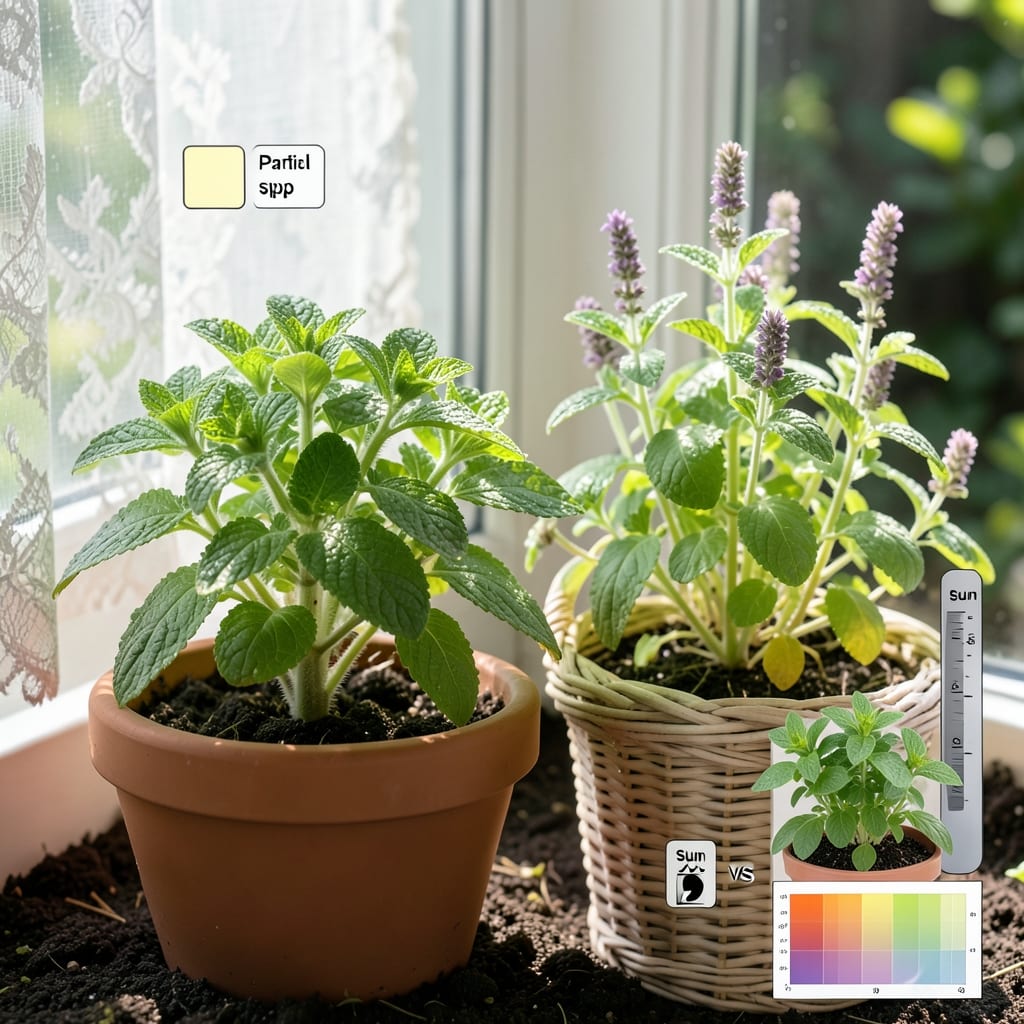
If you’re wondering how much light does a mint plant need, the answer is simple: it’s all about balance. Unlike sun-hungry tomatoes, mint thrives in bright but indirect conditions, making it perfect for windowsills or shaded garden spots.
Too much direct sun can scorch those delicate leaves, while too little light makes mint stretch toward any available rays. The sweet spot? 4-6 hours of filtered sunlight daily—think morning sun or dappled shade. This balance keeps your mint vigorous and aromatic, not just surviving but thriving.
Whether you’re growing mint in pots on a city balcony or tucked into a shady garden bed, I’ll show you exactly how to spot the signs of light stress and adjust your setup. You’ll learn the easiest fixes for both indoor and outdoor setups, so your mint stays happy year-round.
Ready to transform that struggling plant into a bushy, fragrant powerhouse? Let’s dive into the light requirements that make all the difference for your 🌿 mint—without the guesswork.


Ideal light requirements for mint plants: sunlight balance explained
Mint plants thrive in partial shade, making them perfect for gardeners who want flavorful herbs without harsh sunlight. The ideal range is 4-6 hours of sunlight daily, but they can adapt to morning sun with afternoon shade—especially in hot climates. Too much direct sun can scorch leaves, while too little light leads to leggy, weak growth and reduced flavor intensity.
Understanding mint’s light needs starts with recognizing its natural habitat. In the wild, mint grows under dappled sunlight in forest edges or along stream banks, where it receives filtered light. This explains why it tolerates shade better than full sun but still needs some light to photosynthesize efficiently. For container growers, this means placing pots near east-facing windows or under light trees like maples or birches.
Seasonal adjustments are key. During spring and fall, mint can handle up to 6 hours of sunlight without stress, while summer’s intense rays require afternoon shade to prevent leaf burn. In cooler climates (USDA zones 3-5), mint may need more direct light to compensate for shorter growing seasons, while warmer zones (6-10) benefit from filtered or morning light only.
Here’s how to visualize mint’s light preferences:
When assessing your mint’s light environment, pay attention to the quality of light, not just quantity. Bright indirect light—like that from a north-facing window or under a sheer curtain—is ideal for indoor mint. Outdoors, dappled sunlight (e.g., under a pergola or near tall shrubs) mimics mint’s natural conditions. If your mint starts stretching toward light or developing pale leaves, it’s a clear sign of light deficiency.
For gardeners in urban apartments or shaded yards, grow lights can bridge the gap. A 12-hour photoperiod with a full-spectrum LED bulb (6,500K color temperature) mimics natural light and prevents leggy growth. Place the light 6-12 inches above the plant and adjust height as it grows to avoid stretching.
Pro tip: Rotate your mint pot quarter-turns weekly to ensure even light exposure. This prevents one side from becoming lopsided—a common issue in indoor setups where light sources are unidirectional. Outdoor plants also benefit from rotation, especially if grown in containers that can be moved seasonally.
Mint’s adaptability is one of its greatest strengths, but pushing its limits can backfire. While it can survive in low-light conditions, its flavor and growth rate will suffer. Aim for the sweet spot of 4-6 hours to enjoy the boldest, most aromatic leaves for teas, cocktails, or cooking. With the right light balance, your mint will reward you with vigorous growth and intense flavor all season long.
🌿
Signs your mint plant isn’t getting the right light (and how to fix it)
Your mint plant speaks volumes through its leaves—pay attention to its visual cues to diagnose light issues before they become irreversible. The most common red flags appear when mint receives either too much sun or insufficient light. Start by inspecting the leaf color, stem thickness, and growth pattern—these will reveal whether your plant is starving for light or burning under too much heat.
If your mint’s leaves turn yellow or brown with crispy edges, it’s a clear sign of sunburn. This happens when exposed to direct afternoon sun (especially in hot climates). The damage often starts on the upper leaves first, where sunlight hits most intensely. Another telltale sign? Bleached or white patches on leaves, which indicate chlorophyll breakdown from excessive UV exposure. These conditions are more common in south-facing windows or open garden beds without afternoon shade.
On the opposite end, pale, sparse leaves and elongated stems signal light deficiency. Mint plants stretch toward light sources in a phenomenon called etiolation, causing weak, leggy growth. You’ll notice stems growing taller than 12 inches with large gaps between leaves, and the foliage may appear thin and watery. This often happens in north-facing windows or deep shade, where light is limited. The flavor of these leaves will also be milder, as mint’s essential oils develop best with adequate light.
Ignoring these signs can lead to permanent stunting or even plant death. Unlike many herbs, mint won’t recover from severe light-related damage—once leaves burn or stems become too weak, the plant’s vigor is compromised. Act fast by adjusting light exposure or supplementing with grow lights to prevent irreversible decline.
Fixing light issues starts with simple adjustments. For sunburned mint, move it to a shadier spot immediately—ideally under 30% shade cloth or near a north-facing window. If outdoors, relocate to a morning sun spot with afternoon shade from trees or structures. For light-deficient mint, rotate the pot quarter-turns weekly to encourage even growth, then supplement with a grow light if natural light is insufficient. Place the light 6-12 inches above the plant and keep it on for 12-14 hours daily to mimic daylight.
Pro tip: Use a light meter (or your phone’s light sensor app) to measure foot-candles in your mint’s location. Ideal levels for mint fall between 1,000-3,000 foot-candles. If readings are below 1,000 foot-candles, supplement with artificial light. For indoor growers, a full-spectrum LED bulb (6,500K color temperature) is the most effective and energy-efficient solution. Position it 12-18 inches away to avoid heat stress while providing sufficient illumination.
Don’t overlook the container’s role in light absorption. Dark-colored pots absorb more heat, which can stress mint roots even if the light conditions are correct. Switch to light-colored or reflective containers to reduce heat buildup. Additionally, ensure your mint has adequate drainage—waterlogged roots from improper containers can mimic light stress symptoms, like yellowing leaves or stunted growth. Always use pots with drainage holes and a well-draining soil mix to keep roots healthy.
With these fixes, your mint should show visible improvement within 2-3 weeks. Watch for darker green leaves, shorter stems, and more compact growth—these are signs your plant is thriving in its new light conditions. Regularly monitor your mint’s response and adjust as needed, especially during seasonal changes when sunlight intensity varies. A little attention to light will transform your mint from struggling to stunning in no time.
🌱