
Light Requirements
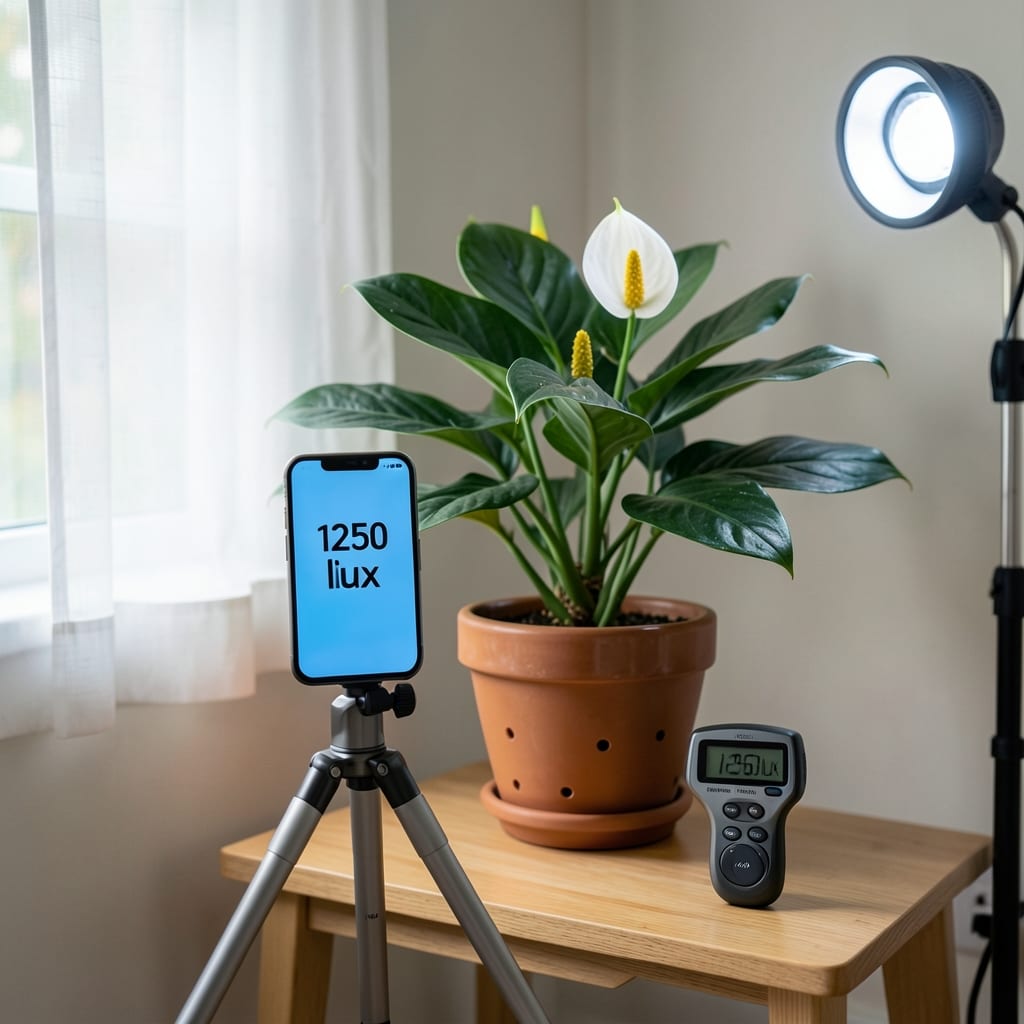
Peace lily light requirements: the ideal brightness spectrum for healthy growth
Peace lilies (Spathiphyllum) thrive in low to bright indirect light, making them perfect for homes with limited natural sunlight. Unlike sun-loving plants, they can't handle harsh rays—direct sunlight causes brown leaf tips and leaf scorch, while too little light leads to droopy leaves and stunted growth. The key is finding that golden middle ground where your plant gets enough light for photosynthesis but avoids stress.
Think of your peace lily’s ideal spot as morning sun with afternoon shade—like a gentle dappled light filtering through trees. If your home has north-facing windows, that’s the sweet spot. For south-facing windows, place your plant at least 6 feet away to prevent sunburn. Even east or west-facing windows work if you position the plant 2-3 feet back from the glass.
Here’s the science behind it: Peace lilies evolved in shady rainforest understories, where light is filtered through canopy leaves. Their leaves are broad and waxy, designed to reflect excess light—but they can’t handle the intense UV rays of direct sun. Too much light triggers oxidative stress, while too little slows chlorophyll production, both of which weaken your plant over time.
🌿
| Light Condition | Description | Signs of Stress | Solution |
|---|---|---|---|
| Low Light (<500 lux) | Dim corners, far from windows | Drooping leaves, pale color, no blooms | Move closer to a window or use grow lights |
| Ideal Light (500-1,500 lux) | North window, filtered east/west light | Glossy dark green leaves, occasional blooms | Perfect! Rotate plant weekly for even growth |
| Bright Indirect (1,500-3,000 lux) | 1-2 feet from east/west window | Healthy growth, may bloom more | Monitor for leaf burn; adjust if needed |
| Direct Sun (>3,000 lux) | South window, no filter | Brown crispy edges, yellowing | Move to indirect light immediately |
Your peace lily’s leaves are its superpower—they’re packed with stomata (tiny pores) that regulate moisture and gas exchange. In low light, these pores stay open longer, making the plant more susceptible to fungal infections from overwatering. Meanwhile, too much light forces the stomata to close, causing wilting and nutrient deficiencies. The trick is keeping them in a balanced state where they can photosynthesize efficiently without stress.
Pro tip: Rotate your peace lily every 2-3 weeks so all sides get even light exposure. Uneven growth (like lopsided leaves) is a classic sign of favoring one direction. If you notice new leaves growing smaller than older ones, it’s a red flag that your plant isn’t getting enough light. Conversely, if older leaves turn yellow with brown edges, you’re likely overlighting it.
Seasonal adjustments matter too. In winter, when daylight is shorter, supplement with a 12-hour grow light (LED or fluorescent) to maintain 2-4 hours of indirect light daily. In summer, watch for afternoon sun creeping in—even 1 hour of direct light can damage leaves. A sheer curtain can act as a natural diffuser if you’re stuck with a sunny spot.
🌱
Remember, peace lilies are forgiving—they’ll survive in low light for months, but they’ll thrive with the right balance. Start by placing your plant 3 feet from an east-facing window and observe for 2 weeks. If leaves stay dark green and upright, you’re golden. If they droop or yellow, move it closer to a brighter spot (but never direct sun). With the right light, your peace lily will reward you with glossy leaves and white blooms all year round.
How to adjust your home’s lighting for a thriving peace lily: room-by-room guide
Finding the perfect spot for your peace lily depends on your home’s natural light layout. Unlike sun-worshippers like succulents, peace lilies (Spathiphyllum) thrive in filtered light, so let’s map out the best rooms and adjustments for each. Start by testing your current light levels with a lux meter app—aim for 500-1,500 lux (the ideal range). If your space falls short, we’ll show you how to supplement it without overdoing artificial light.
North-facing rooms are the gold standard for peace lilies because they offer consistent, gentle light all day. Place your plant 1-2 feet from the window on a rotating plant stand to ensure even growth. If your north window is small, add a reflective surface (like a white shelf) to bounce extra light onto the leaves. Avoid placing it in a drafty corner—cold air from windows can stress the roots, making light sensitivity worse.
🌿
Room-by-Room Lighting Guide for Peace Lilies
✅ North Room
Best for: Consistent indirect light
Placement: 1-2 ft from window
Pros: Gentle morning/afternoon light, no harsh rays
Cons: May need supplemental light in winter
✅ East Room
Best for: Morning sun lovers
Placement: 2-3 ft from window
Pros:Bright but soft morning light
Cons:Afternoon shade needed in summer
⚠️ West Room
Best for: Short-term placement
Placement: 4+ ft from window
Pros:Soft evening light
Cons:Risk of afternoon sunburn
❌ South Room
Best for: Artificial light only
Placement: 6+ ft from window
Pros:None (too intense)
Cons:Direct sun causes leaf burn
💡 Artificial Light Tip: Use full-spectrum LED grow lights (6,500K color temp) for 12 hours/day in winter if natural light is insufficient.
For offices or bathrooms without windows, your peace lily will still survive—but it’ll need extra care. Place it near a bright lamp (like a desk lamp with a cool white bulb) and rotate it quarter-turns weekly to prevent lopsided growth. If you notice stretched, pale leaves, it’s a sign of etiolation (a condition caused by insufficient light). In this case, switch to a grow light on a timer (14 hours of light/day) to mimic natural cycles.
Bathrooms can be tricky because of humidity fluctuations—peace lilies love moisture, but condensation on leaves from hot showers can lead to fungal spots. If you place your plant in a bathroom, wipe leaves dry after each shower and avoid placing it directly under exhaust fans, which can dry out the air too quickly. A pebble tray with water nearby can help maintain humidity without overwatering the soil.
🪴
Pro move: If your peace lily is in a low-light room but you want it to bloom, try this two-step trick. First, gradually increase light exposure over 2-3 weeks by moving it closer to a window (but never in direct sun). Then, add a 12-hour grow light cycle in the evening to simulate longer days. This mimics spring conditions, which triggers flowering. Just be patient—it can take 6-8 weeks of adjusted light before you see those iconic white blooms!
Remember, peace lilies are adaptable, but they’ll always tell you when something’s off. If leaves start yellowing at the tips, it’s often a light + humidity issue—try misting the leaves daily while adjusting the light. If they droop dramatically, check both light and water levels (overwatering in low light is a deadly combo). With these room-specific tips, your peace lily will stay happy, healthy, and ready to bloom—no matter where you place it in your home.