
Light Requirements
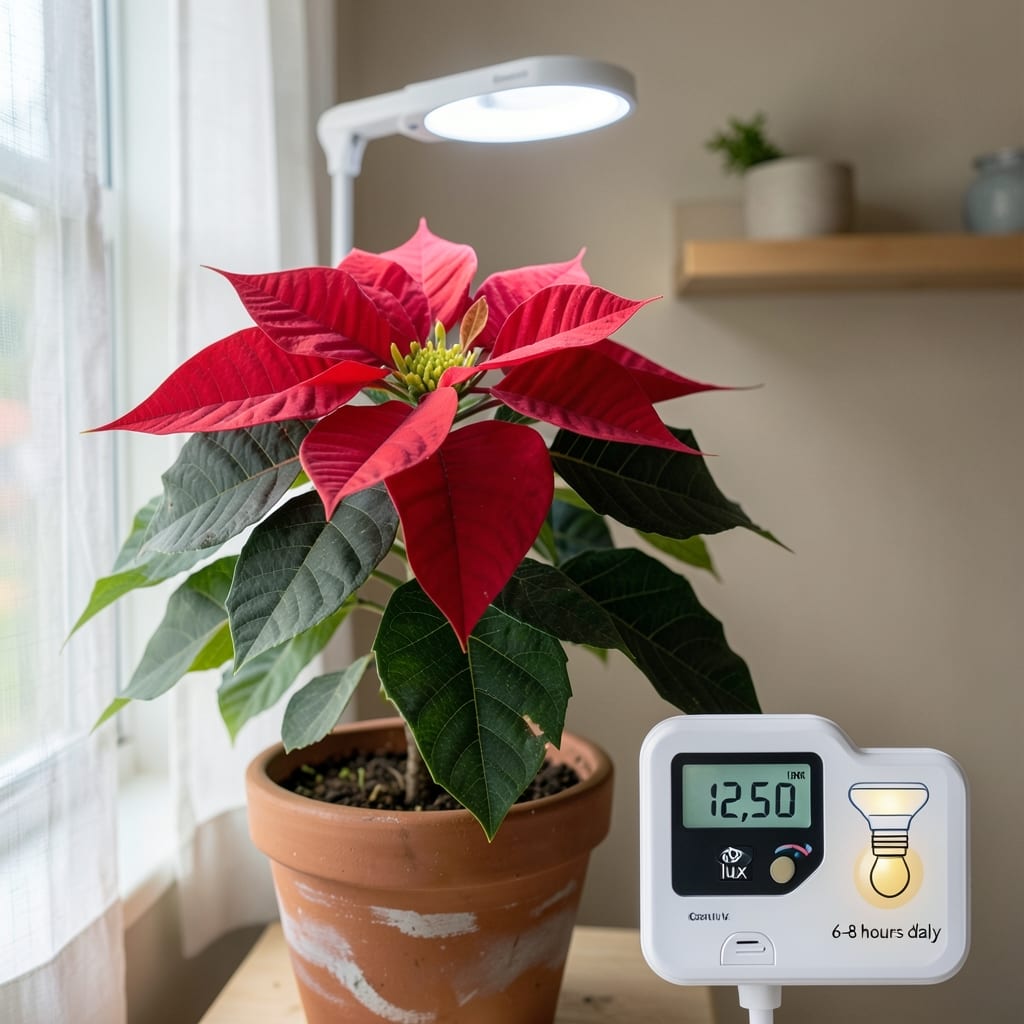
Ideal light requirements for poinsettia growth and blooming
Poinsettias thrive in bright indirect sunlight, making them perfect for home environments where harsh rays are filtered naturally. These plants need 6 to 8 hours of light daily, but direct midday sun can scorch their delicate bracts and foliage. The goal is to mimic their natural understory habitat—think dappled sunlight through tree canopies.
In their native Mexico, poinsettias grow under tropical forest canopies, where they receive filtered sunlight. Replicating this means placing your plant near east or west-facing windows where morning or afternoon light dominates. South-facing windows can work but require sheer curtains to diffuse intensity.
Here’s the light sweet spot for poinsettias:
- Minimum: 6 hours of bright, indirect light (essential for survival)
- Optimal: 6–8 hours (promotes vibrant bracts and compact growth)
- Maximum: 10 hours (beyond this, supplement with shade or artificial light)
Seasonal adjustments are key—poinsettias need 12+ hours of darkness daily for 4–6 weeks before blooming to trigger color change. This means keeping them in dim light or complete darkness from late afternoon until morning during their fall flowering phase.
Watch for signs of light stress:
- Yellowing leaves often signal too much direct sun.
- Stretched stems (etiolation) mean insufficient light.
- Drooping bracts can occur from sudden light changes or drafts.
For indoor growers, supplemental LED grow lights (12–15 inches above the plant) can bridge gaps in natural light. Use lights for 12–14 hours daily during winter’s short days, but avoid placing them too close to prevent overheating.
Outdoor poinsettias in USDA Zone 6a can handle partial shade in summer but need protection from frost and strong winds. Bring them indoors before October 15 to maintain blooms through winter.
Pro tip: Rotate your poinsettia quarter-turns weekly to ensure even light exposure. This prevents lopsided growth and keeps the iconic red bracts uniformly vibrant.
🌱
Ideal light requirements for poinsettia growth and blooming
Poinsettias thrive in bright indirect light, mimicking their natural understory habitat. Too much direct sun causes leaf burn, while insufficient light leads to pale, leggy growth and poor blooming. Aim for 6+ hours of filtered sunlight daily, especially during fall's shorter days when they need extra light to develop vibrant bracts.
Position your poinsettia near an east or west-facing window where morning or late afternoon sun gently illuminates the plant. Avoid harsh midday sun between 10 AM and 2 PM, which can scorch delicate foliage. South-facing windows work only if you use a sheer curtain to diffuse the intensity.
During winter months, supplement natural light with a grow light if your home receives less than 4 hours of sunlight. LED grow lights with a 6400K color temperature work best, placed 6-12 inches above the plant for 12-14 hours daily. This mimics long daylight hours and prevents bud drop before holiday displays.
| Light Condition | Effect on Poinsettia | Solution |
|---|---|---|
| Bright Indirect Light (6+ hours) | Vibrant bracts, compact growth | East/west window or diffused south light |
| Direct Sunlight (2+ hours) | Leaf burn, brown spots | Move to indirect light immediately |
| Low Light (<4 hours) | Leggy stems, pale bracts | Add grow light or rotate plant |
Watch for visual cues to adjust lighting: yellowing leaves signal too much sun, while stretched stems indicate insufficient light. Rotate your plant quarter-turn weekly to ensure even growth and prevent leaning toward light sources. This simple habit maintains symmetrical, show-stopping foliage.
In outdoor winter gardens (USDA Zone 6a), protect poinsettias from frost and direct winter sun by placing them under 50% shade cloth or against north-facing walls. Even brief exposure to freezing temperatures damages tender foliage, so bring potted plants indoors before the first frost on October 15.
For year-round blooming, simulate seasonal light changes: reduce light to 10 hours daily in late summer, then increase to 12+ hours in fall. This tricks the plant into thinking it's transitioning to winter, triggering bract coloration for holiday displays. Consistency is key—sudden light changes cause buds to drop prematurely.