
Light Requirements
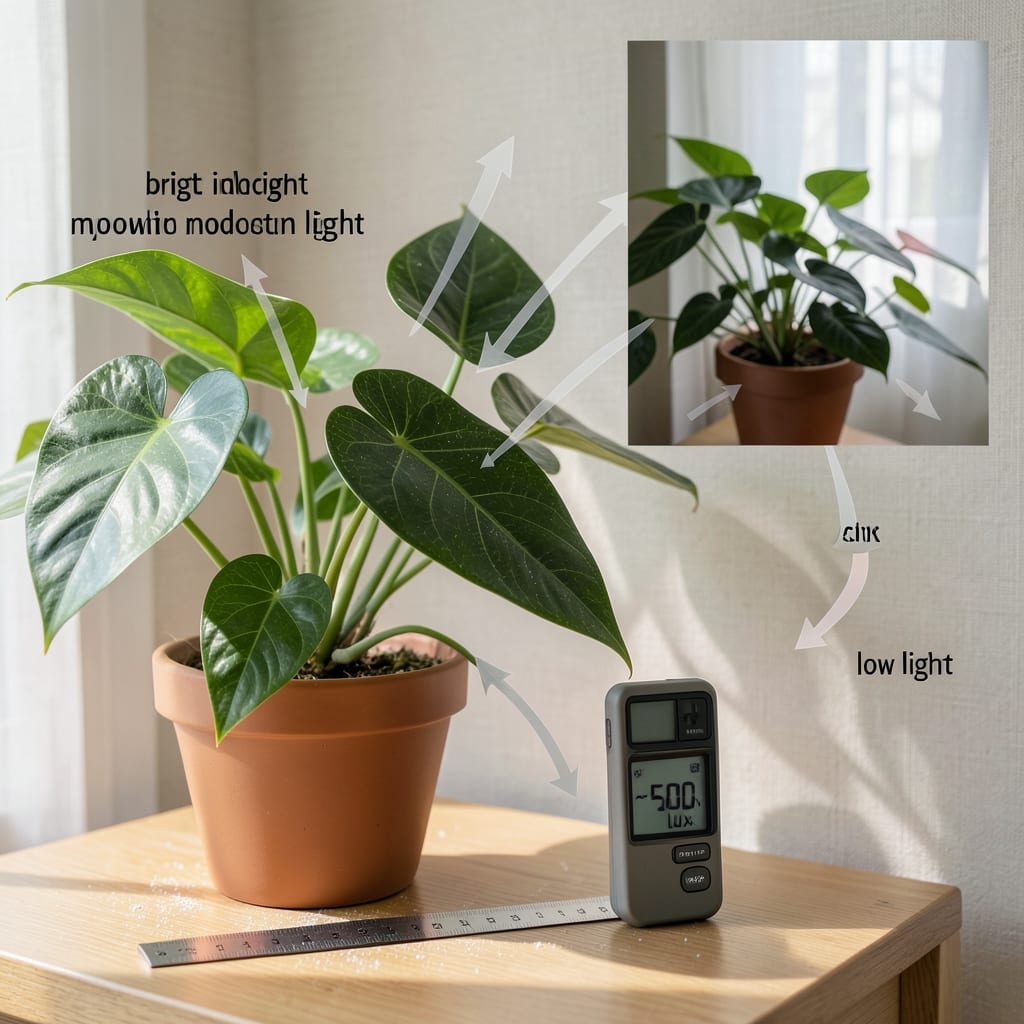
Arrowhead plant light requirements: the perfect balance of bright indirect sunlight
Your arrowhead plant (Syngonium podophyllum) thrives in bright indirect sunlight, mimicking its natural tropical understory habitat. Too little light causes leggy growth and pale leaves, while direct sun scorches delicate foliage. The key is 4-6 hours of filtered light daily, like morning sun through a sheer curtain or dappled shade outdoors.
Think of it like this: your plant craves morning sunlight (6 AM–10 AM) but needs afternoon shade. South-facing windows can work if placed 3+ feet back, while east or north windows provide ideal gentle, diffused light. Avoid west-facing windows—the harsh afternoon rays will bleach leaves within weeks.
Here’s the science: arrowhead plants evolved under canopy cover, where sunlight is 50-70% filtered. Their leaves contain light-sensitive pigments that burn when exposed to UV index 6+ (common in direct midday sun). Even a few hours of direct sun can cause crispy brown edges on leaves.
Pro tip: Use your hand as a light meter. If you can’t read a book comfortably under the same light your plant receives, it’s too dim. For direct sun, if your skin feels warm after 10 minutes, your plant is getting too much UV.
Seasonal shifts matter too. In summer, move your plant 5 feet back from windows to avoid intense afternoon rays. In winter, supplement with 12 hours of grow lights if natural light drops below 4 hours/day. LED grow lights (6500K color temp) are ideal—they mimic sunlight’s spectrum without heat.
Watch for these subtle warning signs of light stress: purple undersides on leaves (phosphorus deficiency from low light) or white powdery spots (sunburn). Act fast—arrowhead plants recover poorly from light-related damage compared to water issues.
For maximum growth, place your plant near an east-facing window in summer (cool morning sun) and south-facing in winter (longer daylight hours). If your home lacks natural light, a south-facing window with a sheer curtain is the next best option—it filters 60-70% of UV rays while maintaining brightness.
Remember: consistency is key. Sudden light changes (like moving from a dark room to a sunny window) can shock your plant. Acclimate it over 7-10 days by gradually increasing exposure. Your arrowhead will reward you with bold arrow-shaped leaves and vigorous growth when you nail the light balance.
🌿
How to adjust your home's lighting for arrowhead plant success
Finding the perfect spot for your arrowhead plant starts with understanding your home's natural light patterns. Most homes have bright indirect light in specific areas, but knowing how to maximize it makes all the difference. Let's explore practical solutions tailored to your space, whether you're dealing with low-light apartments or overly sunny rooms. 🪴
Begin by identifying the best windows in your home. East-facing windows provide gentle morning sunlight—ideal for arrowhead plants—while north-facing windows offer consistent, soft light throughout the day. If your only options are south or west-facing windows, use sheer curtains or a light filter to diffuse the harsh afternoon rays. This simple adjustment prevents leaf burn while still providing enough light. ☀️
- East Window: Gentle morning sun (6 AM–12 PM)
- North Window: Consistent indirect light all day
- West Window: Use sheer curtains to filter afternoon sun
- South Window: Place 3+ feet away or use a light diffuser
If your home lacks natural light, don't worry—grow lights can save your arrowhead plant. LED grow lights are energy-efficient and perfect for supplementing light, especially in low-light conditions. Place the light 12–18 inches above your plant and keep it on for 12–14 hours daily. For a budget-friendly option, fluorescent grow lights also work well, though they may require closer placement (6–12 inches). Test your setup by observing your plant's response over a week. 💡
Seasonal changes can drastically alter your plant's light exposure. During winter months, shorter daylight hours mean your arrowhead plant may need extra light. Move it closer to a south-facing window or supplement with a grow light. In summer, watch for signs of too much light, like brown leaf tips or crispy edges. Adjust by moving the plant back from the window or adding a sheer curtain. Consistency is key—avoid drastic changes in light exposure. ⏰
For precise monitoring, use a simple DIY light meter. Place a white piece of paper near your plant and observe the shadows it casts. If the shadows are sharp and dark, the light is too intense. If the paper appears dim, your plant needs more light. Alternatively, use a lux meter (available online) to measure light intensity—aim for 1,000–2,000 lux for optimal growth. This small step ensures your arrowhead plant gets just the right amount of light. 📋
Finally, consider your plant's growth habits when adjusting light. If your arrowhead plant starts stretching toward the light (etiolation), it needs more brightness. If the leaves darken or develop yellow patches, it's getting too much direct sun. Trust your plant's signals and tweak its environment gradually. With these adjustments, your arrowhead plant will thrive year-round, rewarding you with vibrant, arrow-shaped leaves. 🌱