
Light Requirements
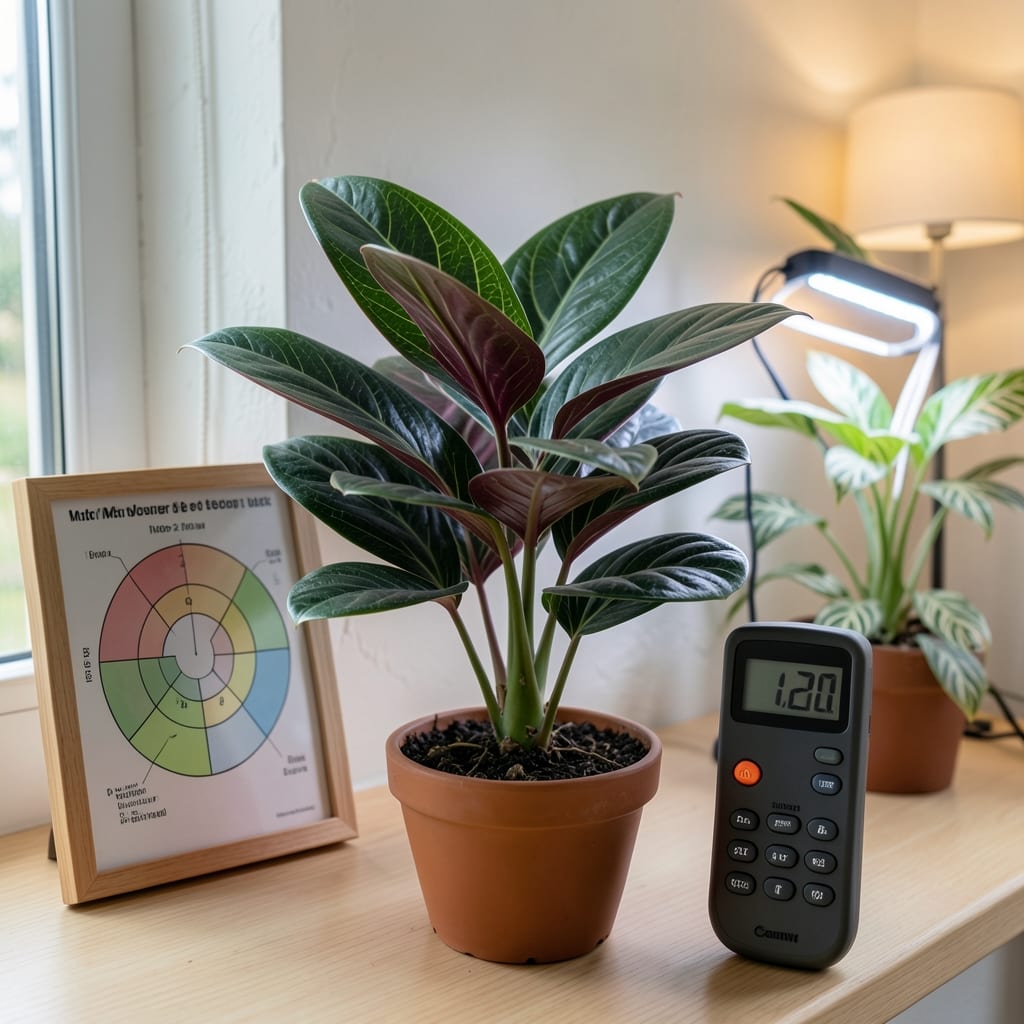
If your Prayer Plant 🌿 looks like it’s throwing a tantrum—drooping leaves or faded patterns—it’s probably screaming for the right light. Too much sun burns its delicate foliage, while too little dims its stunning colors, and neither helps your plant thrive.
Getting the light balance right is the key to keeping your Prayer Plant happy and healthy. We’re talking bright indirect light for 6-8 hours daily, but not direct midday rays that scorch its leaves. I’ll show you exactly where to place it—whether you’re dealing with a south-facing window or need to supplement with grow lights.
You’ll also learn to spot the warning signs of light stress, from yellowing leaves to leggy growth, and how to fix them fast. No more guessing—just clear, actionable steps to keep your Prayer Plant’s foliage vibrant and its growth strong.
Ready to transform your plant’s health? Let’s dive into the perfect light setup for your Prayer Plant 🌿 and watch it flourish in no time.

Ideal light requirements for prayer plant growth: hours & intensity breakdown
Your Prayer Plant 🌿 thrives in bright indirect light, mimicking its natural understory habitat. Think of it as needing the equivalent of a morning coffee ☀️—enough to wake up but not so strong it burns. This means 6-8 hours of filtered sunlight daily, like what you’d find under a sheer curtain or behind a north-facing window.
The light spectrum matters too. Prayer Plants prefer blue light (630-660nm) for growth and red light (440-450nm) for vibrant foliage. Artificial lights can replicate this, but we’ll cover that later. For now, focus on natural light placement—east-facing windows are ideal because they provide gentle morning sun without harsh afternoon rays.
Seasonal adjustments are key. In summer, when sunlight is intense, move your plant 3-4 feet back from the window to avoid leaf scorch. In winter, when days are shorter, supplement with a grow light for 10-12 hours daily to maintain its light cycle. This mimics the 12-hour photoperiod Prayer Plants love.
Here’s the golden rule: If your plant’s leaves start yellowing or developing brown edges, it’s getting too much direct sun. If the foliage fades or the plant stretches toward the light, it’s craving more brightness. Both are red flags for light imbalance.
Now, let’s break down the exact light conditions your Prayer Plant needs to stay vibrant and healthy.
| Light Condition | Hours per Day | Intensity | Best For |
|---|---|---|---|
| Bright Indirect Light | 6-8 hours | 60% sunlight | Vibrant foliage, healthy growth |
| Direct Morning Sun | 2-3 hours (max) | 50% sunlight | Short-term boost, avoid afternoon sun |
| Low Light | 4-6 hours (artificial supplement) | 30% sunlight | Emergency care, slow growth |
| Direct Midday Sun | 0 hours | 100% sunlight | Leaf burn, stress |
The table above shows the sweet spot for Prayer Plant light needs. For example, 6-8 hours of bright indirect light keeps foliage vibrant and growth steady. If you’re in a high-rise apartment with limited natural light, a grow light can bridge the gap—just ensure it’s 12-18 inches away from the plant to avoid leaf damage.
Pro tip: Rotate your plant quarter-turn weekly to ensure even light exposure. This prevents one-sided growth and keeps those stunning foliage patterns symmetrical. Think of it like giving your plant a gentle spa day 🪴 to stay balanced.
Now that you know the ideal light setup, let’s tackle the next big question: How do you spot when your Prayer Plant isn’t getting the right light? Stay tuned for the next section, where we’ll cover warning signs and quick fixes to keep your plant thriving.
Signs your prayer plant isn’t getting the right light (and how to fix it)
Your Prayer Plant 🌿 communicates its light needs through subtle (and not-so-subtle) cues. If the leaves start yellowing along the edges, it’s a cry for less direct sun. This happens when harsh afternoon rays bake the foliage, causing oxidative stress. Move it 3-4 feet back from the window immediately—this gives the leaves time to recover in 2-3 weeks with proper care.
Watch for brown crispy patches on the leaves too. These are sunburn scars, often appearing on the upper surface of leaves exposed to midday sun ☀️. Unlike yellowing, these patches won’t heal—trim them off with sterilized scissors and adjust the plant’s position. A sheer curtain can diffuse harsh light while still allowing bright indirect light through.
- Leggy growth = Needs more light (stretching toward windows)
- Faded patterns = Too little brightness (dull, washed-out colors)
- Drooping leaves = Light shock (sudden move or intense sun)
FIX: Gradually acclimate to brighter spots (1 hour more light daily) or add a grow light for 6 hours.
On the flip side, if your Prayer Plant develops long, thin stems with small leaves, it’s reaching for light. This leggy growth happens when the plant isn’t getting enough bright indirect light—common in north-facing windows or dim corners. To fix this, move it to a sunnier spot or supplement with a 10W LED grow light placed 12 inches away for 8 hours daily.
Another red flag? Pale or white foliage. When Prayer Plants don’t get enough light, they lose their signature patterns and turn almost ghostly. This is your plant’s way of saying, "I need more energy!" Boost light exposure slowly—1 hour more per day—to avoid shocking the plant. Pair this with a light fertilizer (like fish emulsion) to help it recover faster.
Even humidity levels change when light is off. If your plant’s leaves curl at the edges in dry air (common with low-light conditions), increase humidity to 50-60% using a pebble tray or humidifier. This mimics the tropical understory where Prayer Plants naturally thrive.
Here’s my quick-fix