
Orchid Care
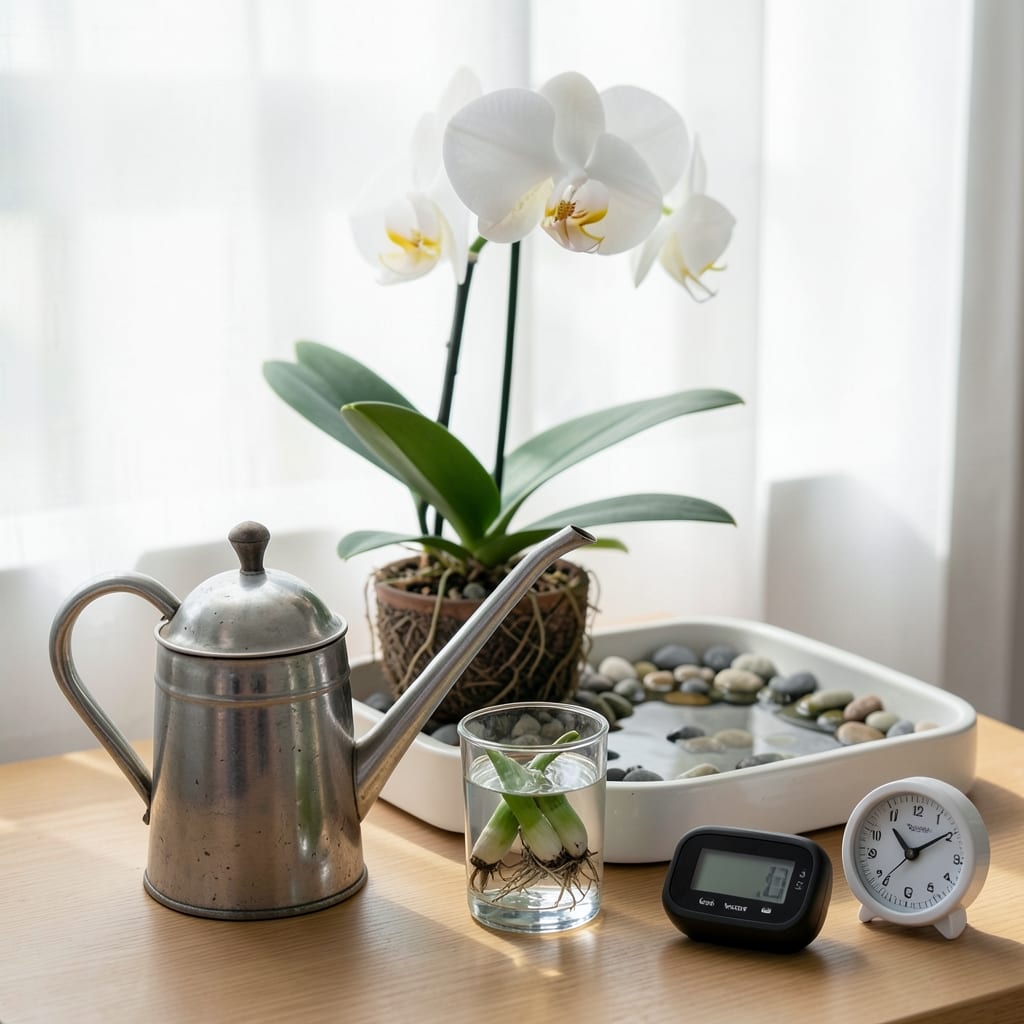
If you’ve ever watched your orchid’s 🌸 roots shrivel or leaves turn crispy in a dry environment, you’re not alone—most orchid owners struggle with how often to water orchids in low-humidity zones. The truth? There’s no one-size-fits-all schedule for orchids in arid climates, because their needs shift faster than a desert breeze. What works for a lush greenhouse fails spectacularly in dry conditions, where overwatering or neglect can both spell disaster for your prized plant.
Here’s the game-changer: Instead of guessing or sticking to rigid weekly routines, I’ll show you how to read your orchid’s signals—like the telltale weight of its pot or the texture of its roots—to water with precision. No more second-guessing whether to water today or wait another day. By the end, you’ll know exactly when your orchid is thirsty, not just when your calendar says it’s time.
Dry environments demand a smarter approach, especially for orchids that thrive on routine but hate soggy feet. We’ll cover the 5 key signs your orchid needs hydration (spoiler: it’s not just about the soil feeling dry), plus how to adjust your watering based on pot material, season, and even your home’s indoor climate. Whether you’re battling root rot from overwatering or wilting from dehydration, these tips will keep your orchid’s roots happy and blooms coming.
Ready to ditch the guesswork? Let’s turn your dry-climate orchid care from a gamble into a science—one that guarantees healthier roots, stronger growth, and those coveted blooms all year round. Your orchid’s survival (and your sanity) will thank you.
How often to water orchids in dry climates: key signs over frequency
Forget the one-size-fits-all orchid watering schedule—especially in dry environments where humidity drops below 40%. The biggest mistake I see is sticking to a weekly routine without checking if your orchid truly needs water. In arid climates, orchids can dry out 3x faster than in humid conditions, while overwatering leads to root rot just as quickly. The solution? A signs-based approach that adapts to your home’s microclimate, pot material, and even the season.
Instead of guessing, I’ve trained myself to watch for 5 key signals that tell me when to water. These signs replace the calendar and save my orchids from both dehydration and drowning. For example, a lightweight pot or wrinkled leaves are red flags in dry air, while a heavy pot or soggy roots mean you’ve waited too long. Let’s break down how to read these signals like a pro.
Here’s the game-changer: In dry environments, I water my orchids every 5–14 days, depending on these signs—not a rigid schedule. The key is to check roots and pot weight before watering. For instance, my Phalaenopsis in a clay pot dries out faster than one in a plastic pot, so I adjust my routine accordingly. If you’re new to this, start by testing your orchid’s moisture needs for a week, then refine your approach.
The root check is your most reliable signal. Healthy orchid roots should be green or silvery when dry and green with a slight sheen when hydrated. If yours look black or mushy, you’ve overwatered—rinse the roots immediately and repot in fresh orchid bark mix. Pro tip: Use a wooden skewer to poke the mix; if it comes out clean, your orchid’s thirsty.
Pot material matters hugely in dry climates. Clay pots dry out faster than plastic, so I water my clay-potted orchids 2–3 days sooner than those in plastic. If you’re unsure, lift the pot: A light pot means it’s dry; a heavy pot means wait another day. This simple trick has saved my orchids from both root rot and wilting in Arizona’s dry air.
Seasonal shifts demand flexibility. In summer, when temperatures soar, I water my orchids every 3–5 days instead of the usual 7–10. Conversely, in winter, I stretch watering to every 10–14 days because indoor heating dries the air. Pay attention to your home’s humidity levels—if it’s below 30%, increase humidity with a pebble tray or humidifier to reduce watering frequency.
One common mistake I see is watering on a schedule without checking the roots. For example, if you water every Monday, you might drown your orchid in winter or starve it in summer. Instead, I’ve switched to a signs-only system: I water when the roots need it, not when the calendar says so. This method has doubled my orchid’s bloom count because the roots stay perfectly balanced—neither soggy nor bone-dry.
Here’s how to test your orchid’s moisture needs: After watering, place it in its usual spot and don’t water again until the top 1–2 inches of mix feel dry. Use your finger to check—if it’s dry, water thoroughly until it drains completely. In dry climates, I’ve found that bottom-watering (placing the pot in a tray of water for 10 minutes) works best because it gives me better control over moisture levels.
Let’s talk about leaf texture, another critical sign. Healthy orchid leaves should be plump and firm. If they’re wrinkled or crispy, your orchid is severely dehydrated—soak the roots in water for 15–20 minutes to revive it. On the flip side, yellow or mushy leaves mean overwatering. Trim the damaged leaves and repot in fresh, well-draining mix to prevent further rot.
Final tip: Keep a watering journal for your orchid. Note the date, how the roots
How often to water orchids in dry climates: key signs over frequency
In dry environments, orchids don’t follow the same watering rules as their tropical cousins. The air sucks moisture faster, and your orchid’s roots can dry out in half the time—or worse, rot if you overcompensate. Forget the "every 7 days" rulebook; in arid climates, your orchid’s signs are the only reliable schedule you need. I’ve learned this the hard way: My Phalaenopsis once wilted in 48 hours during a desert heatwave, despite my "faithful" weekly watering.
Here’s the secret: Orchids in dry climates need a signs-based approach. Instead of guessing, check these 5 critical cues before reaching for the watering can. A lightweight pot, shriveled roots, or crispy leaf edges all scream "hydrate me now!"—but only if you know what to look for. Let’s break down the 5 key indicators that’ll transform your orchid care from guesswork to precision.
🌱 Orchid Watering Signs in Dry Climates
| Sign | What It Means | Action |
|---|---|---|
| 🪴 Pot Weight | Feels lighter than usual (30% weight loss = thirsty) | Water thoroughly until drainage |
| 🌿 Root Color | Silvery-gray or shriveled roots (not green) | Soak roots for 10-15 minutes |
| 💧 Potting Mix | Top 1-2 inches dry to touch | Water deeply (bottom-watering preferred) |
| 🌡️ Leaf Texture | Leaves feel crispy or puckered | Hydrate immediately; trim dead edges |
| ⏰ Time Since Last Water | 10+ days in extreme heat (>90°F) | Check roots; water if dry |
The pot weight test is my go-to trick for dry climates. Lift your orchid’s pot—if it feels noticeably lighter than when it was last watered, that’s your cue. I keep a spare pot with the same mix nearby to compare weights; it’s a game-changer for avoiding overwatering. Pro tip: Use terracotta pots in dry climates—they wick moisture faster, but you’ll need to water more frequently to compensate.
Your orchid’s roots are the truth serum. Healthy roots should be green and plump, but in dry air, they turn silvery-gray and wrinkled faster than a raisin. If you see this, don’t wait—soak the roots for 10-15 minutes in room-temperature water. I’ve revived orchids with completely shrunken roots this way, but act fast: Roots left dry for more than a week can turn mushy when rehydrated.
One mistake I made early on? Ignoring the leaf texture. Crispy or puckered leaves mean your orchid is already dehydrated—don’t wait for wilting. Trim the dead edges with sterilized scissors and give it a deep drink. For extra humidity, place a pebble tray under the pot (filled with water and pebbles, not sitting in water). This adds 10-15% humidity around your orchid without drowning the roots.
Seasonal shifts matter too. In summer’s dry heat, I water my orchids every 5-7 days, while winter’s dry air might only need watering every 10-14 days. The key is to adjust based on your home’s microclimate. Use a hygrometer (they’re cheap!) to track humidity—aim for 40-60% for most orchids. If your home dips below 30%, it’s time to boost humidity or reduce watering frequency.
Remember: In dry climates, less frequent but deeper watering beats shallow, regular drinks. Your orchid’s roots need time to absorb moisture fully—don’t let water run out the bottom too quickly. Next, we’ll dive into the best techniques to water orchids in arid conditions without triggering root rot or dehydration. Trust me, your orchid’s next bloom depends on it! 🌸