
Trees
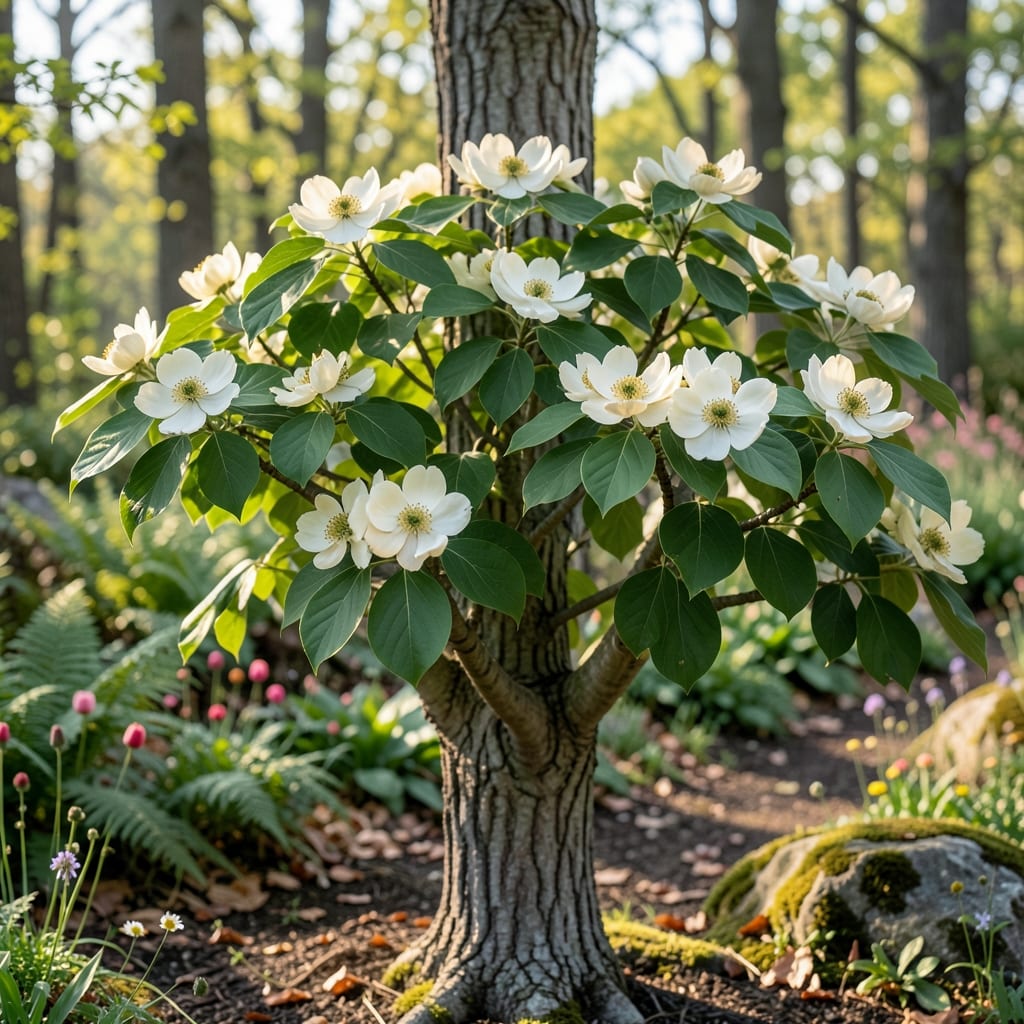
If you're dreaming of a stunning 🌳 Dogwood Tree but wondering how tall a dogwood tree can grow in your backyard, the answer depends on the variety—some soar to 30 feet while others stay compact enough for cozy gardens.
Picture this: a Cornus florida reaching its mature height of 20-30 feet, its blooms lighting up your yard like nature's chandelier, while a dwarf variety stays a modest 8-12 feet tall, perfect for urban spaces. The right choice can transform your outdoor space without sacrificing style.
What you'll discover here is how to match the perfect dogwood to your space, plus the key factors that influence their growth—from pruning techniques to soil conditions. Whether you're planning a grand landscape or a small garden retreat, we've got the insights to help you make the best decision.
Ready to find the ideal dogwood for your vision? Let's explore how these beautiful trees can thrive in your outdoor space—no matter how big or small your yard may be.


Dogwood tree height by variety: from dwarf to giant sizes
Dogwood trees (Cornus species) are prized for their stunning spring blooms and vibrant fall foliage, but their mature height can vary dramatically. If you're planning your landscape, knowing the exact height range for your chosen variety is essential. Some dogwoods stay as compact as 8 feet, while others can soar to 30 feet—making them perfect for both small gardens and large estates.
Most dogwoods fall into three height categories: dwarf (8-12 ft), semi-dwarf (12-18 ft), and standard (20-30 ft). The species and cultivar you select will determine whether your dogwood becomes a backyard centerpiece or a subtle accent. For example, the Pacific Dogwood (Cornus nuttallii) can reach towering heights, while Cherokee Brave stays neatly contained.
Below is a detailed breakdown of popular dogwood varieties and their mature heights, so you can choose the perfect fit for your space. Whether you're working with a tight urban yard or a sprawling rural property, there's a dogwood tree that will thrive—and complement—your vision.
🌱
| Variety | Mature Height | Best For | Notes |
|---|---|---|---|
| Pacific Dogwood (Cornus nuttallii) | 20-30 ft | Large landscapes | Fast-growing, dramatic blooms |
| Flowering Dogwood (Cornus florida) | 15-25 ft | Medium yards | Classic choice, white/pink blooms |
| Kousa Dogwood (Cornus kousa) | 15-20 ft | Urban gardens | Drought-tolerant, glossy leaves |
| Cherokee Brave (Cornus florida) | 8-12 ft | Small yards, containers | Dwarf variety, disease-resistant |
| Stellar Pink (Cornus florida) | 12-15 ft | Foundation planting | Pink blooms, compact growth |
| Golden Age (Cornus kousa) | 15-20 ft | Shade gardens | Golden fall foliage, disease-resistant |
The Pacific Dogwood is the tallest variety, often reaching 30 feet with a broad canopy, making it ideal for large properties where you want a dramatic focal point. In contrast, Cherokee Brave stays under 12 feet, perfect for small urban gardens or even large containers. If you're torn between varieties, consider the Stellar Pink, which offers a balance of 12-15 feet height with stunning pink blooms.
When selecting a dogwood, also consider its spread—some varieties like the Pacific Dogwood can grow 20-30 feet wide, while dwarf varieties like Cherokee Brave stay under 10 feet wide. This ensures your tree won’t outgrow its space or crowd other plants. For example, planting a 20-foot-tall dogwood too close to a patio could block sunlight and create maintenance challenges.
If you're unsure which variety to choose, start by measuring your space. A 15-foot-tall dog
Factors that influence dogwood tree height growth
If you're planting a dogwood tree and want to control its height, you’ll need to understand the key factors that influence its growth. Unlike some trees that grow predictably, dogwoods respond to soil quality, sunlight exposure, pruning practices, and even your local climate zone. For example, a Pacific Dogwood in full sun may reach 30 feet, while the same tree in partial shade could stay closer to 20 feet. Let’s break down how each factor plays a role.
The most critical factor is sunlight exposure. Dogwoods thrive in partial shade (4-6 hours of sun daily), but too much direct sun can stress the tree, leading to faster growth and potential height spikes. In contrast, shady conditions slow growth, keeping varieties like Kousa Dogwood more compact. If your yard has limited sunlight, opt for shade-tolerant cultivars like Golden Age to manage height naturally.
🌱
- Sunlight Exposure
- Soil Quality
- Pruning Practices
- Climate Zone
Another game-changer is pruning. If you want to keep your dogwood at a manageable height—say, 12-15 feet—prune it annually after the spring blooms. Focus on removing suckers and crossing branches to encourage a fuller, bushier shape rather than a tall, leggy one. For example, if you’re growing a Stellar Pink near a patio, pruning it back by 1-2 feet per year will prevent it from overshadowing your outdoor space.
Soil quality also plays a surprising role. Dogwoods prefer well-draining, slightly acidic soil (pH 5.0-6.5). If your soil is heavy clay or nutrient-poor, the tree may grow slowly and weakly, staying under its expected height. Amending the soil with compost or organic matter can boost growth, helping varieties like Flowering Dogwood reach their full 15-25 feet potential.
Finally, your local climate matters. Dogwoods in warmer zones (USDA 6-9) grow faster and taller, while those in cooler climates (USDA 4-5) may stay shorter. For instance, a Pacific Dogwood in Southern California could hit 30 feet in 15 years, but the same tree in the Pacific Northwest might take 20 years to reach that height. Adjust your expectations—and your planting space—based on your region.
By understanding these factors, you can guide your dogwood’s growth to fit your vision—whether that’s a towering 30-foot specimen or a compact 10-foot tree for your small yard. The key is to monitor your tree’s response to its environment and adjust care accordingly.