
Size
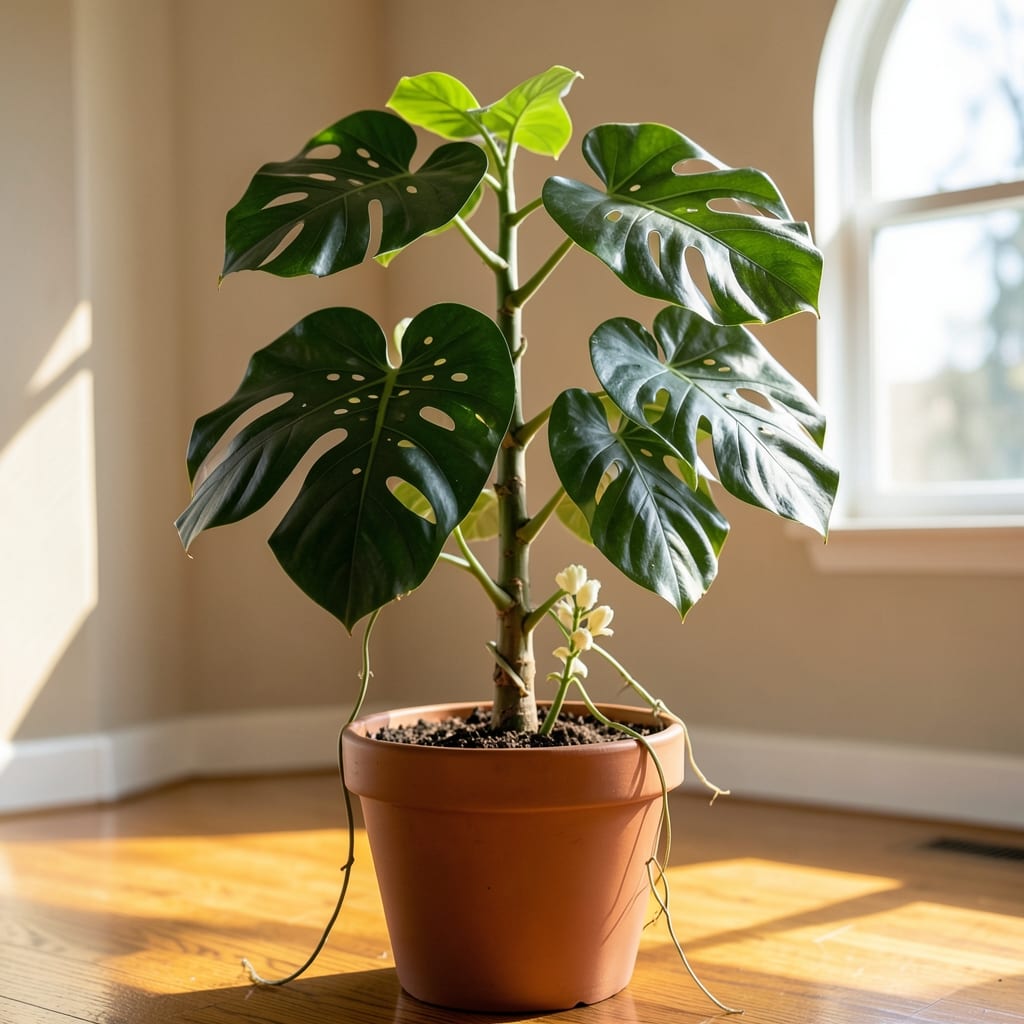
If you’ve ever wondered how tall that Monstera 🌿 in your living room could grow, the answer might surprise you—indoors, it could reach ceiling height, while outdoors, it could tower like a small tree. The difference between a 6-foot indoor vine and a 30-foot jungle giant comes down to light, space, and a little strategic pruning.
Most people assume their Monstera will stay compact, but without proper care, it can quickly outgrow its space. Whether you’re dealing with a leggy plant stretching toward your light fixture or dreaming of a lush, floor-to-ceiling statement piece, understanding its growth potential is the key to keeping it happy—and manageable.
In this guide, I’ll break down the science behind Monstera growth, from indoor vs. outdoor limits to the pruning secrets that can shrink it down or encourage it to climb higher. You’ll also learn how to spot when your plant is getting too tall and how to adjust its care for the perfect size.
Ready to turn your Monstera from a wild vine into a controlled masterpiece? Let’s dive into the facts—and the game-changer techniques—that will keep your plant thriving at the height you want.


Monstera height limits: indoor vs outdoor growth comparison
Your Monstera deliciosa’s height potential depends entirely on its environment. Indoors, most mature plants max out between 6 and 10 feet, while outdoors, they can surge to 20-30 feet—or even 70 feet in tropical climates. The difference comes down to three key factors: sunlight exposure, available space, and growing conditions.
Indoor Monsteras thrive as vining houseplants, their growth limited by ceiling heights and container sizes. Without proper care, they’ll stretch toward light sources, creating long, leggy stems with sparse fenestrations. Outdoors, however, they behave like jungle climbers, attaching to trees or trellises and growing aggressively in warm, humid climates.
Here’s the critical comparison you need to know before committing to a Monstera:
| Factor | Indoor Growth | Outdoor Growth |
|---|---|---|
| Maximum Height | 6–10 ft (with training) | 20–70 ft (tropical climates) |
| Growth Rate | 1–2 ft/year (slow) | 3–5 ft/year (rapid) |
| Light Needs | Bright indirect (6+ hrs) | Direct sun (6+ hrs) |
| Space Requirements | Ceiling height + trellis | Tree support or large area |
| Humidity Needs | 40–60% (supplemental misting) | 70%+ (natural tropical humidity) |
| Pruning Impact | Essential for height control | Less critical (natural growth) |
If you’re growing your Monstera indoors, light placement is everything. A plant near a south-facing window will grow faster but may develop sunburned leaves. Meanwhile, Monsteras in north-facing windows grow slower but develop larger fenestrations over time. For outdoor growers, USDA Zones 10–12 are ideal—any colder, and frost will kill the plant.
One common misconception is that all Monsteras grow equally tall. Varieties like the Monstera 'Thai Constellation' stay compact at 3–6 feet, while standard Monstera deliciosa can easily reach 10 feet indoors if given enough light and support. Even dwarf varieties need proper care to prevent legginess.
For indoor growers, container size plays a huge role. A 10-gallon pot will restrict root growth, slowing height increases, while a 20-gallon container can support a 10-foot vine over 3–5 years. Outdoors, Monsteras spread aggressively—some gardeners report 20-foot vines in just 2 years with ideal conditions.
Here’s a pro tip: If your Monstera is already too tall for its space, don’t panic. Strategic pruning can reduce height by 30–50% while encouraging bushier growth. I’ll cover the exact techniques in the next section—including how to propagate those cuttings into new plants!
🌿 Whether you’re aiming for a floor-to-ceiling statement piece or a compact tabletop plant, understanding these growth limits will help you plan your Monstera’s future—before it’s too late.
How to control Monstera growth: pruning techniques for different heights
Pruning isn’t just about trimming back overgrowth—it’s the secret weapon for shaping your Monstera’s height and encouraging bushier, fuller growth. Whether you want a 6-foot floor plant or a 10-foot climbing masterpiece, the right pruning technique makes all the difference. The key is timing: prune during active growth (spring/summer) to avoid stressing the plant, and always use sterilized pruners to prevent disease.
For height reduction, focus on cutting back the longest, leggiest stems just above a leaf node. This encourages new growth from the node, creating a fuller plant while reducing overall height. If your Monstera is already too tall for its space, you can even prune it back by 50% or more—it’ll bounce back with vigor if given proper care afterward.
- 1 Identify your goal: Decide if you want to reduce height, encourage bushiness, or maintain a specific size (e.g., 6 feet).
- 2 Choose the right time: Prune in spring or early summer when the plant is actively growing. Avoid pruning in fall/winter when growth slows.
- 3 Select stems to prune: For height reduction, cut back the tallest stems just above a leaf node. For bushiness, trim back 1/3 of the longest stems.
- 4 Use the right tools: Always use clean, sharp pruners and disinfect them with rubbing alcohol between cuts to prevent bacterial spread.
- 5 Propagate cuttings: Place stem cuttings in water or moist sphagnum moss to root. You’ll have new plants in 4–6 weeks!
- 6 Adjust care post-pruning: Increase light and humidity for 2 weeks to help the plant recover. Avoid fertilizing immediately—wait until new growth appears.
One of my favorite pruning hacks is the "pinching" technique for younger Monsteras. Simply pinch off the top few inches of new growth to encourage branching. This is perfect for keeping plants under 6 feet tall while maintaining a full, lush appearance. For older plants, I recommend selective pruning—only trimming back the longest, weakest stems to maintain balance.
If you’re aiming for a 10-foot indoor Monstera, focus on providing vertical support (like a moss pole) and pruning only to shape, not reduce height. Outdoors, pruning is less critical, but you can still guide growth direction by trimming back aggressive vines. Just remember: Monsteras are resilient—they’ll recover from even drastic pruning if given the right conditions.
🪴 Pro tip: Save your pruned cuttings! Even a 6-inch stem with a node can root and become a new plant. This is how I’ve expanded my collection to five Monsteras from just one original cutting—without spending a dime!