
Trees
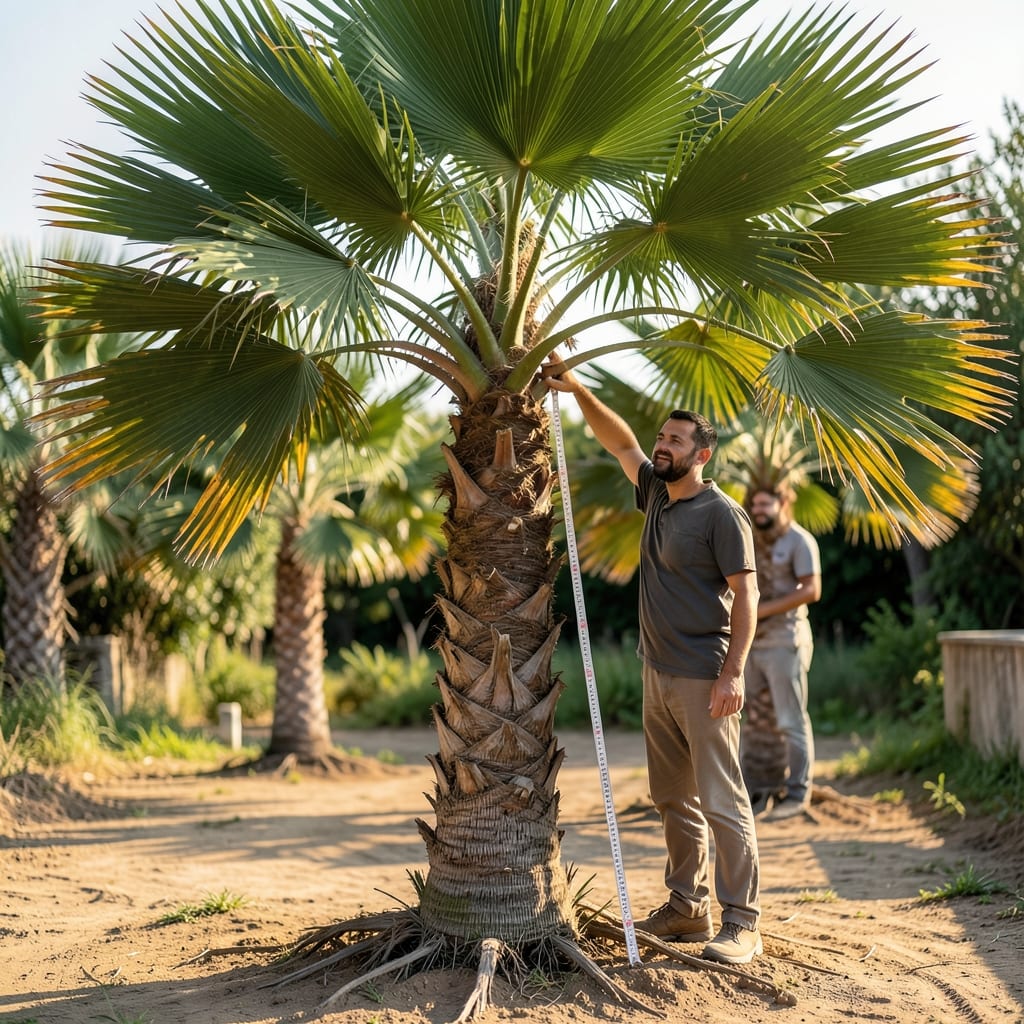
If you're asking "how tall can a Sabal palm grow in meters", you're not just curious—you're planning your landscape's future. This iconic 🌴 can reach heights of 6 to 18 meters (20 to 60 feet), making it a true statement piece for tropical or subtropical gardens in USDA zones 9-11.
But here's the catch: not all Sabal palms grow to the same sky-scraping heights. Some varieties like Sabal minor stay compact, while others like Sabal palmetto can tower over your home, casting dramatic shade. Understanding these differences is key to choosing the perfect specimen for your space.
Growth rates also play a crucial role. While young palms grow 30-60 centimeters per year, reaching their full height can take decades. That means careful planning is essential to ensure your Sabal palm fits beautifully in your landscape without becoming an unexpected skyscraper.
In this guide, I'll break down the height variations by species, growth rates, and practical tips for accommodating these stunning palms in your outdoor space. Let's get started!


Sabal palm height in meters by variety: from dwarf to giant species
If you're considering adding a Sabal palm to your landscape, you're likely wondering: how tall can a Sabal palm grow in meters? The answer varies dramatically depending on the species. These palms range from compact varieties to towering giants, making them versatile for different spaces. Let's explore the height ranges in meters for the most popular Sabal palm varieties.
For example, the Sabal minor, also called the dwarf palmetto, typically reaches 1.5–3 meters at maturity. This makes it perfect for smaller yards or container gardening. On the other end of the spectrum, the Sabal palmetto can soar up to 15–20 meters, rivaling the height of a 5-story building.
Here’s how the most common Sabal palm species compare in terms of height:
| Variety | Common Name | Mature Height (Meters) | Growth Habit | Notes |
|---|---|---|---|---|
| Sabal minor | Dwarf Palmetto | 1.5–3 m | Single-trunk or clumping | Slow-growing, cold-hardy to USDA Zone 7 |
| Sabal etonia | Needle Palm | 3–6 m | Single-trunk | Unique needle-like fronds; thrives in Zones 8–11 |
| Sabal mexicana | Mexican Palmetto | 6–12 m | Single-trunk | Fast-growing; ideal for tropical landscapes |
| Sabal palmetto | Cabbage Palm | 15–20 m | Single-trunk | Iconic in Florida and coastal regions; drought-tolerant |
| Sabal causiarum | Cuban Palmetto | 8–15 m | Single-trunk | Adaptable to humid climates; slow to moderate growth |
The Sabal palmetto, with its 15–20 meter height, is the tallest species and requires ample space. Meanwhile, the Sabal minor is ideal for smaller gardens or as a potted specimen. Always check your local USDA hardiness zone to ensure the variety you choose will thrive in your climate.
Another key factor is the growth habit. Some Sabal palms, like the Sabal minor, grow in clumping formations, while others, such as the Sabal palmetto, develop a single, sturdy trunk. This affects not only height but also how they fill out your landscape over time.
For example, if you're in Zone 9 or 10 and want a statement palm, the Sabal palmetto will dominate your yard with its towering presence. However, if you're in a cooler zone (Zone 7–8), the Sabal minor is a safer bet, offering beauty without the space requirements.
When planning your landscape, consider both the mature height in meters and the growth rate. Some species, like the Sabal mexicana, grow quickly, while others, like the Sabal etonia, take their time. This will help you estimate how long it will take for your palm to reach its full potential height.
Pro tip: If you're unsure about spacing, opt for a dwarf variety like the Sabal minor. It’s forgiving and won’t outgrow its welcome in most gardens. For larger properties, the Sabal palmetto will make a dramatic focal point that turns heads.
Climate Zone limits: where Sabal palms thrive and their height impact
Understanding climate zone limits is crucial when asking how tall can a Sabal palm grow in meters. These palms thrive in USDA zones 8–11, where warm temperatures and humidity fuel their rapid growth. However, their maximum height and growth rate can vary significantly depending on your location.
For example, in Zone 10 or 11, like Florida or Southern California, a Sabal palmetto can easily reach its full 15–20 meter height. The warm, frost-free climate allows it to grow faster and taller than in cooler regions. In contrast, in Zone 9, like parts of Texas or Arizona, growth may be slightly slower, but the palm will still reach impressive heights.
| USDA Zone | Climate Characteristics | Sabal Palm Height Impact | Best Varieties for Zone |
|---|---|---|---|
| Zone 8 | Mild winters, occasional frost | Slower growth; max height 8–12 m | Sabal minor, Sabal etonia |
| Zone 9 | Hot summers, minimal frost risk | Moderate growth; max height 10–15 m | Sabal palmetto, Sabal mexicana |
| Zone 10 | Tropical, frost-free year-round | Fast growth; max height 15–20 m | Sabal palmetto, Sabal causiarum |
| Zone 11 | Extreme heat, coastal influence | Optimal growth; max height 18–20 m | Sabal palmetto, Sabal bermudiana |
If you're in Zone 7 or cooler, your options are limited to the hardiest varieties like the Sabal minor, which tops out at 1.5–3 meters. These palms are more cold-tolerant but will grow slower and may not reach their full potential height. Always check the minimum temperature thresholds for your chosen variety to avoid frost damage.
Another factor to consider is regional microclimates. For instance, coastal areas in Zone 10 may experience higher humidity and stronger winds, which can affect both the growth rate and the structural integrity of taller palms like the Sabal palmetto. Inland areas may have hotter, drier conditions, which can slow growth but also reduce the risk of fungal diseases.
For optimal growth, ensure your Sabal palm is planted in well-draining soil with full sun exposure. In Zones 9–11, this will help your palm reach its maximum height potential more quickly. If you're in a cooler zone, focus on protecting your palm from frost and providing consistent moisture to support steady growth.
Remember, the taller the palm, the more space and maintenance it will require. A 15-meter Sabal palmetto in Zone 11 will need regular pruning to remove dead fronds and may require staking in windy areas. In contrast, a 3-meter Sabal minor in Zone 8 will be low-maintenance and perfect for smaller spaces.