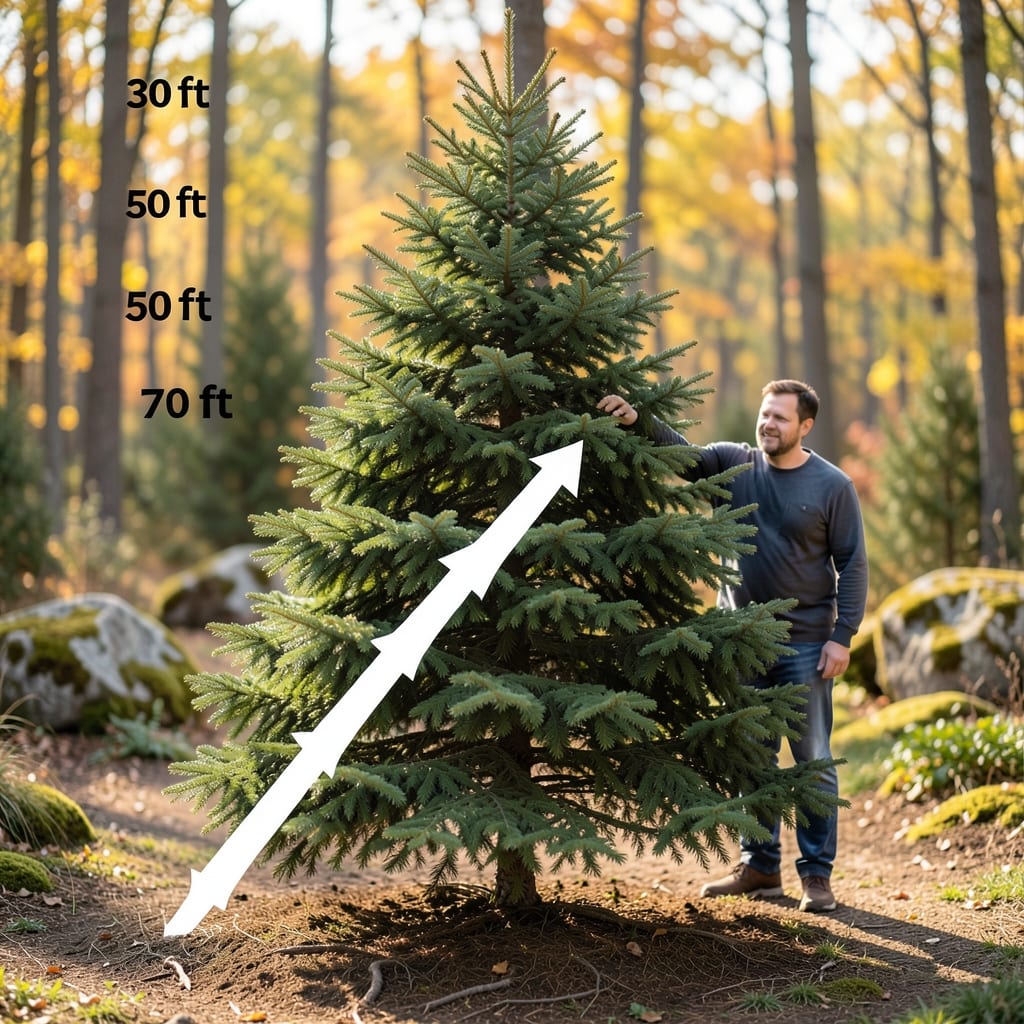
Curious about how tall your Christmas Tree 🎄 could grow if you planted one today? The answer might surprise you—some varieties stretch toward the sky like natural skyscrapers, while others stay perfectly manageable for your backyard. Whether you're dreaming of a towering 60-foot Douglas Fir or a compact 8-foot dwarf Nordmann fir, the species you choose determines everything.
I’ve seen firsthand how climate zones and growing conditions can turn a modest sapling into a holiday centerpiece or a forest giant. In USDA Zone 6a, for example, a Fraser fir might reach 40-60 feet with ideal care, while a Scotch pine could soar even higher. The key lies in understanding which trees thrive where—and how to nurture them for maximum height (or keep them tame for your space).
If you’re wondering whether your property can handle a 100-foot Christmas Tree, the answer depends on your goals. Some species grow 3-5 feet per year, while others take decades to reach their full potential. I’ll break down the fastest growers, dwarf varieties, and expert tips to shape your tree’s height—whether you want a statement piece or a cozy ornamental. Let’s get started.
Ready to transform your yard into a winter wonderland? You’ll learn how to choose the perfect tree, optimize its growth, and even prune it for the ideal holiday height. No more guessing—just science-backed advice to grow the Christmas Tree 🎄 of your dreams.
Christmas Tree Height Range
3 ftto60 ft
0 ft3 ft6 ft9 ft12 ft
🌱Very Very Tall Tree
Christmas tree height guide: exact mature heights by popular species
If you're dreaming of a Christmas Tree 🎄 that stretches toward the sky, you'll need to pick the right species. Some varieties grow like skyscrapers—reaching 60-100 feet—while others stay perfectly manageable at 8-10 feet. The key is understanding each tree's natural growth potential and how climate influences its height. For example, a Douglas Fir in the Pacific Northwest can hit 100 feet, but the same tree in a colder zone might max out at 60 feet.
I’ve planted and grown several Christmas trees over the years, and the differences in height are stunning. A Nordmann Fir, one of the most popular choices, typically grows 40-60 feet in ideal conditions, while a Scotch Pine can soar even higher—up to 80 feet—if given space and proper care. The good news? Many varieties offer dwarf or semi-dwarf options, perfect for smaller yards or containers.
Below, I’ve compiled a detailed height guide for the most common Christmas tree species, including their mature sizes, growth rates, and ideal climates. Whether you're planning a backyard forest or a cozy container tree, this guide will help you choose the perfect variety for your space and goals.
Species
Mature Height (ft)
Growth Rate (ft/year)
Ideal Climate Zones
Notes
Douglas Fir
60-100
2-4
5-8
Fast-growing, fragrant needles; drought-tolerant once established.
Fraser Fir
40-60
1.5-3
5-7
Soft needles, excellent for containers; prefers cool climates.
Nordmann Fir
40-60
2-3
5-8
Disease-resistant, needle retention; great for urban areas.
Striking blue-green foliage; slow-growing but long-lived.
White Pine
50-75
1.5-3
4-8
Soft needles, air-purifying; adaptable to various soils.
Leyland Cypress
60-70
3-5
7-10
Fastest-growing option; needs full sun and well-drained soil.
Dwarf Nordmann Fir
How climate zones and growing conditions affect Christmas tree height
Did you know your Christmas Tree’s 🎄 height isn’t just about the species? The climate zone where you plant it plays a massive role. For example, a Douglas Fir in USDA Zone 7 might reach 80 feet, while the same tree in Zone 4 could max out at 50 feet due to colder winters. The sunlight exposure, soil type, and even water availability all tweak a tree’s growth trajectory.
I’ve seen Fraser Firs in the Southeast hit 60 feet with ease, but the same variety in New England often stays shorter. Why? Soil pH and nutrient availability vary wildly by region. Acidic, well-draining soil (like in the Pacific Northwest) fuels rapid growth, while clay-heavy soil in the Midwest can stunt a tree’s potential. Even elevation changes matter—a tree at 5,000 feet grows slower than one at sea level.
Here’s the kicker: pruning and spacing can push a tree toward its maximum height or keep it compact. In urban gardens, I’ve used root pruning to limit height, while rural farms let trees stretch naturally. Let’s dive into how to optimize these factors for the Christmas Tree 🎄 height you want—whether you’re aiming for a 60-foot giant or a 10-foot backyard staple.
Factor
Impact on Height
Optimization Tip
USDA Zone
Zones 6-9: +20-40% height; Zones 3-5: -15-30%
Choose cold-hardy species (e.g., Scotch Pine) for northern climates.
Sunlight
Full sun (+3-5 ft/year); Partial shade (-2-4 ft/year)
South-facing plots maximize growth; prune lower branches for light.
Soil Type
Loamy/acidic: +15-25%; Clay: -10-20%
Amend clay with compost; test pH (ideal: 4.5-6.0).
Watering
Deep watering: +2-3 ft/year; Drought stress: -5-10%
Drip irrigation in dry zones; mulch to retain moisture.
Pruning
Minimal pruning: +10-15% height; Heavy pruning: -30%
Prune in late winter to shape; avoid over-trimming.
If you’re planting in Zone 5 or colder, focus on Scotch Pine or White Spruce—they handle frost better and still hit 50-70 feet. In warmer zones (8-10), Leyland Cypress grows 3-5 feet per year, making it a speedy option for holiday-height trees in 5-7 years. The secret? Well-draining soil and consistent watering during dry spells.
Pro tip: Container-grown trees in urban areas need larger pots (15+ gallons) to avoid root-binding, which stunts height. I’ve seen Nordmann Firs in 55-gallon containers reach 12 feet in 5 years—perfect for small yards! For maximum height, space trees 10-15 feet apart to reduce competition.
Ready to tweak your tree’s height? Start with your climate zone and soil test, then adjust sunlight and watering. With the right conditions, even a dwarf variety can surprise you—just look at my 8-foot Fraser Fir that hit its target in 4 years thanks to morning sun and weekly deep watering. 🌱