
Flowers
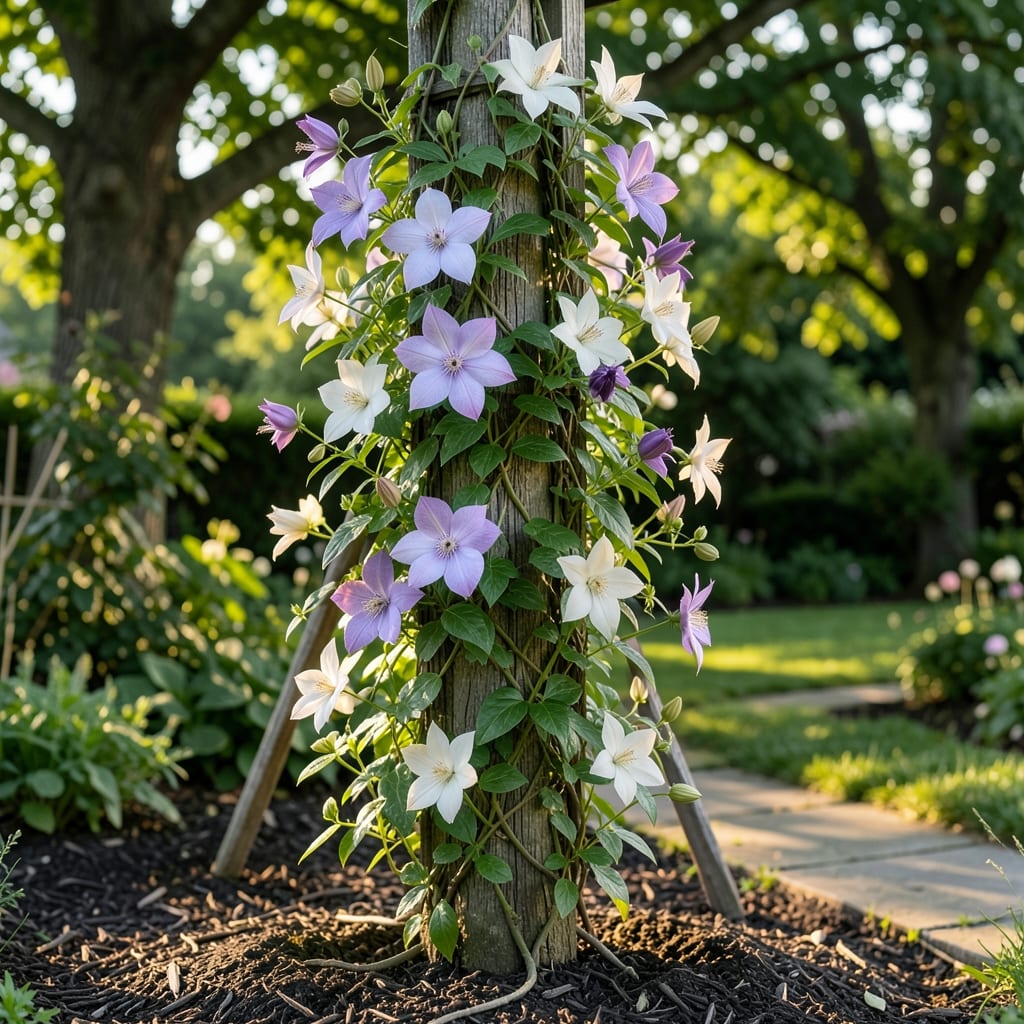
If you’ve ever wondered how tall can clematis grow, the answer might surprise you—some varieties stretch taller than a two-story house, while others stay neatly compact. Picture this: delicate 🌸 clematis vines cascading over trellises, arbors, or even climbing walls, adding vertical drama to any garden. The key to choosing the right type lies in understanding their growth habits and how to support them.
Clematis comes in a stunning range of sizes, from dwarf varieties that top out at just 3–5 feet to towering giants reaching 20 feet or more. Whether you’re working with a cozy backyard or a sprawling landscape, there’s a clematis perfect for your space. The trick is knowing which type thrives where—and how to guide their growth with pruning and support.
For those with limited space, compact clematis like ‘Freckles’ or ‘Niobe’ are ideal, while bold climbers such as ‘Jackmanii’ or ‘Perle d’Azur’ make dramatic statements. I’ll break down the best varieties for your garden, along with tips to control height and maximize blooms. Ready to transform your outdoor space with these vining giants?
Let’s explore how to pick the perfect clematis for your needs—whether you’re dreaming of a lush vertical garden or just want a few elegant blooms to brighten up a trellis. The right choice can turn any corner of your yard into a stunning showcase.


Clematis growth heights by variety: from dwarf to towering giants
When it comes to how tall can clematis grow, the answer depends entirely on the variety you choose. These vines are divided into three main pruning groups—A, B, and C—each with distinct height ranges and growth habits. Group A clematis, like 'Jackmanii', can reach 15–20 feet, while Group C varieties such as 'Freckles' stay compact at 3–6 feet. Understanding these differences helps you select the perfect clematis for your space, whether you have a small balcony or a sprawling backyard.
The tallest clematis varieties often belong to Group 3 (formerly Group A), which includes bold climbers like 'Comtesse de Bouchard' or 'Perle d’Azur'. These giants thrive on sturdy trellises, arbors, or even fences, adding dramatic vertical interest. On the other hand, Group 1 (formerly Group C) clematis, such as 'Niobe' or 'Vyvyan Pennell', are ideal for smaller gardens or containers, topping out at just 3–5 feet. Even within these groups, individual varieties can vary in height by several feet.
Here’s a quick breakdown of what to expect from each pruning group:
| Pruning Group | Mature Height | Popular Varieties | Best For |
|---|---|---|---|
| Group 3 (Large) | 15–30 ft | 'Jackmanii', 'Comtesse de Bouchard', 'Perle d’Azur' | Trellises, arbors, walls |
| Group 2 (Medium) | 8–15 ft | 'Montana', 'Nelly Moser', 'The President' | Perennial borders, small trellises |
| Group 1 (Small) | 3–6 ft | 'Freckles', 'Niobe', 'Vyvyan Pennell' | Containers, small gardens, patios |
If you’re wondering how tall can clematis grow in a single season, expect 3–5 feet of growth in the first year, with 6–10 feet by year two. By year three, mature varieties can add another 10–15 feet, depending on pruning and support. For example, 'Jackmanii' might reach 15 feet in its third year if given proper care, while 'Freckles' will stay around 4–5 feet tall. This rapid growth makes clematis a fantastic choice for quickly transforming bare walls or fences into lush, floral displays.
Support structures play a critical role in determining how tall clematis can grow. Without a trellis, arbor, or fence, vines can sprawl uncontrollably, leading to tangled messes. Install a sturdy structure at planting time—clematis needs support to climb vertically. For tall clematis varieties, opt for a 10–12 foot trellis or a metal arbor to handle their weight. Smaller varieties can thrive on 3–5 foot obelisks or even hanging baskets for a cascading effect.
Another factor influencing height is pruning strategy. Group 3 clematis should be pruned heavily in late winter to encourage new growth, while Group 1 varieties benefit from minimal pruning to maintain their compact form. For instance, if you prune 'Jackmanii' back to 3–4 feet each year, it will still reach 15–20 feet by summer, but with bushier, more manageable vines. On the other hand, 'Freckles' might only need light trimming to shape its growth, staying neatly within its 3–6 foot range.
For those with limited space, dwarf clematis like 'Niobe' or 'Vyvyan Pennell' are game-changers. These varieties thrive in containers or small garden beds, adding color without overwhelming your space. Even in containers, they can reach 3–5 feet, making them perfect for balconies or patios. Pair them with compact shrubs like dwarf hydrangeas or lavender to create a cohesive, low-maintenance display.
If you’re aiming for a bold statement, consider 'Comtesse de Bouchard' or 'Perle d’Azur', both of which can exceed 20 feet when given the right conditions. These varieties are ideal for large fences, pergolas, or even climbing up the side of a house, provided the structure is sturdy enough to support their weight. Just ensure the support is wide enough—clematis vines can spread 3–6 feet wide as they climb.
One common mistake is assuming all clematis grow the same way. Group 1 clematis (small-flowered varieties) often bloom on current-year growth, so aggressive pruning can reduce flowers. In contrast, Group 3 clematis (large-flowered types) bloom on old wood, meaning you should prune them after flowering to avoid cutting off next year’s blooms. This distinction is key to maximizing both height and flower production.
To summarize, how tall can clematis grow depends on the variety, pruning group, and support provided. Whether you’re dreaming of
How to control clematis height: pruning tips for each growth type
Pruning is the secret weapon for managing clematis height and encouraging lush blooms. Without proper pruning, even dwarf varieties can sprawl uncontrollably, while large climbers may become unruly. The key is understanding your clematis’s growth group—whether it’s a Group 1 (early bloomer), Group 2 (repeat bloomer), or Group 3 (late bloomer)—each has unique pruning needs. I’ll walk you through the steps to keep your clematis at the perfect height for your space.
For Group 3 clematis (like 'Jackmanii'), which bloom on new wood, you can prune hard in late winter, cutting back to 2–3 healthy buds from the base. This aggressive pruning encourages vigorous growth and keeps towering varieties like 'Perle d’Azur' under control. Meanwhile, Group 1 clematis (early spring bloomers) should only be pruned lightly to remove dead wood, as they bloom on old wood.
Here’s where things get interesting: Group 2 clematis (repeat bloomers) need a balanced approach. Prune lightly in early spring to shape the plant, then do a second prune after flowering to encourage more blooms. Varieties like 'Freckles' (a Group 2 dwarf) benefit from this method to stay compact while still producing abundant flowers. The goal is to promote bushier growth in smaller varieties and control height in larger ones.
🌿 Pruning Guide for Clematis Height Control
- Step 1: Identify your clematis growth group (1, 2, or 3).
- Step 2: Prune Group 3 hard in late winter (cut to 2–3 buds).
- Step 3: Lightly prune Group 1 in early spring (remove dead wood only).
- Step 4: Prune Group 2 twice: lightly in spring and after flowering.
- Step 5: Use sharp, clean tools to avoid damaging stems.
- Step 6: Apply mulch after pruning to protect roots.
Timing is everything when it comes to pruning clematis for height control. For Group 3 varieties, prune just as new shoots begin to swell in late winter or early spring. This gives them plenty of time to establish new growth before summer. If you prune too early, you risk delayed blooming, while pruning too late can leave your plant vulnerable to winter damage. For Group 2 clematis, the second prune after flowering should be done by mid-summer to avoid cutting off potential autumn blooms.
Don’t forget about support structures—they’re just as important as pruning for managing height. Install a trellis, arbor, or sturdy fence as soon as your clematis starts to grow. For dwarf varieties like 'Niobe', a small 3-foot obelisk works perfectly, while towering giants like 'Comtesse de Bouchard' need a 10-foot pergola or wall. Train the vines gently as they grow to avoid weak stems that can’t support their own weight.
One common mistake I see is over-pruning compact varieties, which can stunt their growth entirely. If you’re growing a dwarf clematis like 'Vyvyan Pennell', stick to light shaping prunes in early spring and avoid cutting back more than 1/3 of the plant. On the flip side, under-pruning large varieties can lead to unruly, tangled growth that blocks sunlight and air circulation. The sweet spot? Balanced pruning tailored to your clematis’s growth habits.
With the right pruning strategy, you can shape your clematis to fit any space—whether you’re aiming for a 3-foot cascading display or a 20-foot vertical masterpiece. Start with the basics, observe how your plant responds, and adjust your approach each year. Before you know it, your clematis will be the star of your garden, blooming beautifully and staying exactly where you want it. 🌸