
Size
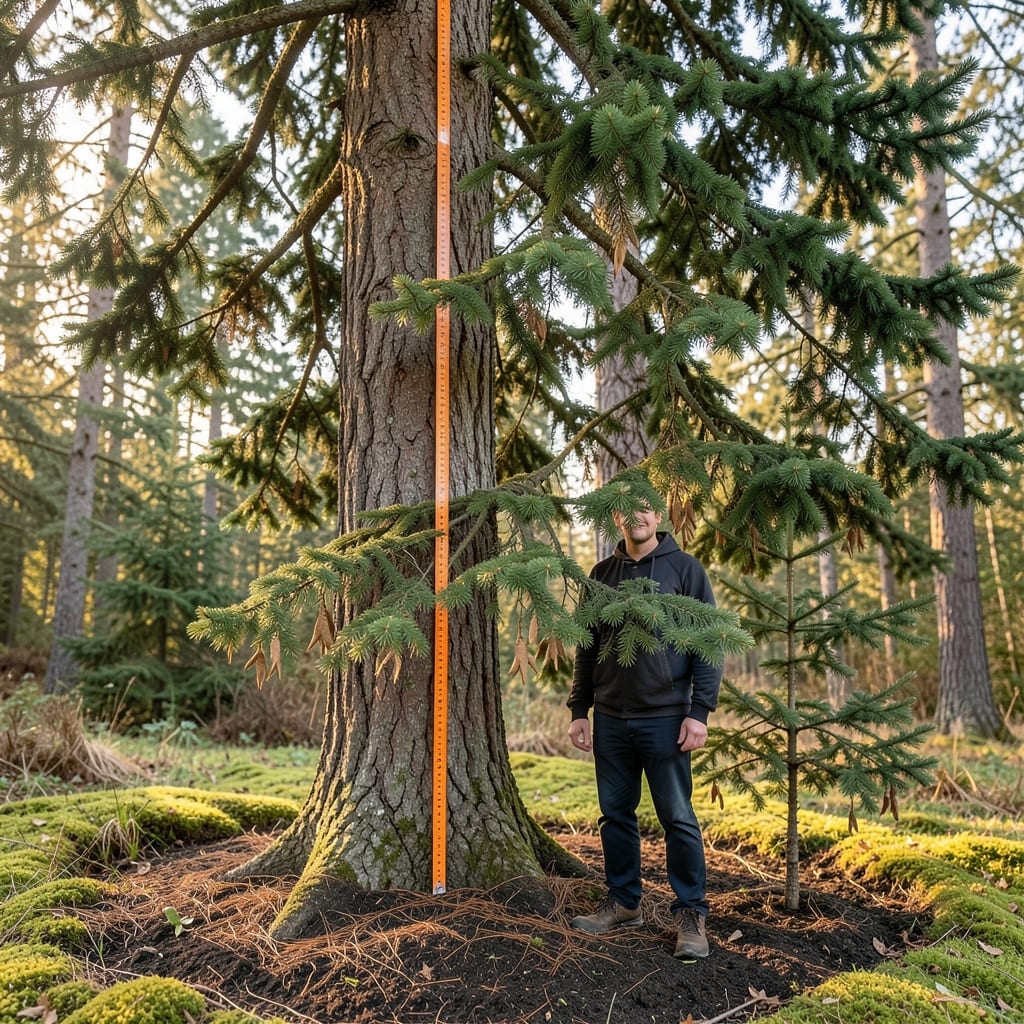
If you’ve ever wondered how tall can Douglas Fir grow, the answer might surprise you—these towering evergreens can stretch up to 300 feet in their natural habitat, making them one of North America’s most majestic giants. 🌲
But here’s the catch: their sky-high potential depends on more than just time. Genetics, climate, and even soil quality play a huge role in whether your backyard Douglas Fir will reach 150 feet or stay a modest 60 feet tall. Whether you’re dreaming of a forest-like canopy or just want a statement tree, understanding these factors is key.
From coastal varieties that grow faster to dwarf cultivars (though rare), each Douglas Fir has its own growth story. I’ll break down the varieties, growth rates, and how to give your tree the best shot at reaching its full height—without turning your yard into a forest.
Ready to learn how to nurture a Douglas Fir that’ll make your neighbors green with envy? Let’s dive into the science behind these sky-scraping trees and how you can encourage their growth—no matter your space.


Douglas Fir height by variety: from dwarf cultivars to giant forest titans
Douglas firs (Pseudotsuga menziesii) are nature’s skyscrapers, with some varieties stretching toward the sky like Pacific Northwest cathedrals. Their mature height varies wildly—from compact ornamental types to 300-foot forest giants. The difference? Genetics, location, and growing conditions. Let’s break down the extremes and everything in between.
For most gardeners, the standard Douglas fir (Pseudotsuga menziesii var. menziesii) is the benchmark. In ideal conditions, these trees can reach 200–300 feet tall, with trunks wider than a two-car garage. But not all Douglas firs are created equal—some stay humble, while others reach for the heavens.
🌲 Comparison Table: Douglas Fir Height by Variety
| Variety | Mature Height | Growth Rate (First 20 Years) | Best For |
|---|---|---|---|
| Coastal Douglas Fir (P. menziesii var. menziesii) | 200–300 ft | 3–5 ft/year | Large estates, forests |
| Interior Douglas Fir (P. menziesii var. glauca) | 120–180 ft | 2–4 ft/year | Urban landscapes, parks |
| 'Glauca' (Blue Douglas Fir) | 40–60 ft | 1–2 ft/year | Small gardens, containers |
| 'Wissahickon' (Dwarf) | 15–25 ft | 6–12 in/year | Bonsai, rock gardens |
| 'Howardii' (Columnar) | 30–50 ft | 1–2 ft/year | Narrow spaces, hedges |
The coastal Douglas fir is the undisputed height champion, thriving in the mild, moist climates of the Pacific Northwest. These trees grow 3–5 feet per year in their youth, fueled by abundant rainfall and rich volcanic soils. The interior Douglas fir, meanwhile, is hardier but slightly shorter, adapting to drier inland conditions.
For smaller spaces, 'Glauca' and 'Wissahickon' are game-changers. The blue-tinged 'Glauca' stays under 60 feet while adding color, while 'Wissahickon' is perfect for bonsai enthusiasts who want a miniature version of the mighty fir. Even these dwarf varieties can live for centuries, just in a more manageable size.
If you’re planting a Douglas fir in your yard, spacing is critical. A coastal giant needs at least 50 feet of clearance from structures, while a 'Glauca' can thrive in a 20-foot radius. Always check local regulations—some cities restrict planting tall trees near power lines or sidewalks.
One surprising fact: Douglas firs grow faster in their first 50 years than they do in their second century. After hitting 100 feet, growth slows dramatically, often adding just 1–2 feet per year. This is why old-growth forests have trees that seem to stretch forever—it takes centuries to reach their full potential.
Before planting, research your local climate zone and soil type. A coastal fir in Arizona? Not ideal. But a 'Glauca' in a Zone 6 garden? Perfect. Match the variety to your space and conditions for the best results.
🌲
Site conditions that skyrocket (or stunt) Douglas Fir growth
Your Douglas fir’s height isn’t just about genetics—it’s a climate-soil-location trifecta. While coastal varieties might hit 300 feet in the Pacific Northwest, the same tree in a dry inland yard could max out at 100 feet. The difference? Site conditions that either fuel or stifle growth. Let’s unpack what makes these trees reach for the sky—or stay stunted.
First, moisture is everything. Douglas firs thrive in high-humidity zones like Oregon’s coast, where annual rainfall exceeds 100 inches. In drier climates (think Zone 6 inland), growth slows dramatically—expect 30–50% less height than coastal counterparts. Even well-established trees need consistent soil moisture, especially in their first 10–15 years.
⚠️ Warning: Urban Planting Pitfalls
Urban yards often have compacted, nutrient-poor soil from foot traffic and construction. Douglas firs hate waterlogged roots but also struggle in clay-heavy or rocky soil. Amend with organic matter (compost, leaf mold) before planting to improve drainage and root expansion.
✅ Do: Test soil pH (ideal: 5.0–7.0); add sand or perlite if drainage is poor.
❌ Don’t: Plant near sidewalks or driveways—root competition will stunt height growth.
Sunlight plays a surprisingly minor role—Douglas firs tolerate partial shade but grow best with 4–6 hours of direct sun. The real height boost comes from elevation and microclimates. Trees in mountainous regions (like the Cascade Range) grow slower due to cooler temps, but their wood density increases, making them taller and straighter over time. Meanwhile, lowland firs near rivers or coasts grow faster but may develop weaker trunks.
One often-overlooked factor? Wind exposure. Coastal Douglas firs are wind-pollinated and develop thicker bark to withstand gales, which can increase height by 20–30% by encouraging upward growth. In sheltered yards, trees grow wider but may lag in height. If you’re planting in a windy area, stake young saplings to prevent top-heavy bending, which can reduce mature height by 10–20 feet.
For urban gardeners, container growing is an option—but with limits. While 'Glauca' or 'Howardii' can thrive in large pots (20+ gallons), they’ll never reach their full height potential. Root-bound trees grow 30–50% slower and may develop girdling roots, which can kill the tree within 5–10 years. If you must container-grow, repot every 2–3 years and use well-draining mix with 50% organic matter.
Pro tip: Mulch strategically. A 3–4 inch layer of wood chips around the base retains moisture, suppresses weeds, and keeps roots cool—critical for fast growth in hot climates. But avoid piling mulch against the trunk; this can cause rot and reduce height by 15–20% over time.
🌲