
Trees
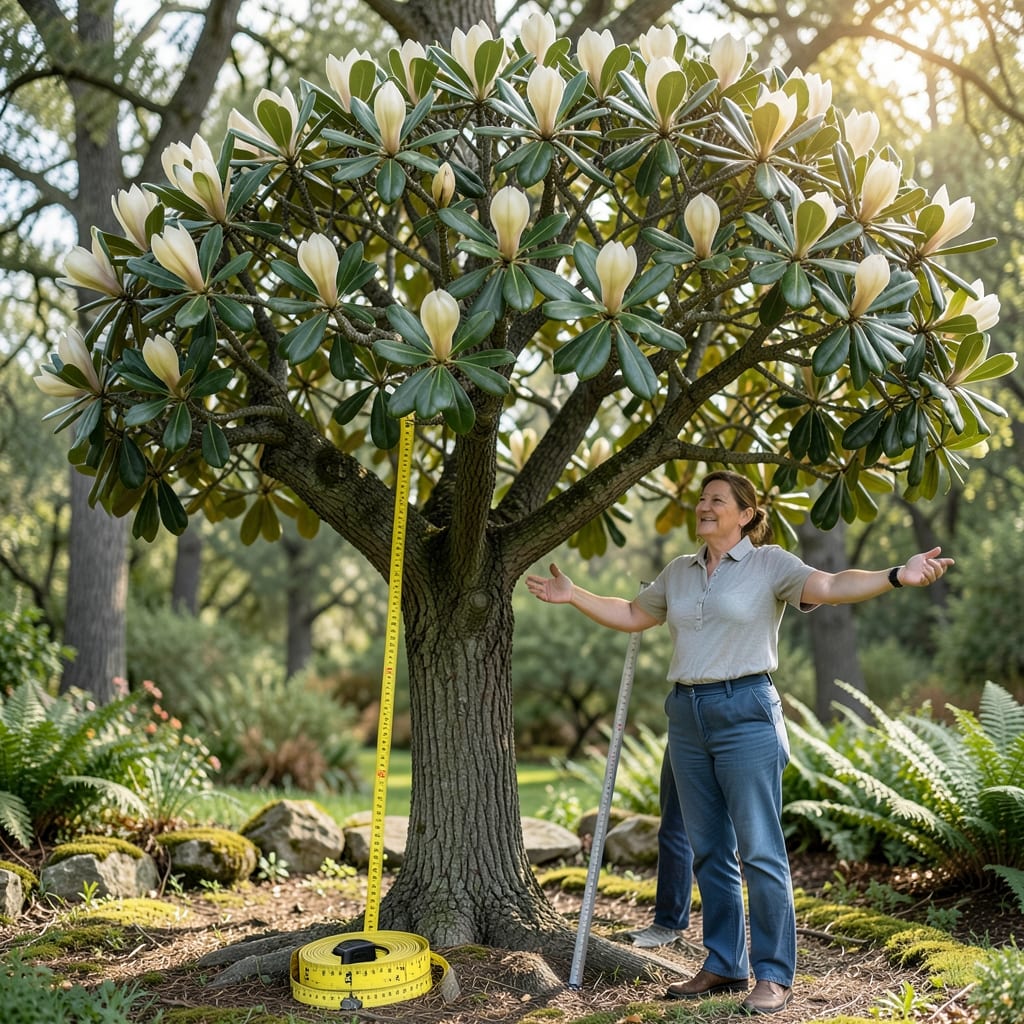
Magnolia tree height by species: from dwarf varieties to 100-Foot giants
Magnolias are nature’s architectural marvels, with some varieties reaching heights that dwarf even the tallest backyard fences. The Southern magnolia (Magnolia grandiflora), for example, can soar to 60–80 feet—taller than a 10-story building—while others stay compact enough for containers. Their mature height depends entirely on the species, with some growing three times faster than others in ideal conditions.
If you’re planning your landscape, knowing these height ranges will help you choose the perfect magnolia for your space. Some species are perfect for urban gardens, while others belong in sprawling estates. Let’s explore the spectrum from dwarf varieties under 10 feet to giants that dominate the skyline.
🌱 Key Takeaway: Evergreen magnolias (Magnolia grandiflora, Magnolia virginiana) tend to be taller, while deciduous types (Magnolia stellata, Magnolia kobus) often stay smaller. Always check the species tag when buying!
| Species | Type | Mature Height | Growth Rate | Best For |
|---|---|---|---|---|
| Magnolia grandiflora | Evergreen | 60–80 ft | Slow to moderate | Large estates, privacy screens |
| Magnolia stellata | Deciduous | 15–25 ft | Moderate | Small yards, containers |
| Magnolia 'Little Gem' | Evergreen (dwarf) | 20–25 ft | Slow | Urban gardens, small spaces |
| Magnolia virginiana | Evergreen | 40–60 ft | Moderate | Swampy areas, coastal gardens |
| Magnolia kobus | Deciduous | 30–50 ft | Moderate | Woodland gardens, parks |
| Magnolia 'Black Tulip' | Deciduous (dwarf) | 8–12 ft | Slow | Patios, containers, small yards |
| Magnolia denudata | Deciduous | 20–30 ft | Moderate | Traditional gardens, borders |
| Magnolia 'Jane' | Deciduous (semi-dwarf) | 15–20 ft | Slow | Foundation planting, small lawns |
The Southern magnolia (Magnolia grandiflora) is the undisputed champion of height, often exceeding 80 feet in ideal conditions. These trees can live for centuries, with some historic specimens in the U.S. South reaching 100+ feet. Their broad, glossy leaves and fragrant white blooms make them a staple in grand estates, but their size requires ample space—at least 30 feet from structures.
On the opposite end of the spectrum, dwarf magnolias like Magnolia 'Black Tulip' stay under 12 feet, perfect for patios or containers. These compact varieties bloom just as spectacularly but require regular pruning to maintain their shape. If you love magnolias but have limited space, these are your best bet!
Deciduous magnolias, like star magnolia (Magnolia stellata), typically stay between 15–25 feet, making them ideal for smaller yards. Their spring blooms appear before the leaves, creating a stunning display. For urban gardens, consider Magnolia 'Little Gem', a dwarf evergreen that tops out at 20–25 feet—small enough for tight spaces but still impressive.
🌿 Pro Tip: Always check the species tag when purchasing a magnolia. Many nurseries sell "magnolia" generically, but height and care needs vary dramatically between types!
Factors that determine how tall your Magnolia will grow
Your magnolia’s final height isn’t just luck—it’s a mix of genetics, environmental factors, and your care habits. While species set the baseline (like Magnolia grandiflora’s 60–80 ft potential), soil quality, sunlight exposure, and even pruning techniques can push a tree to its limits—or stunt its growth entirely. Let’s break down what truly controls how tall your magnolia becomes.
One of the biggest influences is soil drainage. Magnolias hate soggy roots, which can slow growth or even kill the tree. Amend heavy clay with compost or sand to create well-draining soil. In urban areas, compacted soil often restricts root expansion, limiting height. Test your soil’s pH too—magnolias prefer acidic soil (pH 5.0–6.5). If your soil is alkaline, add sulfur or peat moss to adjust it.
🌱 Key Insight: A magnolia in rich, loamy soil with proper drainage can grow 20–30% taller than one in poor soil. For example, a Magnolia stellata might reach 25 feet in ideal conditions but only 15 feet in compacted urban soil.
Growth Factors: Pros & Cons
✔ Full sun (6+ hrs/day) maximizes growth
✔ Evergreens like grandiflora thrive in bright light
✔ Deciduous types tolerate partial shade
✖ Roots compete with nearby plants
✖ Stunted growth if planted <15 ft from structures
✖ Urban planting often limits height potential
✔ Strategic pruning encourages upward growth
✔ Remove dead branches to redirect energy
✖ Over-pruning can weaken the tree
✔ Warm climates (Zones 7–10) support faster growth
✔ Cold snaps can damage young trees
✖ Wind exposure may stunt height
Don’t overlook the power of watering habits. Young magnolias need deep, consistent watering—especially in their first 3 years. Drought stress slows growth, while overwatering can suffocate roots. Aim for 1–1.5 inches of water weekly, adjusting for rain. Mulch around the base to retain moisture and regulate soil temperature, which can boost growth by 15–20%.
Your pruning approach also shapes height. If you want a taller tree, avoid topping (cutting the top flat), which stresses the tree and encourages weak growth. Instead, use selective pruning to remove crossing branches or deadwood. For dwarf varieties like Magnolia 'Black Tulip', light pruning after blooming keeps them compact while encouraging more flowers.
Finally, climate zone plays a role. Magnolias thrive in USDA Zones 4–9, but their growth rate varies. In Zone 7 or warmer, a Magnolia grandiflora may grow 2 feet per year in ideal conditions, while in Zone 5, growth slows to 6–12 inches annually. Always match your species to your local climate—some, like Magnolia stellata, handle colder zones better than others.
🌿 Remember: Even the tallest magnolias start small. Patience and proper care turn a 2-foot sapling into a 60-foot giant—or a 10-foot patio star, depending on your goals!