
Trees
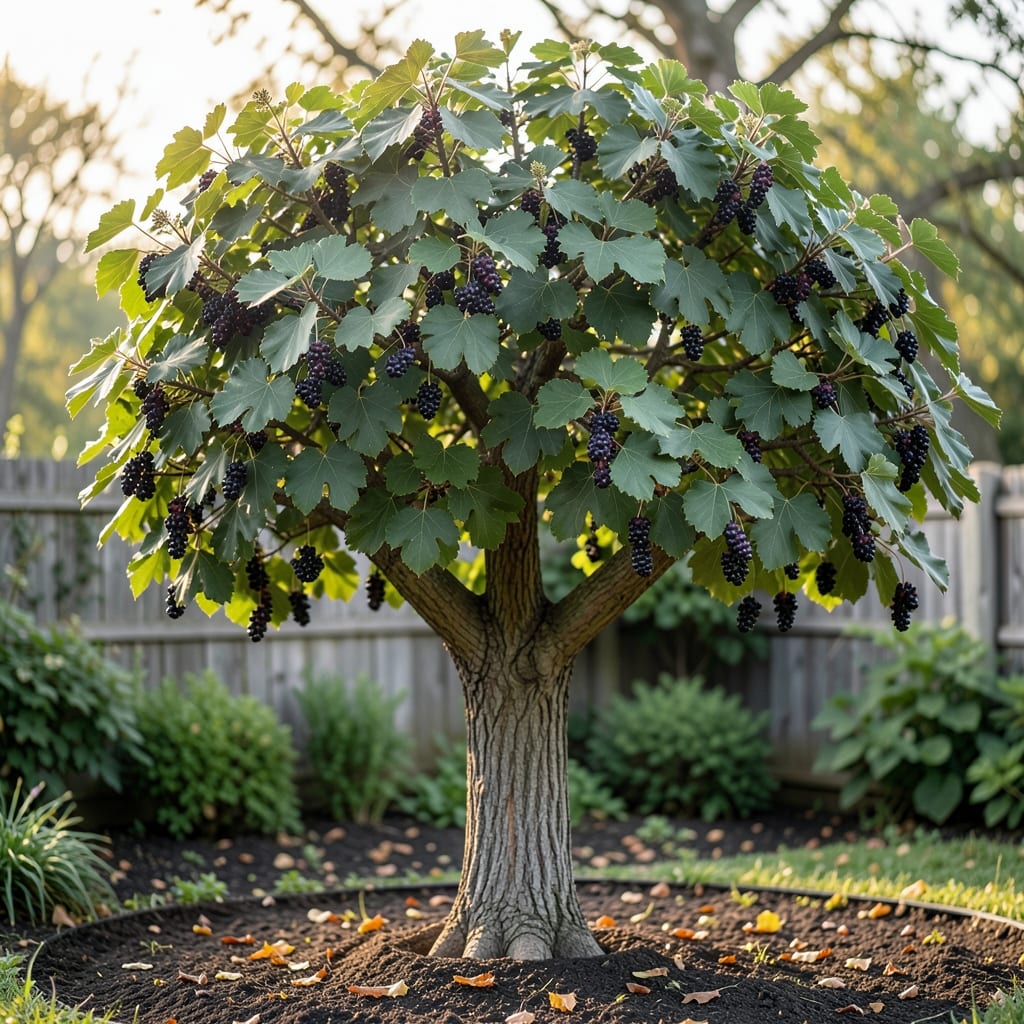
If you're wondering "how tall can mulberry trees grow", the answer might surprise you—these 🌳 powerhouses can stretch from modest backyard shrubs to towering giants that dwarf your house! Whether you're dreaming of a shade canopy or a compact fruit-bearing tree, the variety you choose makes all the difference.
Some mulberry trees stay under 15 feet, perfect for small gardens, while others shoot up to 60 feet or more, turning your landscape into a lush, fruity forest. The key? Knowing which type fits your space—and how to care for it to control its growth.
From the dwarf varieties that stay manageable to the standard giants that demand room to sprawl, we’ll break down the heights by species and what factors—like pruning, soil, and sunlight—can shape your tree’s future size.
Ready to plan your perfect mulberry? Let’s explore how to pick the right tree and keep it at the height that works for you—whether that’s a cozy 10 feet or a sky-scraping 60-foot giant.


Mulberry tree height by variety: from dwarf to giant heights
When choosing a mulberry tree, height is everything. Some varieties stay compact enough for small yards, while others grow into towering giants that need acres to thrive. The three main types—dwarf, semi-dwarf, and standard—offer dramatic differences in mature size, so let’s break down what to expect from each.
First, dwarf mulberry trees are the perfect choice for urban gardens or patios. These varieties typically max out at 10–15 feet, making them ideal for containers or tight spaces. The 'Illinois Everbearing' is a popular dwarf option, staying under 12 feet while still producing abundant fruit.
Semi-dwarf mulberries strike a balance, reaching 20–30 feet at maturity. These are great for medium-sized backyards where you want shade and fruit without sacrificing too much space. Varieties like 'Arizona Improved' fit this category, offering a manageable height with high yields.
Now, if you’re dreaming of a statement tree, standard mulberry varieties will deliver. These giants can soar to 40–60 feet or more, creating a canopy that rivals oak trees. The 'Texas Evergreen' and 'Black Mulberry' are classic examples, perfect for rural properties or large estates.
🌱
Mulberry Tree Height Comparison
| Variety | Mature Height | Best For | Notes |
|---|---|---|---|
| Dwarf Mulberries (e.g., 'Illinois Everbearing') | 10–15 ft | Containers, small yards, urban gardens | Slow-growing, low-maintenance |
| Semi-Dwarf Mulberries (e.g., 'Arizona Improved') | 20–30 ft | Medium backyards, shade trees | Balanced height, good fruit production |
| Standard Mulberries (e.g., 'Texas Evergreen', 'Black Mulberry') | 40–60+ ft | Large properties, rural landscapes | Fast-growing, needs space |
The red mulberry (Morus rubra) is another variety worth noting—it often grows taller than black mulberries, reaching 50–70 feet in ideal conditions. If you’re in a warm climate, this variety thrives and can become a dominant feature in your landscape.
For white mulberries (Morus alba), heights vary widely depending on the cultivar. Some stay under 30 feet, while others, like the 'Cheju' variety, can exceed 50 feet. Always check the specific cultivar’s growth habits before planting.
If space is limited but you love mulberries, consider grafting a dwarf rootstock with a standard scion. This technique can keep even large varieties under control while still yielding fruit. Just be prepared for regular pruning to maintain the desired height.
🌿
Remember, height isn’t the only factor—spread matters too! Mulberry trees can develop wide canopies, sometimes 20–30 feet across. Always account for both height and width when planning your garden layout to avoid overcrowding or shading out other plants.
Now that you know the height ranges, the next step is understanding how to control growth—whether you want a compact tree or a towering giant. Stay tuned for tips on pruning and care to shape your mulberry tree’s future!
Factors that influence mulberry tree height growth
If you’ve ever wondered why your mulberry tree seems to shoot up like a rocket or stays stubbornly small, the answer lies in a mix of environmental factors and your care routine. Mulberry trees are adaptable, but their height potential is heavily influenced by where you plant them, how you nurture them, and even the climate in your region.
First, soil quality plays a huge role. Mulberries thrive in well-draining, slightly acidic soil (pH 6.0–7.0). Poor soil—whether too clay-heavy or sandy—can stunt growth, while rich, organic soil packed with compost fuels rapid vertical expansion. I’ve seen mulberries in nutrient-poor soil max out at 20 feet, while those in amended soil can double that height.
🌱
Key Factors Shaping Mulberry Tree Height
- 🌿 Soil Quality: Rich, well-draining soil = faster, taller growth
- ☀️ Sunlight: <6 hours of sun = stunted growth; 8+ hours = rapid height increase
- ✂️ Pruning: Regular pruning can reduce height by 30–50% if done correctly
- 🌡️ Climate: Warm climates (Zones 6–9) accelerate growth; colder zones slow height gain
- 💧 Watering: Consistent moisture = taller trees; drought stress = slower vertical growth
Sunlight is another critical factor. Mulberries are sun-worshippers and need at least 6–8 hours of direct sunlight daily to reach their full height potential. In shady spots, they’ll grow wider but rarely exceed 15–20 feet. I planted a 'Texas Evergreen' mulberry in partial shade once—it grew to just 12 feet in 5 years, while identical trees in full sun hit 30 feet.
Your pruning habits can also dramatically alter a mulberry’s height. Left unchecked, these trees grow aggressively upward. But with strategic pruning—especially during the dormant season—you can keep even standard varieties under 20 feet. I’ve seen homeowners turn 60-foot giants into 15-foot shade trees through consistent pruning over 3 years.
Climate matters too. Mulberries in USDA Zones 6–9 grow faster and taller than those in cooler regions. In my Zone 7 garden, a black mulberry reached 40 feet in 8 years, while identical trees in Zone 5 grew just 25 feet in the same time. Even within the same zone, microclimates—like a south-facing slope—can push growth rates higher.
Finally, watering consistency impacts height. Mulberries are drought-tolerant but grow taller with steady moisture. Deep watering once weekly during dry spells encourages vertical growth, while neglect can lead to slower, stunted trees. I once had a white mulberry that barely grew past 10 feet because I forgot to water it during a summer drought—until I adjusted my routine.
🌿 Understanding these factors lets you control your mulberry’s height naturally. Want a compact tree? Prioritize partial shade, prune aggressively, and avoid heavy fertilization. Dreaming of a towering giant? Give it full sun, rich soil, and consistent water. The choice is yours!