
Size
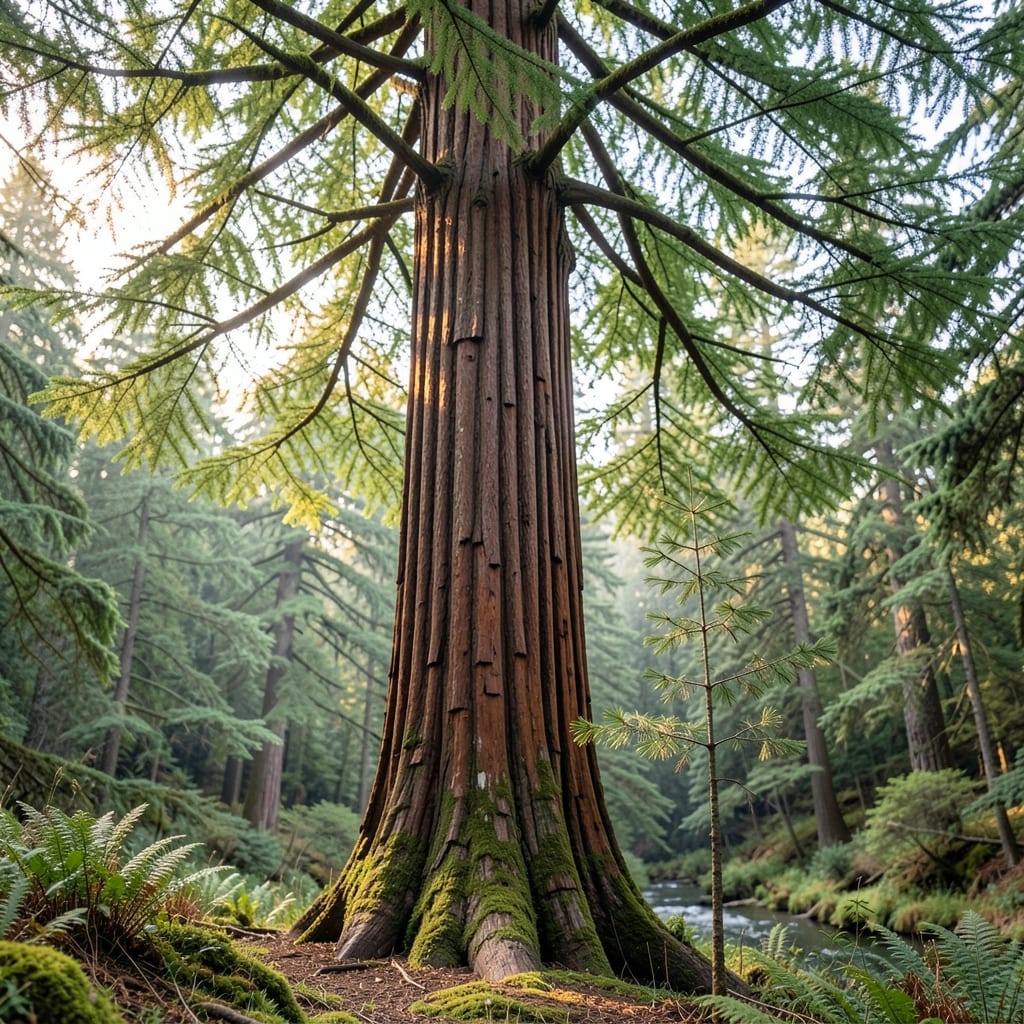
When you stand beneath a towering redwood 🌲, it’s impossible not to wonder: how tall can redwood trees grow? The answer will blow your mind—these ancient giants don’t just reach for the sky; they dominate it, stretching higher than a 30-story building in some cases.
Imagine a tree so massive that its canopy blocks out sunlight for acres around it. Redwoods aren’t just tall—they’re architectural marvels of nature, with roots that anchor them like skyscrapers and leaves that thrive in coastal fog. But their growth isn’t just about height; it’s a perfect storm of genetics, climate, and time.
If you’ve ever dreamed of growing one in your backyard, I’ll show you why that’s a near-impossible (but fascinating) challenge. We’ll break down the science behind their vertical dominance—from the foggy California coasts where they thrive to the undisputed champion, Hyperion, standing at a staggering 380 feet.
Ready to discover how these trees defy gravity—and what it takes to cultivate them? Let’s dive into the secrets of the world’s tallest trees, and why they’re more than just giants of the forest.


Redwood tree height records: the tallest trees on Earth and how they measure up
Redwoods hold the title for the tallest trees on Earth, with two species competing for the crown: coast redwoods (Sequoia sempervirens) and giant sequoias (Sequoiadendron giganteum). While both are giants, they specialize in different ways—coast redwoods focus on height, while giant sequoias prioritize volume and mass. The records for these trees are nothing short of extraordinary.
The tallest known organism on the planet is a coast redwood named Hyperion, standing at a staggering 380 feet (115.8 meters). To put that into perspective, that’s taller than a 30-story building or nearly the length of a football field laid horizontally. This record was confirmed in 2006 by a team of researchers who used advanced laser measurement technology to avoid disturbing the tree’s delicate ecosystem.
But Hyperion isn’t alone. The second-tallest tree, also a coast redwood named Helios, reaches 379.7 feet (115.7 meters), while the third-tallest, Icarus, stands at 374.3 feet (114.1 meters). These trees are all located in California’s Redwood National and State Parks, where the foggy, coastal climate creates the perfect conditions for their growth.
Giant sequoias, on the other hand, don’t grow as tall as coast redwoods, but they make up for it in width and bulk. The largest giant sequoia by volume is the General Sherman Tree, standing at 275 feet (83.8 meters) tall but with a volume of 52,500 cubic feet—enough to fill a six-story building. This tree is located in California’s Sequoia National Park and is a testament to the sheer scale of these ancient giants.
| Tree Type | Record Holder | Height (ft) | Location | Notable Fact |
|---|---|---|---|---|
| Coast Redwood | Hyperion | 380 | Redwood National Park, CA | Tallest known organism on Earth |
| Coast Redwood | Helios | 379.7 | Redwood National Park, CA | Second-tallest tree |
| Giant Sequoia | General Sherman | 275 | Sequoia National Park, CA | Largest tree by volume |
| Coast Redwood | Icarus | 374.3 | Redwood National Park, CA | Third-tallest tree |
Measuring these trees isn’t just about climbing them—it’s a delicate science. Researchers use laser rangefinders and climbing spikes to reach the treetops safely. The process is meticulous because disturbing these trees can harm their fragile ecosystems. For example, the location of Hyperion is kept secret to protect it from vandalism and over-tourism.
The age of these trees also plays a role in their height. Coast redwoods can live for 2,000 years or more, while giant sequoias can reach 3,000 years old. This longevity allows them to grow slowly but steadily, reaching their impressive heights over centuries. Their thick, fire-resistant bark and dense wood also contribute to their ability to survive and thrive in their native habitats.
If you’ve ever visited a redwood forest, you’ve likely felt the sheer scale of these trees. Standing beneath them is a humbling experience, as they tower above everything else in the landscape. Their height isn’t just a matter of genetics—it’s a combination of perfect environmental conditions, time, and resilience. Whether you’re a gardener dreaming of growing one or simply an admirer of nature’s wonders, understanding their height records is a step toward appreciating their true magnificence.
Next, we’ll explore what makes redwoods grow so tall in the first place—from their unique root systems to the foggy coastal climates that fuel their vertical growth. Stay tuned to uncover the secrets behind these ancient giants.
What makes redwood trees grow so tall? The science of their vertical dominance
Redwood trees don’t just grow tall—they defy gravity with their unmatched vertical dominance. Their ability to reach 380 feet stems from a perfect blend of biology and environment. Unlike most trees, redwoods thrive in coastal foggy climates, where mist provides constant hydration without the need for deep roots.
Their thick, fire-resistant bark protects them from wildfires, allowing them to live for millennia. This resilience, combined with rapid early growth, gives them a head start in the race for the sky. Even their root systems are uniquely adapted—spreading wide but shallow to absorb moisture from the fog-laden air.
🌲
Their tallest species, the coast redwood (Sequoia sempervirens), grows faster than any other tree in the world during its first decade. In ideal conditions, they can add 3-4 feet per year in height, though growth slows as they mature. This early burst of energy is critical for outpacing competitors and securing their place as the tallest trees on Earth.
Another key factor is their photosynthetic efficiency. Redwoods can photosynthesize even in low light, thanks to their needle-like leaves that minimize water loss. This adaptation allows them to thrive in the shady understories of their own forests while still reaching for the sunlight above.
If you’ve ever wondered why redwoods don’t topple over despite their height, the answer lies in their flexible trunks. Their wood is lighter and more flexible than other giant trees, like oak or maple, allowing them to bend without breaking in high winds. This resilience ensures they can withstand storms that would snap lesser trees.
For gardeners dreaming of growing redwoods, understanding these factors is crucial. While their natural habitat is limited to coastal California, their adaptations offer valuable lessons in vertical growth strategies that can inspire even smaller trees in your garden.