
Size
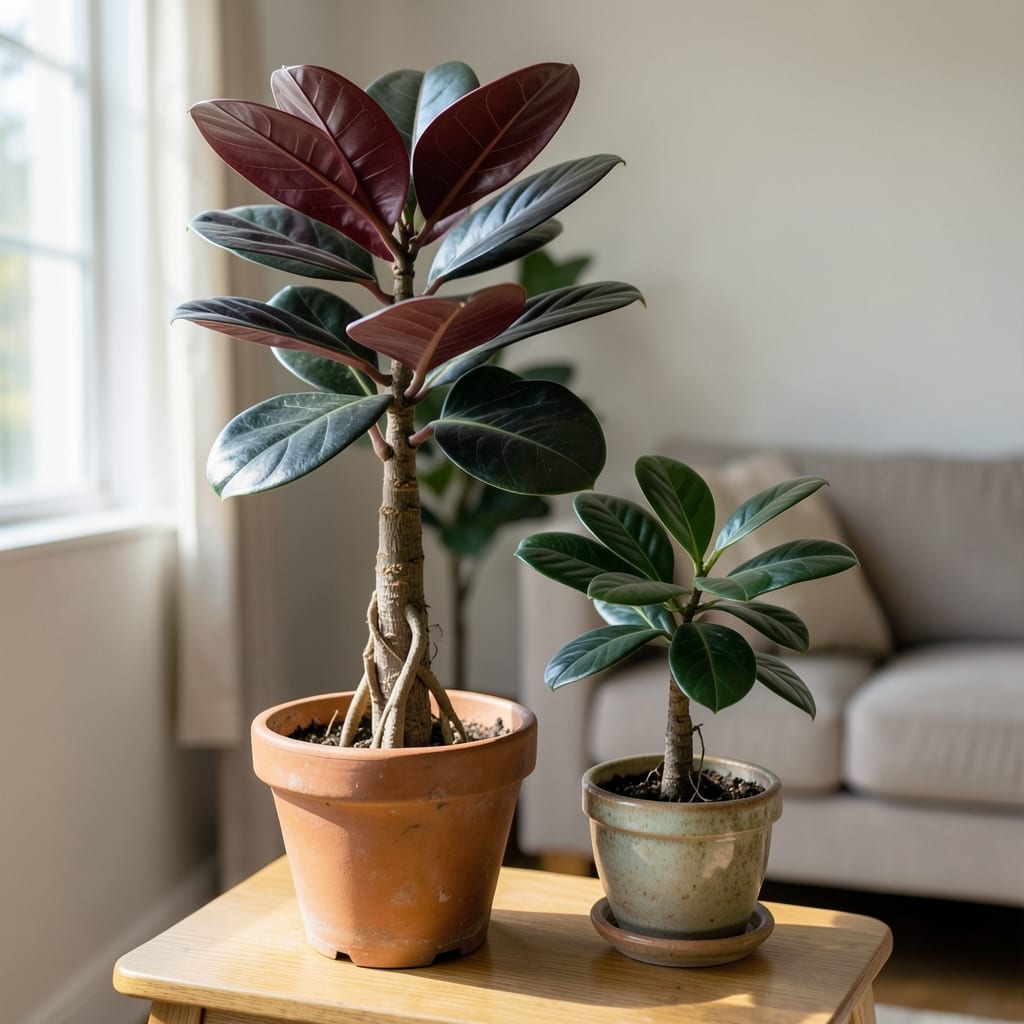
If you’ve ever wondered how tall can rubber plants grow—or whether your leafy green friend 🌿 will soon need a ladder to reach—you’re not alone. These striking plants are famous for their dramatic height swings, from compact tabletop companions to towering indoor trees that steal the show.
The answer depends entirely on the variety and care you provide. Some rubber plants stay modest at just 3 feet, perfect for shelves or desks, while others stretch toward 10 feet or more when given the right conditions. Even in USDA Zone 6, where many gardeners grow them, their potential height varies wildly.
But here’s the game-changer: with a few simple adjustments—like pruning, light tweaks, or choosing the right pot—you can steer your rubber plant’s growth in any direction. Whether you want a bushy, dwarf-sized plant or a lush, floor-filling statement piece, the control is in your hands.
Let’s break down the heights by variety, the secrets to managing growth, and how to keep your rubber plant thriving—no matter how tall (or short) you want it to be.


Rubber plant height by variety: from dwarf to giant sizes
Your rubber plant (Ficus elastica) might seem like a modest houseplant now, but some varieties can grow tall enough to rival small trees—up to 10 feet indoors or even taller outdoors with ideal conditions. The key difference lies in the variety you choose, as well as how you care for it. Whether you prefer a compact tabletop plant or a statement-making floor specimen, there’s a rubber plant height range to match your space.
Rubber plants are naturally fast growers, with some varieties like the Robusta reaching their mature height in just 5-7 years under perfect conditions. Others, like the variegated varieties, grow slower but can still reach impressive heights given enough space and light. Let’s explore the height ranges for the most popular rubber plant varieties so you can pick the perfect fit for your home.
🌱 Visual Guide: Below is a quick reference for how tall each rubber plant variety can grow, along with their growth habits and care needs to maximize their potential.
| Variety | Mature Height (Indoors) | Growth Rate | Key Features |
|---|---|---|---|
| Robusta | 6-10 ft | Fast | Dark green glossy leaves, thick stems |
| Tineke | 3-6 ft | Moderate | Variegated pink/cream edges, slower growth |
| Burgundy | 4-8 ft | Moderate | Deep burgundy leaves, compact growth habit |
| White Princess | 3-5 ft | Slow | Creamy white variegation, delicate appearance |
| Black Prince | 5-9 ft | Fast | Near-black leaves, bold statement plant |
The Robusta variety is the tallest-growing rubber plant, often reaching 10 feet indoors if given enough time and space. This makes it a fantastic choice for large rooms or even outdoor gardens in warmer climates. If you’re working with limited vertical space, the Tineke or White Princess varieties are excellent picks, typically staying between 3-6 feet tall.
Outdoors, rubber plants can grow even taller—sometimes exceeding 10 feet—especially in tropical or subtropical climates where they’re not constrained by pot size. However, most indoor growers will find their rubber plants maxing out around 6-8 feet due to container limitations and controlled light conditions. The Black Prince variety, with its striking dark foliage, is another fast grower that can reach impressive heights quickly.
If you’re growing your rubber plant outdoors in USDA Zone 10 or higher, expect it to grow much faster and taller than indoor specimens. In these climates, rubber plants can thrive as small trees, with some reaching 15 feet or more over time. Even in containers, they’ll grow taller if given enough sunlight and space to stretch.
One common misconception is that all rubber plants grow equally tall. In reality, variegated varieties like Tineke or White Princess often grow slower and stay shorter because their unique leaf patterns require more energy to produce. This doesn’t mean they’re stunted—it’s simply part of their natural growth pattern. If you want a compact rubber plant, these varieties are ideal for smaller spaces.
For those who love the idea of a tall rubber plant but have limited ceiling height, consider pruning regularly to control its size. Even the fastest-growing varieties can be kept at a manageable height with consistent topping techniques and propagation. This way, you can enjoy the beauty of a rubber plant without worrying about it outgrowing your space.
🌿 Whether you’re dreaming of a floor-to-ceiling green wall or a small tabletop plant, choosing the right rubber plant variety is the first step to achieving your desired height. With the right care, your rubber plant can become the perfect size for your home—no matter how big or small your space may be.
How to control rubber plant height: pruning and growth hacks
If you’ve ever watched your rubber plant (Ficus elastica) stretch toward the ceiling like a jungle vine, you know how quickly they can outgrow their space. The good news? With a few simple pruning techniques and growth hacks, you can shape your rubber plant to fit your home—whether you want a bushy tabletop plant or a tall floor specimen. The key is understanding how to manipulate its natural growth habits without harming the plant.
Rubber plants grow fastest in bright indirect light and with regular watering, but even the most well-cared-for plant can become unruly. The secret to controlling height lies in pruning, light management, and container size. Let’s dive into the most effective methods to keep your rubber plant at your desired height—no matter how tall (or short) you want it to be.
🌱 Pro Tip: Rubber plants respond well to pruning, and cutting back the stems encourages bushier growth and prevents leggy, tall stems. Here’s a step-by-step guide to mastering the art of pruning and controlling your plant’s height.
-
Step 1: Choose the Right Time to Prune
Prune your rubber plant in spring or early summer when it’s actively growing. Avoid pruning in fall or winter, as the plant enters a dormant phase and won’t recover as quickly. -
Step 2: Use Clean, Sharp Tools
Always use sterilized pruning shears or scissors to make clean cuts. Dirty tools can introduce bacterial infections or fungus, which rubber plants are susceptible to. -
Step 3: Cut Just Above a Leaf Node
When pruning to control height, cut the stem just above a leaf node (the bump where leaves grow). This encourages new growth to sprout from that node, creating a fuller, bushier plant. -
Step 4: Propagate Cuttings for New Plants
Don’t throw away your pruned cuttings! Place them in water or well-draining soil to root and grow into new rubber plants. This is a great way to expand your collection or share with friends. -
Step 5: Adjust Light Exposure
If your rubber plant is growing too tall and leggy, move it to a brighter spot (but avoid direct sunlight). This slows vertical growth and encourages compact, bushier growth. -
Step 6: Repot into a Smaller Container
Rubber plants grow taller when root-bound. If you want to stunt its growth, repot it into a smaller container to limit its root space. This forces the plant to focus on leaf growth rather than stretching upward. -
Step 7: Fertilize Lightly for Controlled Growth
Use a balanced fertilizer (like 10-10-10) sparingly to avoid encouraging rapid growth. Over-fertilizing can lead to long, leggy stems and weaker branches.
One of the most common mistakes I see is over-pruning in one session, which can stress the plant. Instead, prune gradually—cut back just a few inches at a time—to encourage steady, controlled growth. If you’re aiming for a taller rubber plant, avoid heavy pruning and let it stretch naturally toward a south-facing window or grow light.
For those with variegated varieties like Tineke or White Princess, pruning is even more critical. These plants grow slower naturally, but pruning helps maintain their compact shape and vibrant foliage. A little extra care goes a long way in keeping them looking their best without sacrificing their unique variegation.
🪴 Whether you’re pruning to keep your rubber plant short or encouraging it to grow taller, the key is consistency. With the right techniques, you can shape your rubber plant to fit your space perfectly—no matter how tall (or short) you want it to be.