
Trees
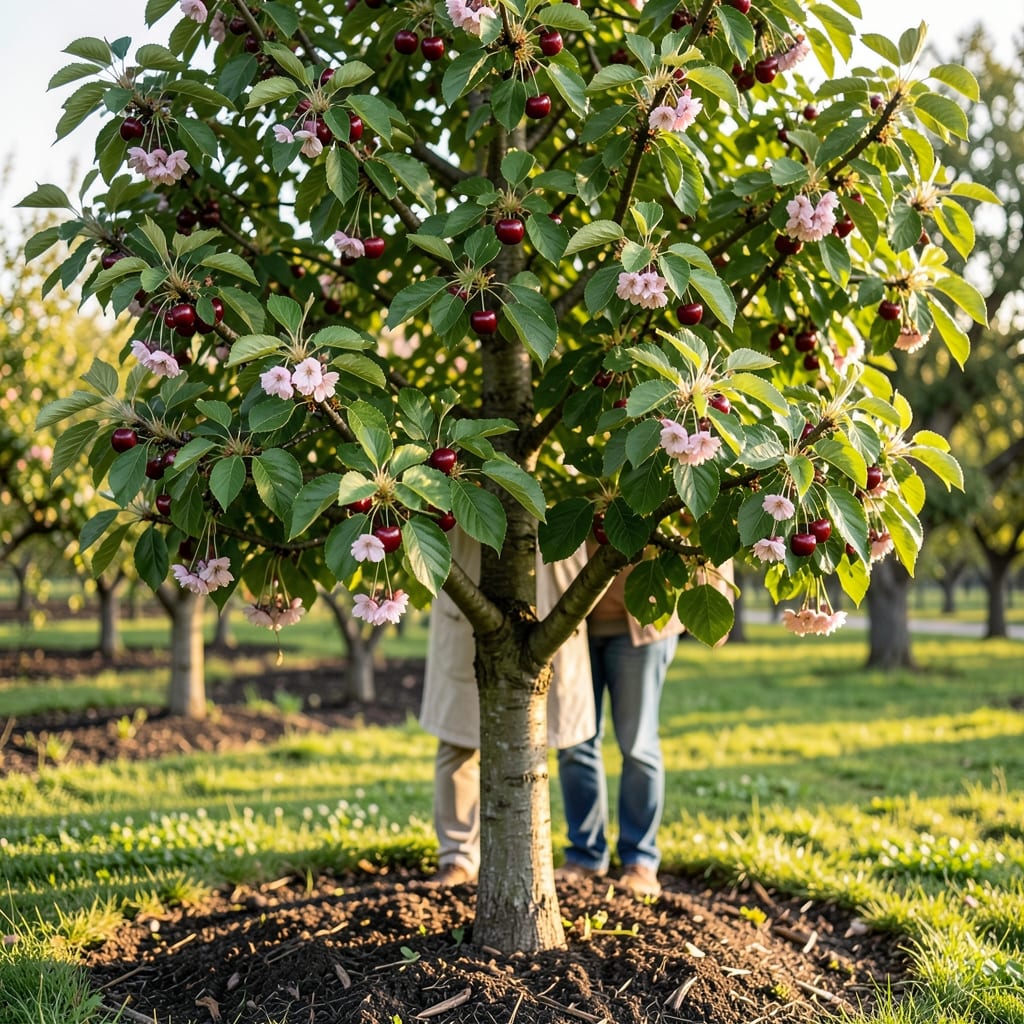
Wondering how tall cherry trees grow before planting one in your yard? The answer might surprise you—these stunning 🍒 trees can range from compact 8-foot dwarfs to towering 60-foot giants, depending on the variety you choose.
If you're working with limited space, dwarf cherry trees are perfect for containers or small gardens, while standard varieties need room to spread their branches wide. But here's the catch: even "small" trees can outgrow expectations if not properly pruned or planted in the right conditions.
In this guide, I'll break down the mature heights of popular cherry types—from sweet and sour fruit varieties to ornamental showstoppers—and share the key factors that influence their growth, like soil quality and climate.
Whether you're dreaming of a backyard orchard or just want a pretty shade tree, you'll learn how to pick the perfect cherry tree for your space and long-term vision. Let's get started!


Cherry tree height guide: mature sizes by variety and type
If you're wondering how tall cherry trees grow, the answer depends entirely on the variety you choose. Cherry trees aren't one-size-fits-all—some stay compact enough for small yards, while others become towering backyard giants. The key is understanding the three main height categories: dwarf, semi-dwarf, and standard varieties, each with distinct mature sizes and growth habits.
For fruit-bearing cherries, sweet and sour varieties typically fall into standard or semi-dwarf categories, while ornamental cherries often include both dwarf and weeping forms. The right choice affects everything from pruning needs to yard spacing and even fruit production. Let's explore the height ranges you can expect from popular varieties and what makes each unique.
| Variety Type | Mature Height | Growth Rate | Best For |
|---|---|---|---|
| Dwarf Sweet Cherries (e.g., 'Stella', 'Compact Stella') | 8-12 ft | Slow to moderate | Containers, small yards, urban gardens |
| Semi-Dwarf Sweet Cherries (e.g., 'Lapins', 'Van') | 12-18 ft | Moderate | Backyard orchards, medium spaces |
| Standard Sweet Cherries (e.g., 'Bing', 'Rainier') | 20-30 ft | Fast | Large properties, rural orchards |
| Dwarf Sour Cherries (e.g., 'Montmorency') | 8-10 ft | Slow | Containers, small-space gardening |
| Standard Sour Cherries (e.g., 'Meteor', 'Balaton') | 15-25 ft | Moderate | Traditional orchards, larger yards |
| Ornamental Cherries (e.g., 'Kwanzan', 'Okame') | 15-30 ft | Fast | Landscaping, shade trees, floral displays |
| Weeping Cherries (e.g., 'Pendula', 'Amanogawa') | 15-25 ft (spreading 15-20 ft wide) | Moderate | Japanese gardens, patio trees, focal points |
Ornamental cherry trees often steal the show with their stunning spring blossoms and vibrant fall foliage. Varieties like 'Kwanzan' (20-30 ft) and 'Autumn Brilliance' (15-25 ft) grow taller than most fruit-bearing types, making them perfect for landscape focal points. Their height also means they provide excellent shade, but be prepared for regular pruning maintenance to keep them looking their best.
Weeping cherry trees are a unique choice if you want a dramatic, cascading silhouette rather than a traditional upright form. While they may not grow as tall as standard varieties (typically 15-25 ft), their spreading branches can reach 15-20 feet wide, creating a stunning umbrella effect. These are ideal for patio gardens or as centerpiece trees in larger landscapes.
One common misconception is that all cherry trees grow to similar heights. In reality, the difference between a dwarf sweet cherry (8-12 ft) and a standard sour cherry (15-25 ft) is dramatic. This variation means you can grow cherries in containers on balconies or plant them as towering shade trees in rural settings—all while enjoying the same beautiful blooms and potential fruit harvest.
When planning your cherry tree's future height, also consider its spread. Even dwarf varieties can develop a canopy 6-10 feet wide, while standard trees may spread 20-30 feet. This means you'll need to account for both height and width when choosing a planting location, especially if
How to choose a cherry tree based on space and climate
Selecting the right cherry tree for your space starts with understanding your yard's available area and climate conditions. A 20-foot standard cherry tree planted in a 10-foot-wide space will quickly become a problem, while a dwarf variety might struggle in a windy, exposed location. Let's break down the key factors to consider before making your choice.
First, measure your planting area and account for both the tree's mature height and canopy spread. A standard cherry tree with a 25-foot height and 20-foot spread needs at least 30 feet of clear space in all directions. In contrast, a dwarf cherry with an 8-foot height and 6-foot spread can thrive in a 10-foot radius. Always plant at least 10-15 feet away from structures, fences, or other trees to prevent root competition and ensure proper airflow.
✅ Dwarf Varieties (8-12 ft)
- Pros: Fits containers, small yards, urban spaces
- Pros: Easier to prune and maintain
- Pros: Faster fruit production in smaller spaces
Best for: Balconies, patios, tight backyard corners
⚠️ Semi-Dwarf Varieties (12-18 ft)
- Pros: Balanced size for medium yards
- Cons: Needs more space than dwarfs
- Pros: Good fruit production without giant size
Best for: Backyard orchards, medium-sized properties
⚠️ Standard Varieties (20-60 ft)
- Pros: Maximum fruit production
- Cons: Requires large planting areas
- Cons: Needs regular pruning for safety
Best for: Rural properties, orchards, spacious yards
Climate plays a crucial role in cherry tree success. Most cherry varieties thrive in USDA Zones 5-8, but cold hardiness varies by type. Sweet cherries generally need warmer climates (Zones 6-8) and may suffer damage in colder winters, while sour cherries are more cold-tolerant (Zones 4-8). Ornamental cherries like 'Kwanzan' can handle Zone 5, making them ideal for northern gardens.
Sunlight requirements are non-negotiable—cherry trees need full sun (6+ hours daily) for optimal growth and fruit production. If your yard has partial shade, consider dwarf varieties or plant in the sunniest location possible. Poor sunlight leads to weak growth, fewer blossoms, and reduced fruit yields. Even ornamental cherries will produce sparser blooms without adequate light.
Pruning is another critical factor in managing height. Regular pruning can keep a standard cherry tree 20-30% shorter than its natural height, while aggressive pruning can transform it into a more manageable size. However, pruning too heavily can reduce fruit production, so balance is key. Always prune during late winter or early spring before new growth begins to minimize stress on the tree.
For urban gardeners with limited space, consider container-growing dwarf cherries. Choose large pots (at least 18 inches in diameter) with drainage holes and use a high-quality potting mix. Remember that even dwarf varieties need seasonal repotting every 2-3 years to prevent root-bound stress. With proper care, container-grown cherries can thrive for decades, providing fresh fruit and stunning blooms year after year.