
Trees
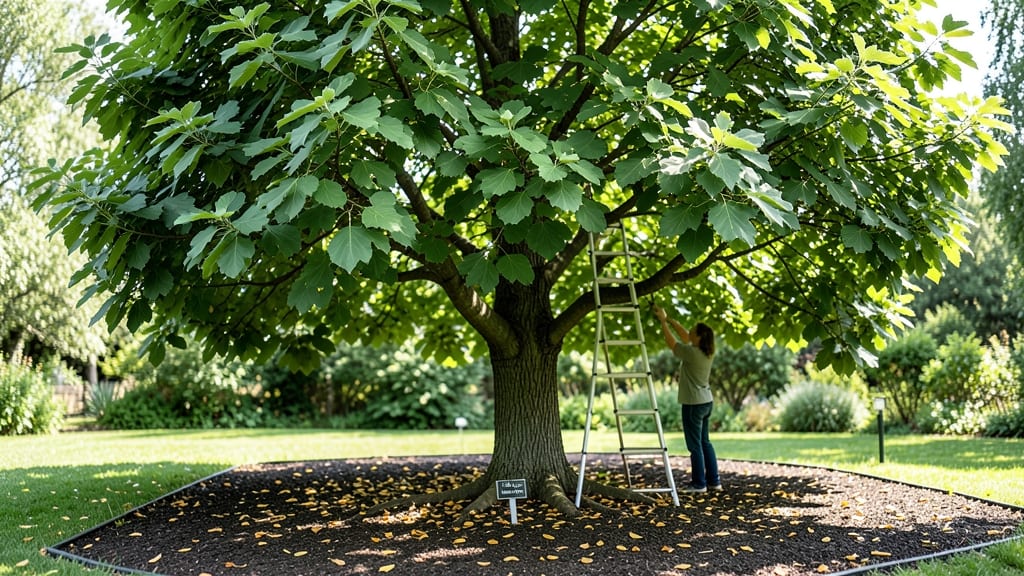
If you're wondering "how tall do linden trees grow", the answer might surprise you—these stately 🌳 giants can reach heights that dwarf most backyard spaces, with some varieties stretching over 100 feet at maturity.
But before you picture a linden tree towering over your home, it's worth noting that not all linden trees grow to the same height. Some compact varieties stay under 40 feet, making them perfect for smaller yards, while others grow into majestic shade providers for large landscapes.
In this guide, I'll break down the exact height ranges for the top 5 linden tree varieties, including growth rates and how to manage their size through proper planting and pruning techniques.
Whether you're planning a new shade tree or simply curious about these beautiful trees, you'll discover which linden varieties fit your space—and how to help them reach their full potential without overpowering your property.


Linden tree height by variety: exact mature sizes explained
Linden trees (genus Tilia) are nature's shade masters, but their mature heights vary dramatically depending on the species. From the compact Littleleaf Linden to the towering European Linden, choosing the right variety ensures your tree fits your space perfectly.
Let’s break down the exact height ranges for the top 5 varieties, including growth rates and ideal planting zones.
First, let’s clarify: height isn’t the only factor. Canopy spread, growth rate, and adaptability to your climate also matter. For example, the Amur Linden might be shorter but thrives in colder zones, while the American Linden grows faster but needs more space.
Below, we’ll compare their mature sizes and growth habits so you can pick the perfect match for your yard.
| Variety | Mature Height (ft) | Growth Rate (in/year) | Ideal USDA Zones | Best For |
|---|---|---|---|---|
| Littleleaf Linden (Tilia cordata) | 40–60 ft | 12–24 in | 4–8 | Small yards, urban planting |
| American Linden (Tilia americana) | 60–80 ft | 12–18 in | 3–8 | Large estates, parks |
| Hybrid Linden (Tilia × europaea) | 70–100 ft | 12–24 in | 4–8 | Shade trees, landscapes |
| Amur Linden (Tilia amurensis) | 30–50 ft | 6–12 in | 3–7 | Cold climates, small spaces |
| European Linden (Tilia platyphyllos) | 60–80 ft | 12–18 in | 4–8 | Traditional gardens, large properties |
Notice how the Littleleaf Linden tops out at 40–60 feet, making it ideal for suburban yards where space is limited. Meanwhile, the Hybrid Linden can reach 100 feet, rivaling oak trees—perfect for parks or estates.
If you’re in USDA Zone 3 or colder, the Amur Linden is your best bet for a hardy, shorter option.
Here’s a pro tip: Soil quality can influence height. Linden trees thrive in well-draining, slightly acidic soil (pH 6.0–7.0). Amend clay soil with compost to encourage faster, healthier growth. Over time, this can add 10–20% more height compared to poor soil conditions.
How fast do linden trees grow to full height?
If you're planning to plant a linden tree for shade or aesthetic appeal, understanding its growth rate is key. Linden trees grow at different speeds depending on the variety, but most reach 50-75% of their mature height within 10-15 years.
For example, a Littleleaf Linden might hit 30 feet in a decade, while a European Linden could take 15-20 years to reach 60 feet. Growth slows significantly after the first 20 years, focusing more on width than height.
One of the fastest-growing varieties is the Littleleaf Linden, which can add 12-24 inches per year in ideal conditions. This makes it a great choice if you want quicker shade or a statement tree.
On the other hand, European Linden grows at a steadier 12-18 inches per year, taking longer to reach its full majestic height. Soil quality, sunlight exposure, and proper watering can all speed up or slow down this process.
🌱
To maximize growth, plant your linden tree in well-drained soil with full sun exposure. Mulching around the base helps retain moisture and encourages root development, which supports faster vertical growth.
Avoid over-fertilizing, as too much nitrogen can lead to excessive leaf growth at the expense of height. Instead, focus on a balanced fertilizer like 10-10-10 applied in early spring.
Pruning plays a crucial role in shaping your linden tree's height. If you want to encourage upward growth, avoid heavy pruning of the top branches. Instead, prune lower branches to maintain an open canopy and reduce competition for nutrients.
This allows the tree to allocate more energy to growing taller. Just remember, pruning should be done in late winter or early spring before new growth begins.
💧
Factors like climate and location also impact growth rates. Linden trees in USDA Zones 3-7 thrive best, but those in cooler zones may grow slower initially. If you're in a warmer climate, like Zone 7 or higher, your linden tree might grow faster due to longer growing seasons.
Always monitor soil moisture, especially during the first few years, as consistent watering helps establish a strong root system for future height gains.
For gardeners with limited space, consider the Littleleaf Linden or Amur Linden, which grow more compactly but still offer beautiful foliage and shade. With the right care, even these varieties can reach impressive heights over time—just at a slightly slower pace.
Whether you're planting for shade, aesthetics, or both, understanding your linden tree's growth rate helps you plan for its future impact on your landscape.