
Fertilization
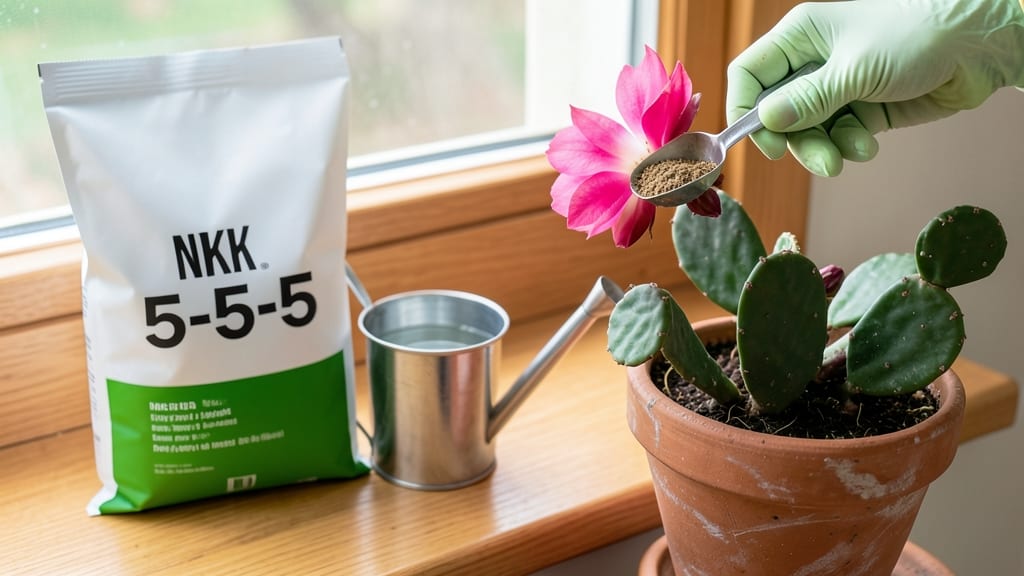
If your Christmas Cactus 🌵 is struggling to bloom year after year, the answer might be simpler than you think—timing your fertilizer just right makes all the difference.
Too early, and you’ll push growth at the wrong time; too late, and you’ll miss the critical window for next fall’s stunning flowers.
Most gardeners fertilize their plants on instinct, but Christmas Cacti 🌵 thrive on precision. The secret lies in syncing feeding with their natural growth cycles, especially during those spring and summer months when they’re gearing up for their spectacular fall display.
Skip this step, and you might end up with leggy stems or weak buds instead of vibrant blooms.
I’ve learned the hard way that one size doesn’t fit all when it comes to fertilization. Whether you’re using a balanced liquid feed or slow-release granules, the key is knowing when to apply it—and just as importantly, when to stop.
Let me show you exactly how to time it for maximum impact without overdoing it.
Ready to unlock next year’s showstopping blooms? The right fertilization schedule isn’t just about feeding your plant—it’s about working with its natural rhythm. Let’s dive into the exact steps to keep your Christmas Cactus 🌵 happy and blooming beautifully every season.

Christmas cactus fertilization schedule by growth stage (with key timing rules)
The Christmas cactus (Schlumbergera) thrives on a fertilization schedule that aligns with its natural growth cycles. Unlike many plants, it has distinct phases: active growth (spring/summer), blooming (fall), and dormancy (winter).
Fertilizing at the wrong time can lead to weak blooms or even plant stress. The key is to feed during active growth and avoid fertilizing when the plant rests.
Most gardeners make the mistake of fertilizing year-round, but your Christmas cactus only needs nutrients when it’s actively growing. Think of it like this: you wouldn’t feed a hibernating bear in winter—it’s the same principle.
The ideal fertilization window starts in early spring and continues through summer, tapering off as fall approaches.
Here’s the golden rule for fertilizing: use a balanced fertilizer (10-10-10 NPK) every 4-6 weeks during the growing season. This ensures your plant gets equal parts nitrogen (for leaves), phosphorus (for roots), and potassium (for blooms).
Overdoing it with nitrogen-heavy fertilizers can lead to lush foliage but fewer flowers, which is the opposite of what you want!
Now, let’s break down the month-by-month fertilization schedule to keep your Christmas cactus blooming like a pro. This table will show you exactly when to feed, how much, and why it matters.
| Growth Stage | Month | Fertilizer Action | Notes |
|---|---|---|---|
| Dormancy | December-February | Skip | Plant is resting; no fertilizer needed. |
| Active Growth | March-April | Light Feed | ½ tsp per 6-inch pot; encourages new growth. |
| Active Growth | May-June | Feed | Full dose every 4-6 weeks; supports blooming. |
| Pre-Bloom | July-August | Light Feed | Reduce frequency; prepare for dormancy. |
| Blooming | September-November | Skip | Focus on water and light; no fertilizer needed. |
Notice how fertilization stops completely in fall and winter? This is when your Christmas cactus is preparing for its blooming phase. If you fertilize during this time, you’ll likely end up with fewer buds or even no flowers at all.
The plant needs this rest period to store energy for next year’s blooms.
One common question I hear is, “What if my Christmas cactus isn’t blooming?” The answer often lies in the fertilization schedule. If you’ve been feeding too late in the season or skipping the early spring feed, your plant may not have enough energy to produce buds.
Start with a light feed in March to kickstart growth, then follow the schedule religiously.
For potted Christmas cacti, always use a well-draining mix and reduce fertilizer strength by half if your plant is in a larger container. Larger pots hold more soil, which can dilute nutrients and lead to over-fertilization.
A simple rule: bigger pot = less fertilizer. Always water your plant before fertilizing to prevent root burn.
Pro tip: If your Christmas cactus looks leggy or weak, it might be hungry for nutrients. This is your cue to check your fertilization schedule. A balanced 10-10-10 fertilizer applied every 6 weeks during spring and summer will keep your plant healthy and blooming for years to come.
Just remember: timing is everything!
Finally, pay attention to your plant’s environmental cues. If your home stays too warm in winter (above 60°F), your Christmas cactus might not enter dormancy properly. In this case, you may need to adjust your schedule slightly, but always prioritize the natural growth cycle.
With the right timing, your Christmas cactus will reward you with vibrant blooms year after year.
Christmas cactus fertilization schedule by growth stage (with key timing rules)
Fertilizing your Christmas cactus at the wrong time can mean the difference between vibrant blooms next holiday season and stunted growth. Unlike outdoor plants, this succulent follows a seasonal growth cycle tied to light exposure and temperature shifts.
The key is aligning your fertilizer application with its natural phases—active growth, blooming, and dormancy—not just feeding year-round.
Most gardeners mistakenly fertilize during fall and winter, when the plant is preparing for dormancy. This disrupts its natural rest period and can lead to burned roots or missed blooms. Instead, focus on spring and summer feeding to fuel new stem growth and bud formation.
Even a balanced 10-10-10 fertilizer can backfire if applied incorrectly—dilution and timing matter just as much as the product itself.
🌵 Christmas Cactus Fertilization Timeline
| Stage | Action | Frequency | Notes |
|---|---|---|---|
| Early Spring (March) | Light Feed | Every 4-6 weeks | ½ tsp 10-10-10 per 6" pot |
| Late Spring (May) | Full Feed | Every 4 weeks | Encourages stem elongation |
| Summer (June-August) | Maintenance Feed | Every 6 weeks | Reduce to half-strength |
| Fall (September-November) | No Fertilizer | Skip | Plant enters dormancy |
| Winter (December-February) | No Fertilizer | Skip | Blooming phase; avoid disturbances |
Start fertilizing in early spring (March) with a light application to wake up roots after dormancy. Use a balanced fertilizer like 10-10-10, but dilute it to half-strength to avoid root burn.
By late spring, increase frequency to every 4 weeks as new growth appears. This is when your plant needs the most nutrients to develop strong stems for next year’s blooms.
During summer months, shift to a maintenance schedule—every 6 weeks—using half-strength fertilizer again. The heat can stress the plant, so reduce feeding to prevent salt buildup in the soil.
Always water thoroughly before fertilizing to help distribute nutrients evenly. Overlooking this step can lead to fertilizer burn on delicate roots.
As temperatures drop in fall, stop fertilizing entirely. This mimics the plant’s natural cycle, allowing it to store energy for winter. Resuming feeding in early spring ensures you’re not disrupting its dormancy phase.
A common mistake is assuming blooming plants need extra fertilizer—they don’t. In fact, feeding during this time can shorten bloom duration or cause buds to drop prematurely.
Pro tip: If your Christmas cactus skips blooming, it’s often a sign of over-fertilizing or poor light exposure during growth phases. Adjust your schedule by cutting back on spring/summer feeds and ensuring it gets bright indirect light for at least 6 hours daily. 🌿