
Plants
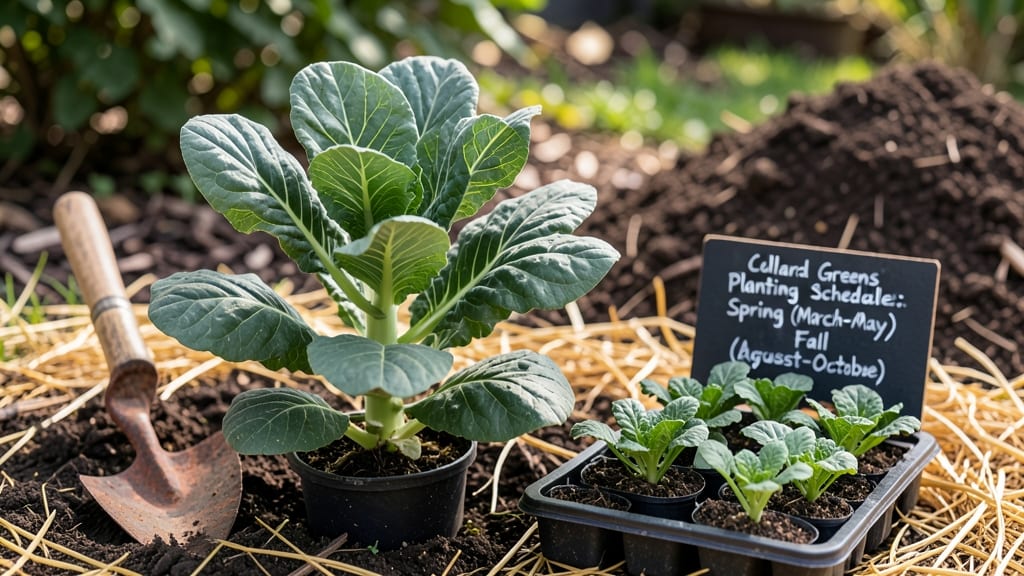
Timing your 🥬 collard planting in North Carolina can make the difference between tender, flavorful harvests and tough, bitter greens. Since this state spans three distinct microclimates—Coastal Plain, Piedmont, and Mountains—your planting window might vary by 4-6 weeks depending on where you live.
Most gardeners in zones 7a-8b reach for their collard seeds in early spring, but that’s only half the story. Fall plantings, when done right, can yield sweeter leaves through winter, while spring starts require careful attention to frost dates.
The key? Knowing exactly when to put those seeds in the ground for your specific region.
In this guide, I’ll break down the optimal planting windows for each North Carolina microclimate, including adjustments for early vs. late harvest goals. You’ll also discover how to use soil prep and succession planting to keep your garden producing well past the first frost.
Whether you’re a first-time gardener or a seasoned grower, getting your collards in the ground at the right time is the game-changer for a bountiful, low-maintenance harvest. Let’s get started.
North Carolina collard planting deadlines by microclimate zone
North Carolina’s diverse geography—from the humid Coastal Plain to the cooler Mountains—means frost dates can vary by 3-4 weeks across regions. For collards, this translates to region-specific planting windows to avoid bitter flavors or stunted growth. Let’s break down the best times to plant based on your microclimate.
In the Coastal Plain (Zones 8a-8b), where winters are mild, you can start spring collards as early as February for harvests by May-June. The Piedmont (Zones 7a-7b) has slightly cooler winters, so aim for March-April plantings.
Meanwhile, in the Mountains (Zones 6b-7a), wait until late April to avoid late frosts.
Fall plantings are critical for winter harvests. In the Coastal Plain, sow seeds by mid-August for a November-December harvest. The Piedmont should plant by early August, while Mountain gardeners can extend plantings until mid-September to take advantage of cooler nights.
For Coastal Plain gardeners, the key is to plant 6-8 weeks before the first frost (typically mid-November) to ensure winter-hardy collards. In the Piedmont, focus on soil temperature—wait until it’s above 50°F (10°C) to avoid slow germination.
Mountain gardeners can push fall plantings later due to cooler microclimates, but avoid sowing after September 15th to allow enough growth before frost.
Pro tip: Use the NC State Extension’s Frost Date Calculator to fine-tune your planting schedule. Input your ZIP code for hyper-local frost predictions, which can shift planting windows by 1-2 weeks even within the same region.
If you’re in a transition zone (e.g., near the Sandhills or Blue Ridge Escarpment), err on the side of earlier plantings for spring and later plantings for fall. These areas often experience unpredictable frost patterns, so having a backup planting 2 weeks later can save your harvest.
For container gardening in urban NC areas, adjust timelines by 1 week earlier than ground plantings. Containers heat up faster and dry out quicker, so spring starts in February and fall starts in July work best for balcony collards.
Always pair your planting dates with soil prep. Amend beds with compost and a balanced fertilizer (10-10-10) 2 weeks before sowing. This ensures strong root establishment before the heat of summer or winter chills set in.
🌱
North Carolina collard planting deadlines by microclimate zone
North Carolina’s diverse climate—from the Coastal Plain’s humidity to the Mountains’ cooler temperatures—means your collard planting deadlines should shift by region. The Piedmont sits in between, offering a middle-ground approach. Let’s break down the optimal windows for each zone, using NC State Extension frost data as our guide.
For Coastal NC (Zones 7b–8a), where summers are long and winters mild, aim to plant collards in early March for spring harvests or mid-August for fall/winter crops. These dates account for the late April frost risk and humidity’s slower soil warming.
In the Piedmont (Zones 7a–7b), push planting to mid-March (spring) or late August to avoid summer’s 90°F+ heat, which stresses young plants.
| Zone | Spring Planting | Fall Planting | Key Adjustments |
|---|---|---|---|
| Coastal Plain (7b–8a) | Early March | Mid-August | Avoid May heat; use shade cloth |
| Piedmont (7a–7b) | Mid-March | Late August | Soil warms slower; test temps |
| Mountains (6b–7a) | Late March | Early September | Shorter season; prioritize cold-hardy varieties |
The Mountains (Zones 6b–7a) demand the latest starts: late March for spring and early September for fall. Here, shorter growing seasons mean you’ll rely on cold-hardy varieties like ‘Georgia Southern’ or ‘Vates’ to survive light frosts. Use black plastic mulch to extend the season by 2–3 weeks in cooler areas.
Pro tip: Check NC State Extension’s Frost Probability Maps (link in resources) to fine-tune dates. For example, Asheville’s first frost often hits October 15, while Wilmington’s lingers until November 10.
Adjust your fall planting 6–8 weeks before your local first frost date to ensure mature plants before winter sets in.
Remember, soil temperature matters more than air temperature. Collard seeds need soil at 60°F+ to germinate. Use a soil thermometer ($10 at garden centers) to confirm readiness—especially in the Piedmont, where cool, damp springs delay warming.
For Coastal gardeners, don’t skip the August planting window. Humidity and short winter days actually improve collard flavor, but late August starts give plants enough time to establish before November’s first frost.
In the Mountains, focus on succession planting in late summer to replace bolting spring crops with hardy fall varieties.