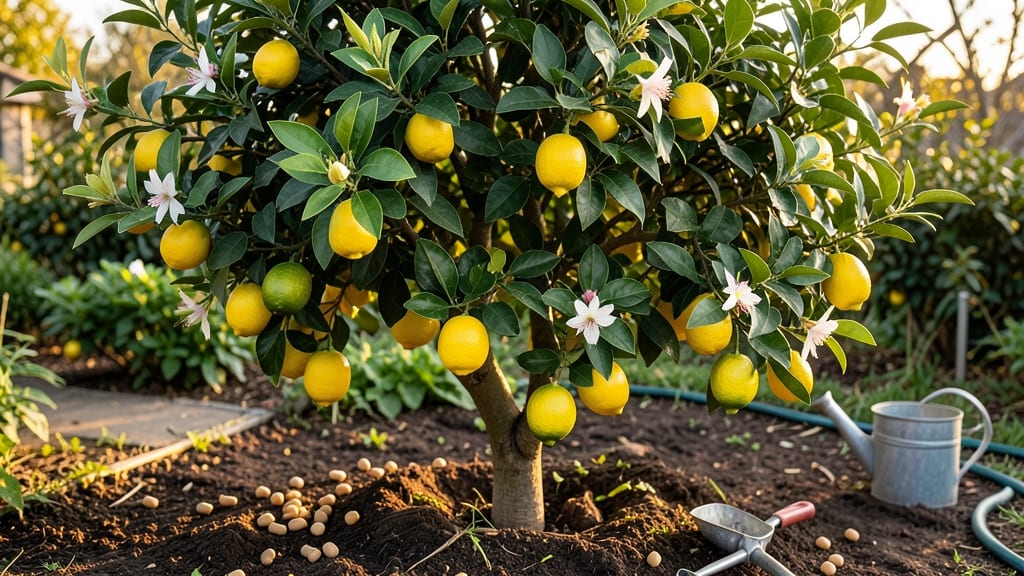
The best time to fertilize citrus trees isn't just about the calendar—it's about matching your tree's growth cycle to the right nutrients at the right moment. 🍊 Whether you're growing in USDA Zone 9b or pushing the limits in Zone 8, timing makes all the difference between a bumper crop and a struggle.
Most gardeners make one critical mistake: fertilizing too late in the season or skipping the early spring boost when roots are hungry for growth. I've seen citrus trees thrive when fed during their natural flush—just after the last frost in January-March—but also during summer's fruit-setting phase.
The key? Understanding how your tree's energy shifts with the seasons.
In this guide, I'll break down the exact month-by-month schedule that works for both Mediterranean climates and subtropical zones. You'll learn when to feed lightly, when to go all-in, and why skipping fall and winter fertilization actually helps your tree store energy for next year's harvest.
Ready to transform your citrus tree from struggling to spectacular? Let's dive into the science-backed timing that'll have your tree producing bigger, sweeter fruit in no time—without the guesswork or wasted fertilizer.
💚💚💚
🍊Citrus Tree Feeding Guide
Frequency
Every 4-6 weeks during growing season (spring-summer)
Best Time
Early morning or evening (avoid midday heat)
NPK Ratio
6-6-6 or 8-3-9 (balanced with slightly higher nitrogen)
Amount
1/4 to 1/2 cup per young tree; 1-2 cups per mature tree
Optimal fertilizing seasons for citrus trees: a month-by-month breakdown
Timing is everything when it comes to fertilizing your citrus trees. Unlike annuals, citrus thrive on a seasonal schedule tied to their natural growth cycles.
In temperate zones (USDA 8-9), the key window is early spring through early summer, while tropical zones (USDA 10-11) can extend feeding into late summer. The goal? Feed when roots are active but before extreme heat or dormancy sets in.
Most citrus trees enter a dormant phase in fall and winter, especially in cooler climates. This is when they stop growing and conserve energy. Fertilizing during this time can burn roots or encourage weak, sugar-laden growth that’s prone to frost damage.
Instead, focus on soil prep and light pruning to set the stage for next year’s harvest.
Here’s your month-by-month citrus fertilization guide, adapted for both temperate and tropical climates:
Month
Temperate Zones (USDA 8-9)
Tropical Zones (USDA 10-11)
Key Notes
January
Light feed (if no frost)
Light feed
Avoid heavy feeding; focus on soil moisture.
February
Full feed (post-dormancy)
Full feed
Apply balanced NPK (6-6-6) to kickstart growth.
March
Feed + micronutrients
Feed + micronutrients
Add zinc or iron if leaves are yellowing.
April
Light feed (reduce nitrogen)
Feed (high phosphorus)
Shift to phosphorus-rich fertilizer for flowering.
May
Light feed (avoid heat stress)
Feed (balanced NPK)
Water deeply after fertilizing to prevent root burn.
June
None (heat dormancy)
Light feed (if no extreme heat)
Monitor for nutrient deficiencies like chlorosis.
July-August
None
None (unless heavy fruiting)
Focus on watering and pest control.
September
None (prep for dormancy)
None
Reduce watering; remove old fruit to redirect energy.
October-December
None (dormant)
None
Prune lightly and mulch to protect roots.
Optimal fertilizing seasons for citrus trees: a month-by-month breakdown
Citrus trees thrive when fertilized during their active growth phases, which aligns with warmer months when they’re not dormant. In USDA Zones 9-11, this means fertilizing from late winter through summer, while colder zones (8-9) should adjust for shorter growing seasons.
The key is timing: too early or late can stress your tree or waste nutrients.
Your citrus tree’s root system is most active in spring and early summer, making these the prime windows for feeding. However, over-fertilizing in heat can burn roots, so always pair applications with deep watering. Let’s break down the ideal schedule by month to keep your tree productive year-round.
Season
Fertilizing Action
Notes
Climate Adjustments
Late Winter (Feb)
Light Feed
Stimulate new growth after dormancy.
Zones 8-9: Wait until frost risk passes.
Spring (Mar-May)
Feed Every 4-6 Weeks
Use balanced NPK (6-6-6) for blooms/fruit.
Tropical zones: Start earlier (Feb).
Summer (Jun-Aug)
Light Feed (Reduce)
Avoid high nitrogen; focus on potassium for fruit.
Extreme heat? Skip July-August.
Fall (Sep-Nov)
Skip
Tree prepares for dormancy; no new growth.
Zones 8-9: Stop by October.
Winter (Dec-Jan)
Skip
Dormant trees need no fertilizer.
Mulch instead to protect roots.
In tropical climates (Zones 10-11), citrus trees grow year-round, so you can extend fertilizing into early fall—but always stop by October to let the tree rest. For colder zones (8-9), focus on March-May and avoid fertilizing after July to prevent late-season stress.
Watch for leaf color changes like yellowing or purple stems—these signal nutrient needs. If your tree drops leaves in summer, it’s likely heat-stressed, not hungry. Always water deeply after fertilizing to prevent root burn, especially in sandy soils that drain quickly.
Pro tip: Use a slow-release fertilizer in spring to feed your tree steadily. For organic options, compost or fish emulsion work well, but avoid fresh manure—it can burn roots. Adjust your schedule based on your tree’s growth rate: fast growers need more frequent feeding than slow ones.