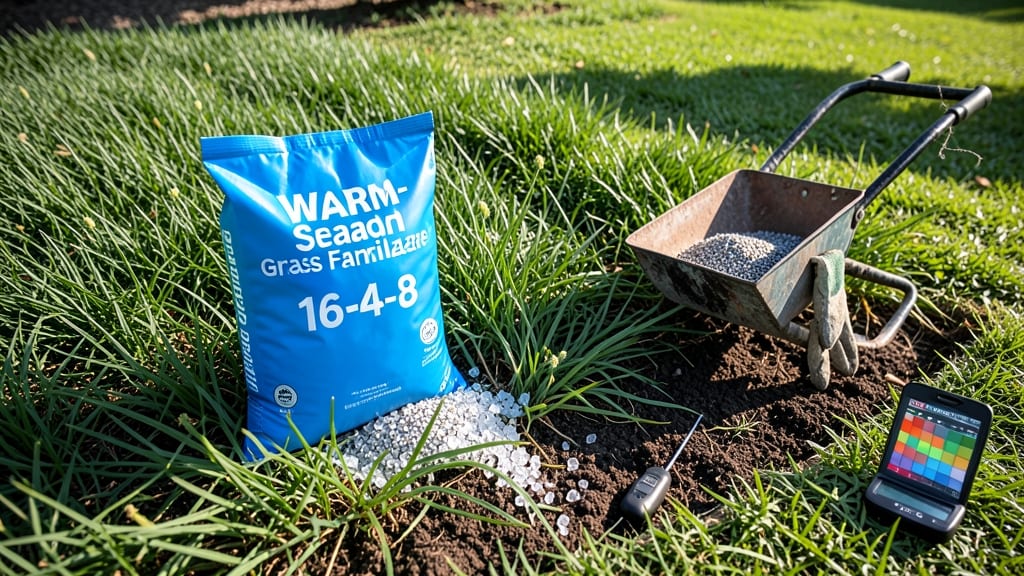
North Florida lawn fertilization schedule by season (month-by-month guide)
North Florida’s humid subtropical climate creates unique challenges for lawn care. Unlike northern regions, your grass stays active year-round, but fertilization timing must adapt to avoid burning or wasted nutrients.
The key is feeding cool-season grasses (St. Augustine, centipede) in fall and early spring, while warm-season grasses (bahia, zoysia) thrive with spring and summer feeding.
Most homeowners make the mistake of fertilizing during peak summer heat, which stresses grass instead of nourishing it. Instead, focus on early spring (February-March) and late fall (October-November) for optimal results. These windows align with your grass’s natural growth cycles and North Florida’s mild winter temperatures.
Here’s your month-by-month fertilization guide, tailored to North Florida’s USDA Zones 8A-9A. This schedule balances nutrient needs, rainfall patterns, and temperature shifts to keep your lawn green and resilient.
🌱 Visual Guide: North Florida Fertilization Schedule
| Month |
Cool-Season Grasses (St. Augustine, Centipede) |
Warm-Season Grasses (Bahia, Zoysia) |
Key Notes |
| January |
Light feed (16-4-8) |
Skip |
Mild temps; avoid heavy feeding. |
| February |
Full feed (30-0-4) |
Light feed (16-4-8) |
Prep for spring growth; apply pre-emergent for weeds. |
| March |
Full feed (30-0-4) |
Full feed (16-4-8) |
Peak growth month; water deeply after fertilizing. |
| April |
Light feed (16-4-8) |
Full feed (16-4-8) |
Transition to summer; reduce nitrogen. |
| May |
Skip |
Light feed (16-4-8) |
High heat; avoid fertilizing cool-season grasses. |
| June |
Skip |
Light feed (16-4-8) |
Dormancy for cool-season; warm-season thrives. |
| July |
Skip |
Light feed (16-4-8) |
Irrigate frequently; avoid fertilizing if drought-stressed. |
| August |
Skip |
Light feed (16-4-8) |
Prepare for hurricane season; reduce fertilizer. |
| September |
Skip |
Light feed (16-4-8) |
Transition month; reduce watering gradually. |
| October |
Full feed (30-0-4) |
Light feed (16-4-8
How to adjust fertilization for North Florida’s unique climate zones (8A-9A)
North Florida’s USDA Zones 8A-9A create distinct microclimates that demand tailored fertilization approaches. Jacksonville’s coastal humidity and Gainesville’s inland dry spells both require adjustments to avoid over- or under-feeding your lawn.
Coastal areas like Jacksonville experience higher humidity year-round, which can lead to fungal growth if you fertilize too heavily in summer. Inland zones like Gainesville face more frequent droughts, meaning your grass may need less frequent watering but still benefits from slow-release fertilizers to retain moisture.
Here’s how to adapt your fertilization plan based on your location’s unique climate patterns:
🌬️
Coastal Areas (Jacksonville, St. Augustine)
Use low-nitrogen fertilizers in summer (June-August) to prevent lawn burn from heat stress. Opt for iron-based supplements instead of full NPK blends during peak humidity.
☀️
Inland Areas (Gainesville, Ocala)
Increase watering frequency by 20-30% when fertilizing in spring and fall to help roots absorb nutrients. Use drought-resistant grasses like bahia or centipede if your area gets less than 40 inches of rain annually.
🌧️
Transition Zones (Daytona, Palm Coast)
Monitor soil moisture before fertilizing—wait until after 2-3 days of rain to apply nutrients. Use slow-release fertilizers to prevent runoff during sudden summer storms.
💧
All Zones: Drought Adjustments
If your area experiences prolonged drought (3+ weeks without rain), reduce fertilization to half-strength and focus on deep watering instead. Never fertilize during active drought conditions.
Pro tip: Use a soil moisture meter ($15-$25 at garden centers) to check moisture levels before fertilizing. Coastal areas should aim for 30-40% soil moisture, while inland zones need 20-30% to avoid nutrient runoff.
Adjust your irrigation schedule 24 hours after fertilizing—water lightly to help nutrients penetrate the soil without washing them away. For coastal lawns, this means early morning watering (before 8 AM), while inland lawns can handle late afternoon watering (after 4 PM) to reduce evaporation.
Remember, over-fertilizing in North Florida’s heat can lead to brown patches and weed infestations. Always follow the 3-1-2 rule: 3 applications per year (spring, summer light, fall), 1 pound per 100 sqft, and 2 inches of water post-application to activate nutrients.
★★★★★4.9(6 reviews)
|