
Plants
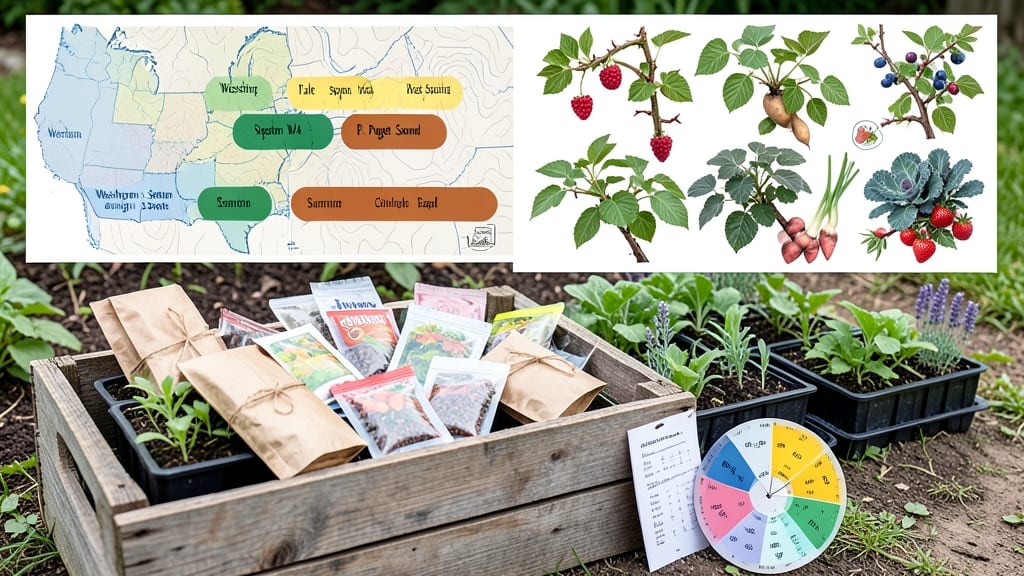
Washington State planting zones: when to start seeds indoors vs. direct sowing
Washington State spans USDA Hardiness Zones 5b-9a, creating dramatic differences between coastal regions and inland valleys. In Zone 7b (Seattle), last frost dates average March 15, while Zone 9a (Yakima Valley) sees frost as late as May 15.
These variations mean your planting timeline must adapt—whether you're growing tomatoes in the Puget Sound or peppers in the Columbia Basin.
For most gardeners, the key decision is when to start seeds indoors versus direct sowing outdoors. Cool-season crops like kale and peas can handle early spring soils, but heat-lovers like cucumbers need warmer temperatures.
I’ve broken down the rules to help you avoid frost damage while maximizing your harvest window.
🌱 Washington State Planting Timeline by Zone
| Zone | Last Frost | Start Seeds Indoors | Direct Sow | Transplant Outdoors |
|---|---|---|---|---|
| 5b-6a (Mountains) | May 1-15 | March 1-April 15 | April 15-May 1 | May 15-June 1 |
| 7b (Puget Sound) | March 15-April 1 | February 15-March 15 | March 1-April 15 | April 15-May 15 |
| 8a-9a (Eastern WA) | April 15-May 15 | March 1-April 1 | April 15-May 1 | May 1-June 1 |
Notice how Zone 5b-6a (mountainous areas like the Cascades) has a 6-week later last frost than Zone 7b (Seattle). This means if you plant tomatoes in Seattle by April 15, you risk frost damage in the mountains.
Always adjust your schedule based on elevation—every 1,000 feet up adds 3-5 days of frost risk.
For cool-season crops like spinach or carrots, direct sow 4-6 weeks before your last frost date. In Zone 7b, that’s February 15, while in Zone 9a, you can wait until March 15.
Heat-loving crops like eggplant and okra need soil temperatures above 60°F—so wait until May 1 in cooler zones or April 15 in warmer ones.
Pro tip: Use row covers to extend your planting window by 2-3 weeks in spring. I’ve successfully grown lettuce in Zone 7b as early as January 15 with a simple floating row cover. Just remove it when flowers appear to prevent bolting.
If you’re growing perennials like asparagus or rhubarb, plant crowns in early spring (March-April) or early fall (September-October). These crops establish roots slowly, so give them 6-8 weeks before frost to settle in.
For succession planting, plan to sow fast-maturing crops like radishes or bush beans every 2-3 weeks after your last frost. In Zone 9a, you can even squeeze in a fall planting of kale or turnips by August 15 for a winter harvest.
Remember: Soil temperature matters more than air temperature. Use a soil thermometer to confirm readiness—most vegetables need 50°F+ for germination. In Zone 7b, this often means waiting until mid-April for warm-season crops.
🌱
Microclimate-specific planting deadlines for coastal, Puget Sound, and eastern WA
Washington’s diverse microclimates mean your neighbor’s perfect planting time might be a disaster for your garden. Coastal areas like Seattle and San Juan Islands stay cooler longer, while Spokane and Yakima Valley bake earlier in spring. Let’s break down exact deadlines for your zone.
For coastal regions (e.g., Olympia, Bellingham), last frost averages April 15–May 1. Inland areas like Pullman or Wenatchee can plant 2–3 weeks earlier. The Puget Sound area falls in between, with March 20–April 15 as the critical window for cool-season crops.
🌱 Comparison Table: Planting Deadlines by Washington Microclimate
| Region | Last Frost Date | Start Seeds Indoors | Direct Sow Cool Crops | Plant Warm Crops |
|---|---|---|---|---|
| Coastal (Seattle, Bellingham) | April 15–May 1 | Feb 15–March 15 | April 1–April 15 | May 15–June 1 |
| Puget Sound (Tacoma, Everett) | March 20–April 15 | Feb 1–March 1 | March 15–March 31 | May 1–May 15 |
| Eastern WA (Spokane, Yakima) | March 1–March 15 | Jan 15–Feb 15 | March 1–March 15 | April 15–April 30 |
| San Juan Islands | May 1–May 15 | March 1–March 15 | April 15–May 1 | June 1–June 15 |
*Adjust dates 1–2 weeks earlier for high-elevation areas (e.g., Mount Rainier foothills).
Urban areas like Seattle experience heat islands, so plant heat-loving crops like tomatoes or peppers slightly later than rural zones. Meanwhile, high-desert regions (e.g., Yakima) can start warm-season plants as early as April 15 thanks to faster soil warming.
For fall planting, coastal areas can extend the season until September 30, while inland zones may need to wrap up by September 15. Always check 7-day forecasts before planting heat-sensitive crops like cucumbers or squash.
Pro tip: Use row covers to push coastal planting 2 weeks earlier or cold frames to extend fall harvests by 4–6 weeks. Test your soil’s warmth with a seedling thermometer—aim for 60°F+ for most vegetables.
Remember, microclimates change yearly. Track your local frost dates for 3 years to refine your schedule. Happy planting! 🌱