
Plants
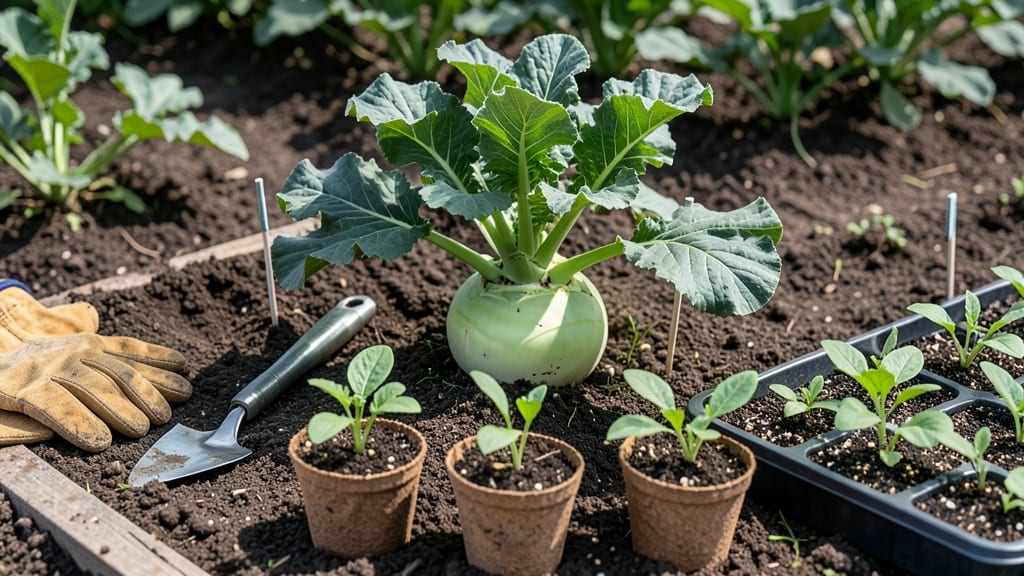
If you're a Zone 5 gardener dreaming of crisp, sweet 🥬 kohlrabi bulbs but struggling with when to plant kohlrabi in zone 5, you're not alone.
The key to success lies in planting at the perfect moment—too early and frost will strike, too late and your harvest might bolt before you even taste it.
For Zone 5 gardeners, the ideal window opens in early spring (March-April) or late summer (July-August), when soil temperatures hover around 45-65°F. This cold-hardy veggie thrives in cooler weather, making it a standout crop for our region's unpredictable climate.
But here's the game-changer: spacing out your plantings every 2-3 weeks after your last frost date (around mid-May) gives you a steady harvest through early fall. I'll show you exactly how to time it right for maximum yield without the stress of bolting or pests.
Let's dive into the exact planting schedule, soil prep secrets, and companion plants that'll keep your kohlrabi growing strong from spring to fall—no guesswork required.
Optimal planting windows for kohlrabi in Zone 5 by month
Kohlrabi’s cool-season love makes it a standout for Zone 5 gardeners, but timing is critical to avoid bolting or stunted growth. The ideal window spans two seasons: early spring (March-April) and late summer (July-August).
These periods align with soil temperatures between 45°F and 75°F, perfect for germination and bulb development.
Zone 5’s short growing season (about 150 frost-free days) demands precision. Northern Zone 5 (e.g., Duluth, MN) should start 2-3 weeks later than southern areas (e.g., St. Louis, MO) to avoid early frost damage.
Always check your last frost date (typically mid-May) and count backward from 55 days to harvest.
🌱 Kohlrabi Planting Calendar for Zone 5
| Month | Planting Window | Soil Temp (°F) | Key Notes |
|---|---|---|---|
| February | Start indoors (6-8 weeks before last frost) | 60-65°F | Use grow lights for seedlings; harden off before transplanting. |
| March | Direct sow outdoors after soil warms to 45°F | 45-55°F | Cover with row fabric for frost protection. |
| April | Final spring sowing by April 15 | 50-60°F | Avoid planting if nights stay below 40°F. |
| July | Begin fall succession for late harvests | 60-70°F | Use shade cloth if temps exceed 80°F. |
| August | Last outdoor sowing by August 1 | 55-65°F | Prioritize quick-maturing varieties (e.g., 'Purple Vienna'). |
For northern Zone 5, prioritize early March sowings with row covers to extend the season. In southern Zone 5, you can push April plantings slightly later, but avoid May sowings—heat stress causes bolting.
Always choose cold-hardy varieties like 'Blue Danube' or 'White Vienna' for Zone 5’s unpredictable springs.
Fall plantings in July-August should focus on succession crops every 2-3 weeks to stagger harvests before first frost (mid-October). Use drip irrigation to maintain consistent moisture, which prevents cracks in the bulbs—a common issue in Zone 5’s dry summers.
Pro tip: Test your soil temperature with a soil thermometer before planting. Kohlrabi seeds won’t germinate well below 45°F, even if the air feels warm. Aim for 50°F+ for reliable sprouting. If your soil is too cold, wait 1-2 weeks or use black plastic mulch to warm it faster.
Container growers in Zone 5 can start indoors in February but must move pots outdoors after last frost. Use 5-gallon containers with well-draining mix and place in full sun. Containers dry out faster, so water daily in summer and every other day in spring/fall.
Watch for cabbage worms and flea beetles, which thrive in Zone 5’s cool, damp springs. Apply neem oil or row covers at the first sign of damage. Companion plants like radishes or nasturtiums can deter pests naturally.
Harvest begins 55-70 days after sowing, but don’t wait too long—the bulbs become woody and tough in Zone 5’s short season. Aim to harvest by late June for spring crops and September for fall plantings to avoid first frost damage.
Save seeds from your healthiest plants for next year! Kohlrabi’s bolting tendency increases in hot summers, so focus on fall plantings for seed production. Store seeds in a cool, dry place for up to 3 years.
Optimal planting windows for kohlrabi in Zone 5 by month
Zone 5 gardeners have a short but sweet window for growing kohlrabi, thanks to its cool-season tolerance. The key is planting when soil temperatures hover between 45°F and 65°F—too cold delays germination, while heat triggers bolting. Let’s break down the best months and microclimate adjustments for your region.
For spring plantings, aim for late March to early April in southern Zone 5 (e.g., Indianapolis, St. Louis) or mid-April to early May in northern areas (e.g., Minneapolis, Chicago). These dates align with your last frost date (mid-May) and ensure bulbs mature before summer heat sets in.
Fall plantings offer a second chance: late July to early August lets you harvest before the first frost (mid-October). This works because kohlrabi’s 55-day maturity gives it time to grow without bolting in Zone 5’s shorter fall days.
| Planting Window | Soil Temp (°F) | Frost Risk | Harvest Time |
|---|---|---|---|
| Late March–Early April | 45–55°F | Low (post-frost) | May–June |
| Mid-April–Early May | 50–60°F | Moderate | June–July |
| Late July–Early August | 55–65°F | Low (pre-frost) | September–October |
🌱 Note: Adjust 1–2 weeks earlier for southern Zone 5, later for northern areas.
Northern Zone 5 gardeners (e.g., Duluth, MN) should push planting to late April to avoid early frosts, while southern areas (e.g., Memphis, TN) can start as early as February under row covers. Always check your local frost dates—they vary by 1–2 weeks even within Zone 5.
Pro tip: Use a soil thermometer to confirm temps before planting. Kohlrabi seeds won’t sprout below 40°F, and soil above 70°F will cause bolting. Aim for 50–60°F for ideal germination.
For extended harvests, stagger plantings every 2 weeks in spring or every 3 weeks in fall. This ensures a steady supply of crisp, tender bulbs without overwhelming your garden at once.