
Trees
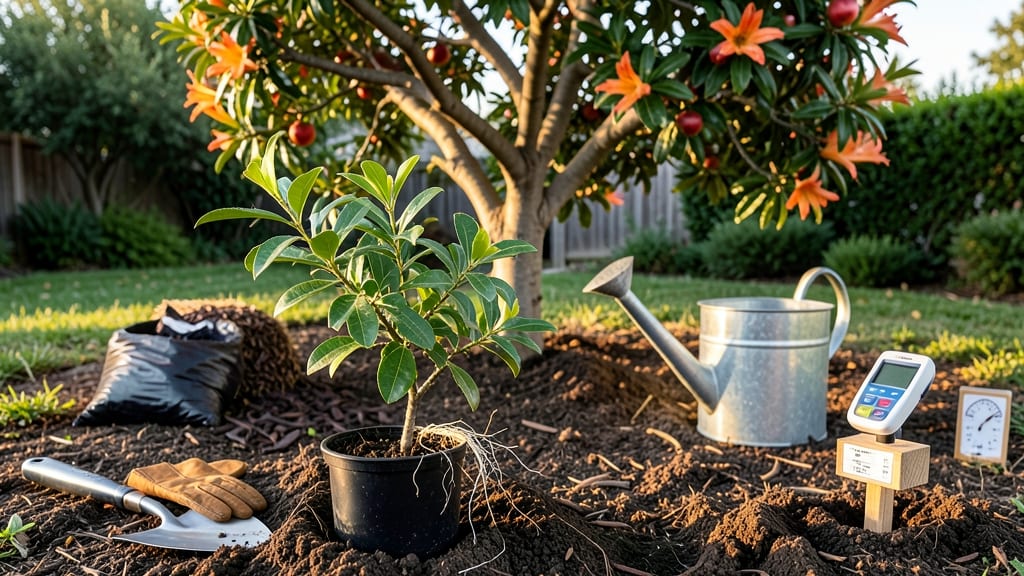
Best planting months for pomegranate trees in California by region
California’s microclimates create a puzzle for pomegranate growers. The coastal fog belt (USDA Zone 9b-11) has mild winters, while the Central Valley (Zone 9a-10) faces occasional frost.
Meanwhile, desert regions (Zone 9b-10) stay warm year-round. Your planting window must align with these conditions to avoid frost damage or heat stress.
For most of California, the ideal planting window spans from November through March.
This period balances cool soil temperatures (below 75°F) and minimal frost risk in all but the coldest inland areas. Bare-root trees thrive when planted during their dormant season, while container-grown pomegranates offer more flexibility for year-round planting in mild zones like Southern California.
Here’s how to tailor your planting schedule to California’s five key regions:
| Region | USDA Zone | Best Planting Months | Key Considerations |
|---|---|---|---|
| Coastal (San Francisco, Santa Barbara) | 9b-11 | November–February | Mild winters; avoid late-winter fog delays. Use windbreaks for protection. |
| Central Valley (Sacramento, Fresno) | 9a-10 | December–February | Watch for January frost (Zone 9a). Plant after last frost date. |
| Sierra Foothills (Chico, Placerville) | 8a-9a | March–April | Cold-hardy varieties like ‘Wonderful’ only. Plant after last frost (late March). |
| Desert (Palm Springs, Joshua Tree) | 9b-10 | November–January | Avoid summer planting (heat stress). Use drip irrigation to prevent root burn. |
| Southern California (Los Angeles, San Diego) | 10a-11 | November–March (year-round for containers) | Mild winters; container planting extends window. Protect from Santa Ana winds. |
In coastal areas, the November–February window avoids the heavy fog that can delay root establishment. For example, in Santa Barbara, planting in December gives roots time to settle before the spring rains.
Meanwhile, Central Valley growers should wait until after January 15 to sidestep late frost risks in Zone 9a.
For desert regions, the November–January window is critical. Planting in summer (June–August) causes heat shock, while spring planting (April–May) risks drought stress as temperatures soar. Use mulch to retain moisture and shade cloth during the first growing season.
Southern California’s mild winters (Zone 10a-11) allow for year-round container planting, but bare-root trees still thrive best in November–March. If you’re in Los Angeles or San Diego, you can even plant in April, but prioritize morning watering to prevent root rot from afternoon humidity.
Pro tip: Check your local frost dates via the USDA Plant Hardiness Zone Map or your Cooperative Extension office. For example, Sacramento’s last frost typically occurs around January 10, while San Francisco’s is often December 15.
Planting 2–4 weeks after your area’s last frost date ensures your pomegranate tree avoids cold damage.
Remember, container-grown pomegranates adapt better to off-season planting because their roots aren’t disturbed by soil temperature shifts. If you’re in a warmer microclimate (e.g., Riverside or Palm Springs), you can plant as late as April, but always water deeply afterward to encourage root growth.
🌱
How to adjust planting time for early vs. late varieties of pomegranates
Not all pomegranate varieties thrive under California’s diverse microclimates. Early varieties like ‘Wonderful’ need cooler winters to set buds, while late varieties such as ‘Eversweet’ handle heat better. Your planting window can shift by 2-3 months depending on the type you choose.
For example, ‘Wonderful’ should go in the ground by January in frost-prone zones, while ‘Eversweet’ can wait until March in desert areas.
If you’re planting bare-root trees, adjust timing based on dormancy. Cold-hardy varieties (like ‘Wonderful’) should be planted in late winter (February-March) to avoid early spring frosts. Meanwhile, heat-tolerant types (like ‘Granada White’) can handle early spring (March-April) without stress.
Always check your local USDA zone—coastal areas (Zone 9b+) have a longer window than inland valleys (Zone 9a).
Early vs. Late Varieties: Planting Tradeoffs
- ✅ Better for cooler zones (coastal, foothills)
- ✅ Needs winter chill (300+ hours below 45°F)
- ✅ Plant by January-February to avoid frost
- ❌ Struggles in hot inland areas (Central Valley)
- ✅ Thrives in hot climates (desert, Southern CA)
- ✅ Tolerates less winter chill (200+ hours)
- ✅ Can plant until March-April
- ❌ May bolt to fruit too early in mild winters
To extend your planting window, use microclimate manipulation. In coastal fog zones, add a windbreak (like bamboo fencing) to protect young trees from salt spray. In desert areas, plant near a shade cloth structure to buffer afternoon heat.
For container planting, you can plant year-round in Zone 10+, but move pots to shaded areas during summer’s peak heat (June-August).
Root pruning before transplanting can also help. Trim roots by 1/3 if planting outside the ideal window. This reduces transplant shock and encourages faster establishment. Pair this with a 3-inch layer of mulch (wood chips or straw) to retain moisture and regulate soil temperature.
For dwarf varieties (like ‘Wonderful’ grafted), this technique works especially well in urban gardens with limited space.
If you miss the ideal window, don’t panic. Container-grown pomegranates can be planted in early spring (April) as long as you acclimate them gradually to outdoor conditions. Harden off container trees by moving them outside for 2-3 hours daily over 10 days before full transplant.
This mimics natural conditions and reduces shock, even if you’re planting late.
Finally, choose your variety based on your local frost dates. Use the California Frost Freeze Map (from UC Agriculture) to pinpoint your area. For example, Sacramento (Zone 9a) has last frosts around January 10, while San Diego (Zone 10a) rarely sees frost.
Adjust your planting date 2-4 weeks before your area’s last frost date for best results.