
Plants
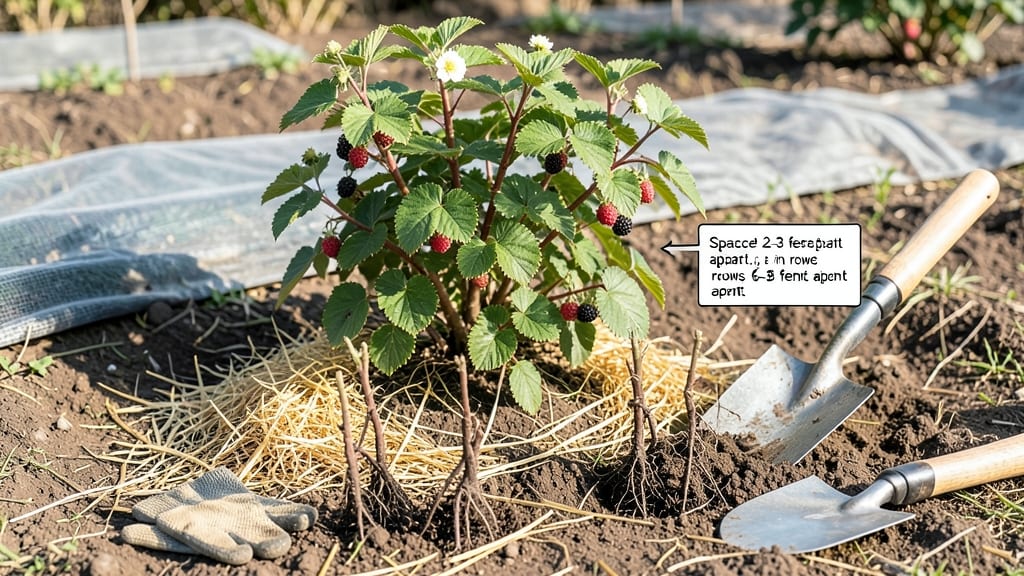
Timing your raspberry planting in Zone 6 isn't just about checking the calendar—it's about catching that sweet spot when soil temperatures hit the perfect range for root growth. 🍇 With an average last frost date around April 15, you've got a narrow window to get those bare-root plants in the ground before buds swell and summer heat arrives.
Most gardeners in Zone 6 (General) swear by early spring planting, but there's a trick to it: soil needs to be at least 40-50°F—warm enough to prevent shock but cool enough to avoid stress.
This means you might need to wait until late March or early April, even if your calendar says "spring."
Container-grown raspberries give you a little more flexibility, letting you plant up to 2 weeks later than bare-root varieties. The key is working with your microclimate—whether that means planting near a south-facing wall to warm the soil faster or choosing a sheltered spot to avoid late frosts.
Get this right, and you're setting your raspberries up for a stronger start, faster establishment, and that first harvest of juicy berries by mid-summer. Let's break down exactly how to time it perfectly for your Zone 6 garden.
Optimal soil temperature triggers for planting raspberries in Zone 6
Planting raspberries in Zone 6 hinges on two critical factors: soil temperature and frost timing. Unlike many plants, raspberries thrive when soil reaches 40-50°F—this warmth signals roots to establish quickly before summer heat arrives.
In my experience, waiting for this threshold prevents transplant shock and ensures vigorous early growth.
Most gardeners in Zone 6 focus on calendar dates, but I’ve learned to prioritize soil thermometers instead. A 40°F soil temp is ideal for bare-root raspberries, while container-grown plants can tolerate slightly cooler soil (35°F) since their roots are protected.
Testing soil temp in the morning (after dew evaporates) gives the most accurate reading.
Spring planting in Zone 6 typically aligns with late March to early May, but your exact timing depends on microclimates. For example, southern Zone 6 (like Virginia) may plant in March, while northern areas (like Wisconsin) should wait until mid-April.
Fall planting is also viable if soil temps stay above 40°F—usually August to early September.
Here’s the key: Never plant when soil is still cold or thawing. Frozen or soggy soil restricts root growth, leading to weak plants that struggle in summer. I’ve seen raspberries planted too early in Zone 6 flop in heat waves because their roots couldn’t establish properly.
🌱
🌱 Raspberry Planting Soil Conditions in Zone 6
| Condition | Specification | Action |
|---|---|---|
| Soil Temp (Spring) | 40–50°F | Use soil thermometer; plant when consistent for 3+ days |
| Soil Temp (Fall) | 40–50°F | Aim for 6–8 weeks before first frost |
| Last Frost Date | April 15 (varies ±2 weeks) | Plant 2–3 weeks after last frost for safety |
| First Frost Date | October 15 (varies ±2 weeks) | Fall planting must finish by early September |
| Soil Moisture | Well-drained, slightly moist | Avoid waterlogged soil; amend with compost |
| pH Level | 5.5–6.5 | Test soil; adjust with lime or sulfur if needed |
One common mistake I see is planting raspberries too early when soil is still cold. For example, in Zone 6a (colder), planting in February can stress roots because soil temps often hover around 35°F. Wait until soil warms to 45°F—this usually happens by mid-March.
For fall planting, the goal is to give roots time to establish before winter dormancy. In Zone 6, this means planting 6–8 weeks before first frost (typically by early September). Fall-planted raspberries often produce earlier harvests the following year because they’ve had a head start on root growth.
Pro tip: If you’re unsure about soil temps, use the "finger test". Stick your hand 6 inches deep—if the soil feels cool but not freezing, it’s likely in the 40–50°F range. This method works well for gardeners without a thermometer.
🌿
Local climate variations in Zone 6 can shift planting windows by 2–3 weeks. For instance, urban areas (like Chicago) may experience heat islands, where soil warms faster than rural zones. Conversely, high-elevation areas (like Colorado’s Front Range) might need to wait until late April for safe planting.
To account for these differences, check your local cooperative extension service for frost date data. They provide hyperlocal adjustments that calendar-based guidelines can’t match. For example, my neighbor in Zone 6b Indiana plants in early April, while I wait until mid-April in Zone 6a Ohio.
Finally, consider microclimates in your yard. A south-facing slope warms up faster than a north-facing low spot. If you have a sheltered area (like near a brick wall), soil may reach planting temps 1–2 weeks earlier than open ground. Use these spots for early spring plantings.
✂️
Optimal soil temperature triggers for planting raspberries in Zone 6
Planting raspberries in Zone 6 hinges on soil temperatures, not just calendar dates. The ideal window opens when soil reaches 40–50°F at a depth of 4 inches—this triggers root growth without frost damage.
For bare-root raspberries, this typically aligns with late winter to early spring, while container-grown plants can tolerate slightly cooler soils.
Use a soil thermometer to confirm readiness. If your area experiences late frosts, wait until after your average last frost date (usually mid-April in Zone 6).
Fall planting is riskier but possible if you choose hardy varieties like 'Heritage' and plant in late August to early September for root establishment before winter.
| Planting Stage | Soil Temp (°F) | Zone 6 Window | Key Notes |
|---|---|---|---|
| Bare-Root Planting | 40–50°F | Late Feb–April | Plant before buds swell |
| Container-Grown | 45–55°F | March–May | Flexible timing; avoid heatwaves |
| Fall Planting | 50–60°F | Aug–early Sept | 6–8 weeks before frost |
Micro-climates matter! If your garden sits in a frost pocket or near a heat-retaining wall, adjust planting by 2–3 weeks. For example, southern Zone 6 (like parts of Virginia) may plant as early as February, while northern Zone 6 (like upstate New York) should wait until mid-April.
Test soil moisture too—well-draining, slightly acidic soil (pH 5.5–6.5) prevents root rot. Amend clay soil with compost or sand to improve aeration. Mulch after planting to retain moisture and regulate soil temps during spring flushes or fall frosts.
Pro tip: Plant summer-bearing raspberries (like 'Boyne') in spring for a June–August harvest, while fall-bearing varieties (like 'Heritage') can handle both spring and fall planting for double yields.
Monitor your local micro-climate for 2–3 years to refine your planting schedule. Even a 10°F difference in soil temp can delay root growth by weeks—soil thermometers are your best friend! 🌱