Plants
Best planting windows for snap peas in Zone 7 (fall & spring)
Zone 7 gardeners have two prime opportunities to grow snap peas: early spring and late summer/fall. Timing is critical because these cool-weather lovers bolt (flower prematurely) when soil temperatures exceed 75°F. Aim for soil temps between 40-65°F for optimal germination and growth.
For spring plantings, start seeds indoors 6-8 weeks before your last frost date (typically mid-March in Zone 7). Transplant seedlings outdoors 4-6 weeks before the last frost—usually late February to early March. This gives them time to mature before summer heat arrives.
Fall plantings are equally rewarding. Sow seeds 6-8 weeks before your first frost (around mid-September in Zone 7) for a winter harvest. Choose early-maturing varieties like 'Sugar Snap' or 'Oregon Sugar Pod' to ensure pods ripen before cold sets in.
🌱 Snap Pea Planting Comparison for Zone 7
| Season | Planting Window | Soil Temp | Key Considerations |
|---|---|---|---|
| Spring | Feb 15 - Mar 15 | 40-65°F | Avoid late plantings; heat stress reduces yield |
| Fall | Aug 15 - Sep 15 | 50-70°F | Use shade cloth if temps rise above 80°F |
| Both | N/A | N/A | Choose trellis varieties to save space and improve airflow |
Your last frost date is crucial—check local records, as Zone 7 spans diverse microclimates. For example, Atlanta (Zone 7b) has a later last frost than Charlottesville (Zone 7a). Adjust planting dates 1-2 weeks earlier if you're in a cooler microzone.
Always test soil temperature before planting. Use a soil thermometer (insert 2 inches deep) to confirm ideal conditions. If temps are too warm, delay planting or use shade cloth to protect seedlings until soil cools.
For extended harvests, try succession planting every 2 weeks during your ideal window. This ensures a steady supply of fresh pods without overwhelming your garden at once. Pair snap peas with radishes or lettuce—they share similar growing conditions and deter pests.
Remember: Snap peas hate heat. If summer arrives early, your plants will struggle. Monitor 7-day forecasts and plant only when you're confident temps will stay mild for at least 60 days—the average time to harvest.
Pro tip: Use black plastic mulch to warm soil faster in spring or straw mulch to keep roots cool in fall. Both tricks help maintain optimal growing conditions and extend your planting windows by 1-2 weeks at each end of the season.
Best planting windows for snap peas in Zone 7 (fall & spring)
Zone 7 gardeners have two prime opportunities to grow snap peas: early spring and late summer/fall. Timing is everything—plant too early, and frost zaps tender seedlings; too late, and summer heat causes bolting or poor pod development.
My Zone 7 garden thrives on these two windows, yielding crisp pods from May through November.
For spring plantings, aim for February to early March—about 4-6 weeks before your last frost date (typically March 15 in Zone 7).
This gives seeds time to germinate in 45-60°F soil before temperatures climb. Fall plantings should start August to early September, allowing pods to mature before the first frost (mid-November in most of Zone 7).
| Season | Planting Window | Soil Temp | Frost Risk | Harvest Window |
|---|---|---|---|---|
| Spring | Feb–Early Mar | 45–60°F | Low (after last frost) | May–June |
| Fall | Aug–Early Sep | 60–70°F | Moderate (before first frost) | Oct–Nov |
Pro tip: Use a soil thermometer to confirm temperatures. Snap peas won’t germinate well below 45°F, and soil that’s too warm (>70°F) can cause uneven sprouting. I’ve learned this the hard way—last year’s April planting flopped because the soil hit 72°F too soon!
Zone 7’s microclimates matter too. If you’re in a cooler microclimate (e.g., higher elevation), push spring plantings to mid-March. Warmer areas (e.g., near coasts) can extend fall plantings to early October. Always check your local frost dates—they vary even within Zone 7.
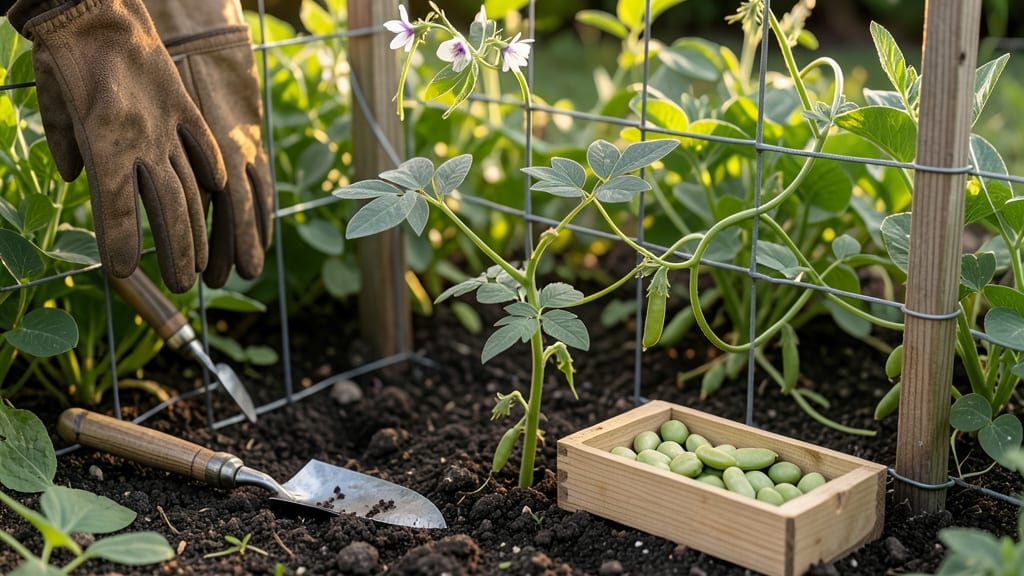
For fastest germination, soak seeds overnight before planting. Direct-sow peas 1 inch deep, spacing them 2 inches apart in rows 18 inches apart. A trellis is a must—peas climb to 4-6 feet, saving space and improving airflow to prevent powdery mildew.
My garden’s trellis keeps pods off the ground and easy to harvest!
After planting, mulch with straw to retain moisture and suppress weeds. Snap peas are light feeders, so avoid heavy fertilizers. A light application of 5-10-10 at planting time is enough. Over-fertilizing leads to lush foliage but fewer pods—a mistake I made my first year! 🌱
Monitor for pest pressure like pea aphids or slugs, especially in spring. Handpick aphids early, and use diatomaceous earth for slugs. With the right timing and care, you’ll enjoy sweet, crisp pods for weeks—no store-bought peas needed!