
Light Requirements
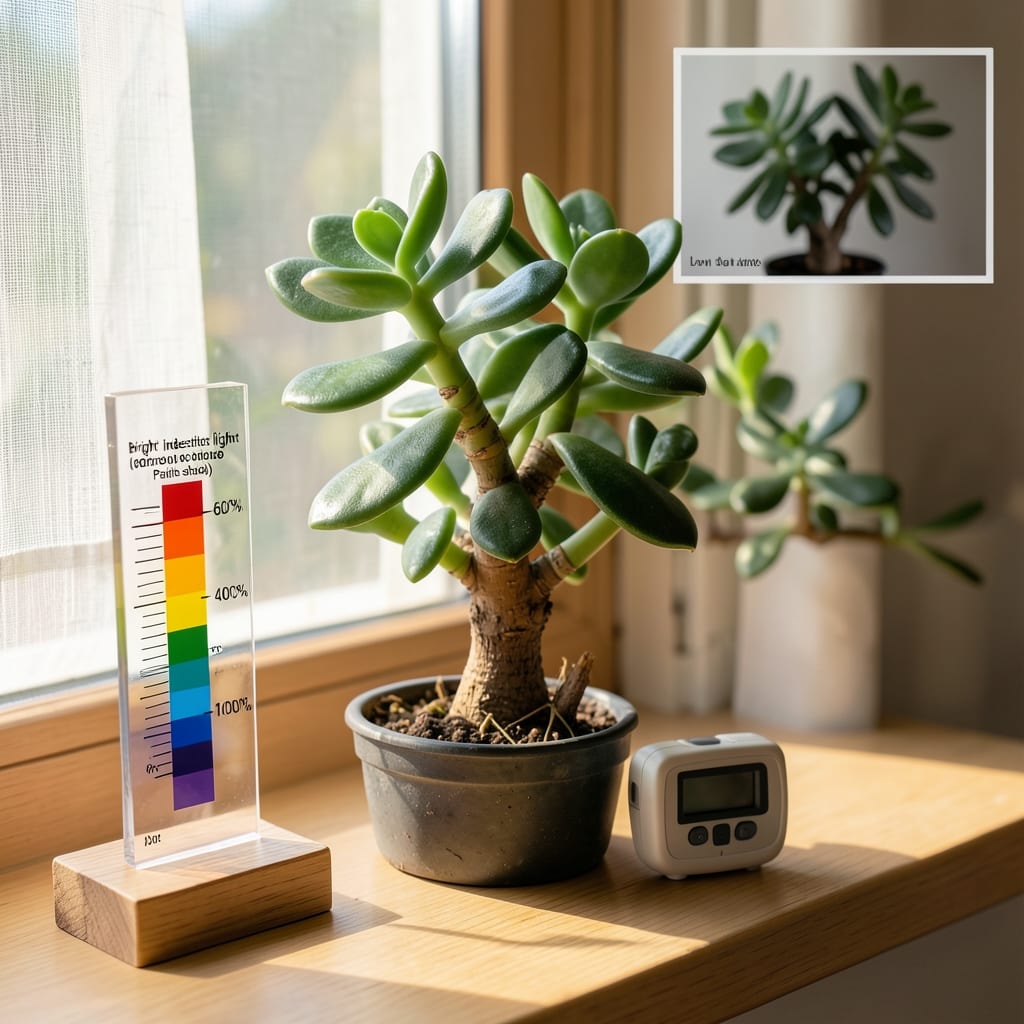
If your 🌿 Jade Plant looks stretched and leggy or its leaves are turning yellow, you’re probably dealing with how much light does a jade plant require. Understanding the right conditions is the key to keeping this popular succulent happy and thriving—whether you're growing it indoors or outdoors.
Jade Plants adore bright, indirect light but can handle some direct sun, especially in cooler months. Too little light leads to weak growth, while too much can scorch those glossy leaves. The secret lies in finding that perfect balance, which I’ll break down for you with practical tips to avoid common mistakes.
You don’t need a greenhouse or fancy equipment—just a few smart adjustments to your plant’s placement. I’ll show you exactly where to position your Jade Plant for vibrant growth, from choosing the right window to using grow lights when natural light falls short.
Ready to transform your Jade Plant from struggling to stunning? Let’s dive into the ideal light conditions and keep your succulent looking its best year-round.


Jade plant light requirements: the ideal spectrum and intensity
Jade plants (Crassula ovata) are sun-worshippers at heart, but they’re not as hardy as you might think. These succulent powerhouses crave bright, indirect light for at least 4-6 hours daily, but they’ll also tolerate direct morning sun—just avoid harsh afternoon rays that can scorch their leaves. The key is finding that golden balance where they get enough light to stay compact and vibrant without turning into a crispy critter.
Think of your jade plant’s light needs like a sunbathing teen—they want plenty of exposure, but not a midday tan session. In indoor settings, a south-facing window is ideal, while outdoor spots should mimic this brightness without the intense midday heat. Without enough light, your jade will stretch awkwardly (a condition called etiolation), and too much can cause sunburn or bleached, papery leaves.
Here’s the light spectrum breakdown your jade plant thrives in:
- Morning sun (6 AM–12 PM): Perfect for direct exposure—this is their peak energy time.
- Afternoon sun (12 PM–6 PM): Use indirect light or filter through a sheer curtain to avoid leaf damage.
- Overcast days: Still bright indirect light is better than dim corners—jade plants won’t thrive in shade.
Seasonal shifts matter too. In winter, when sunlight is weaker, your jade might need a grow light for 12-14 hours daily to compensate. Meanwhile, summer’s intense rays may require partial shade during peak hours (1 PM–4 PM) to prevent leaf scorch. Rotate your plant quarter-turns weekly to ensure even growth and avoid lopsided stems.
🌱 Jade Plant Light Requirements Summary
| Condition | Ideal Specification | Seasonal Adjustments |
|---|---|---|
| Daily Light Hours | 4-6+ hours | Winter: Supplement with grow lights |
| Light Type | Bright indirect or direct morning sun | Summer: Filter afternoon sun |
| Indoor Placement | South or west-facing window | Rotate weekly for even growth |
| Outdoor Placement | Partial shade with morning sun | Avoid direct midday heat |
| Grow Light Alternative | 12-14 hours LED grow light | Keep 6-12 inches above plant |
Light isn’t just about quantity—it’s also about quality. Jade plants need full-spectrum light to maintain their rich green leaves and compact growth habit. Without it, they’ll stretch toward the light (etiolation), losing their thick, plump stems and turning leggy. This isn’t just ugly; it weakens the plant, making it more prone to falling over or rotting from poor structure.
Pro tip: If your jade plant starts developing pale, yellowish leaves or reddish-pink hues, it’s a cry for more light. Conversely, dark brown patches or crispy edges mean it’s getting too much direct sun. The goal is consistent, bright light without the extreme heat or UV stress. Think of it like goldilocks lighting—not too dim, not too harsh, but just right.
For indoor growers, a south-facing window is the sweet spot, but west-facing windows can work too—just rotate your plant every few days to prevent it from leaning. If you’re in a north-facing home, you’ll likely need a grow light to supplement, especially in winter months when natural light is scarce. A basic LED grow light on a timer is a game-changer for keeping your jade happy year-round.
Outdoor jade plants love patios, balconies, or garden beds with morning sun and afternoon shade. In USDA Zones 9-11, they can often stay outside year-round, but in cooler climates, bring them indoors before temperatures drop below 50°F. Even outdoors, avoid full sun in summer’s peak—opt for dappled shade or partial sun to keep leaves lush and healthy.
Remember, light is the foundation of your jade plant’s health. When it’s right, you’ll see thick, glossy leaves, compact growth, and even the occasional tiny pink or white flower. Get it wrong, and you’ll spend more time reviving a sad, stretched-out plant than enjoying its beauty. Start with these light guidelines, and you’ll be well on your way to a thriving jade plant that’s the envy of every plant parent.
Signs your jade plant isn’t getting enough (or too much) light
Your jade plant’s leaves tell a story about its light conditions. If you’ve been guessing about placement, these visual cues will reveal whether your plant is starving for sunlight or getting sunburned. The key is learning to read the signs early—before the damage becomes permanent.
When a jade plant doesn’t get enough light, it stretches uncontrollably toward any available source. This etiolation shows up as long, thin stems with spaced-out leaves that look almost bamboo-like. The leaves themselves may turn pale yellow or washed-out green, losing their glossy, plump texture. In extreme cases, the stems become weak and floppy, making the plant top-heavy and prone to falling over. Think of it like a tower of spaghetti—not exactly sturdy or attractive.
Here’s how to diagnose light deficiency quickly:\n- Leaves are pale or yellowish (especially on the bottom of the plant)\n- Stems are elongated with large gaps between leaves\n- Plant leans dramatically toward the light source\n- New growth is slow or nonexistent\n\n
On the flip side, too much direct sun causes visible stress in the form of sunburn. Look for dark brown or black patches on leaves, often near the edges where sunlight hits most intensely. These crispy, papery spots feel dry and brittle to the touch, almost like burnt paper. In severe cases, entire leaves may curl or pucker inward, and the plant might drop leaves to protect itself. Over time, this excessive sun exposure weakens the plant, making it more susceptible to pests and disease.
🌱 Light Stress Symptoms: Quick Fixes
- Move to brighter spot (south/west window)
- Use a grow light 6-12" away (12-14 hrs/day)
- Rotate plant weekly for even growth
- Move to indirect light or afternoon shade
- Use a sheer curtain to filter harsh rays
- Water more frequently (but less deeply)
Don’t wait until your jade plant is severely stressed to act. If you notice these signs early, you can reverse the damage with a few simple adjustments. For example, if your plant is etiolated, moving it to a sunnier window and adding a grow light can encourage new, compact growth within weeks. If it’s sunburned, relocating it to a shadier spot and increasing watering frequency (without overwatering) helps it recover.
Pro tip: Take before-and-after photos of your jade plant’s leaves. This visual record helps you track progress and adjust light conditions more precisely. For instance, if you move your plant to a brighter spot and notice new leaves regaining color within 2-3 weeks, you’re on the right track. Conversely, if sunburn patches worsen after relocating, you’ve gone too far with the light exposure.
Remember, jade plants are resilient but not indestructible. The goal is to find that sweet spot where leaves stay thick, glossy, and vibrant. With these diagnostic tools, you’ll be able to spot problems early and keep your jade plant looking its best—no guesswork required.