
Size
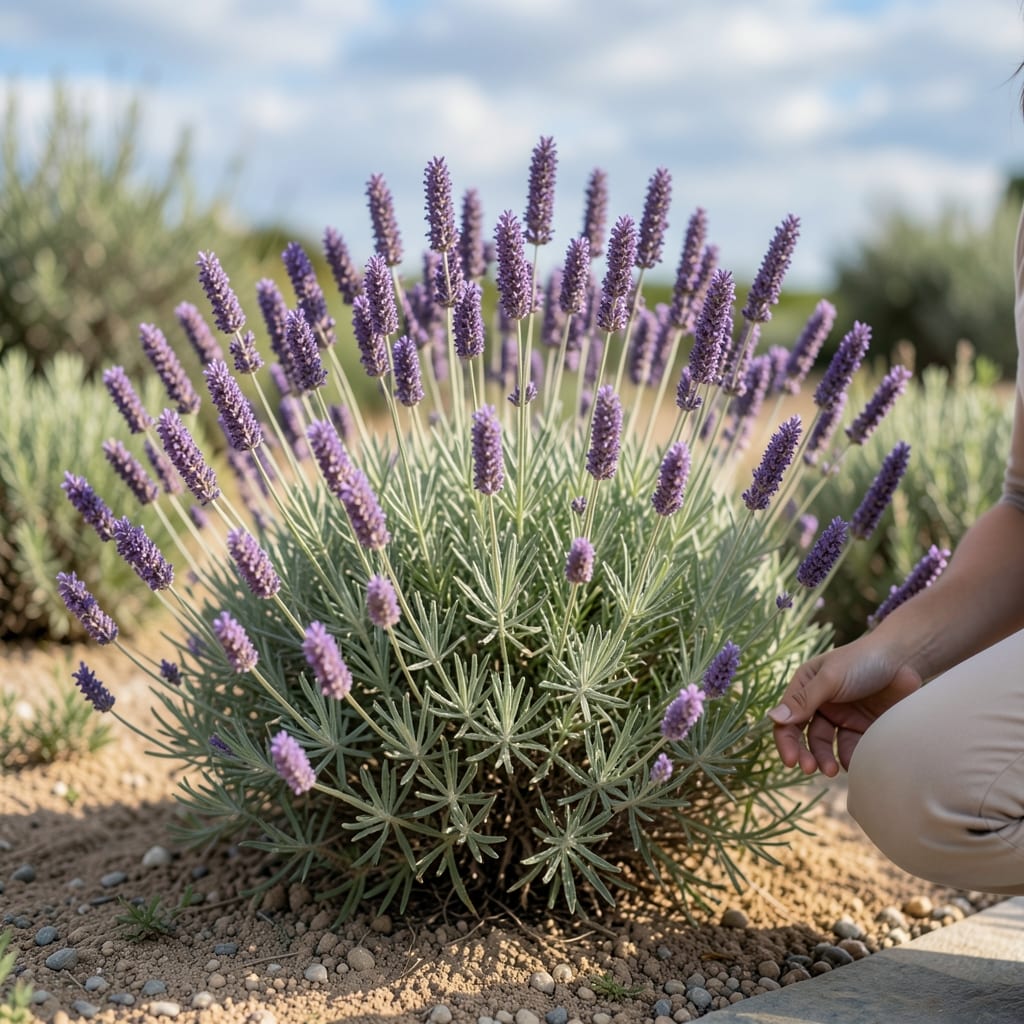
Wondering how tall and wide does lavender grow in your garden? If you're dreaming of fragrant purple blooms but working with limited space, this is the question that could change how you plan your planting. Lavender 🌿 isn't just beautiful—it's versatile, thriving in everything from tiny containers to sprawling landscapes, but its mature size depends on the variety you choose.
Most lavender plants reach between 2 to 4 feet tall and spread 3 to 5 feet wide at maturity, but some compact varieties stay as short as 8 to 12 inches. Whether you're growing English lavender with its classic tall spikes or French lavender's bushier form, spacing is everything—crowd your plants, and you'll sacrifice both airflow and those signature blooms.
What you might not realize is that pruning plays a huge role in controlling lavender's size. A little trimming after flowering keeps plants tidy and encourages denser growth, while neglect can turn your neat lavender hedge into a wild, leggy mess. The right variety and care make all the difference for small gardens.
Ready to transform your space without sacrificing beauty? I'll break down the best space-saving lavender types and exactly how to manage their growth—so you can enjoy that calming fragrance without the sprawl. Let's get started.


Lavender growth dimensions: height and spread by popular varieties
Understanding lavender growth dimensions starts with the variety you choose, as sizes can vary dramatically. Most gardeners assume all lavender plants grow similarly, but the truth is far more nuanced. For example, English lavender typically reaches 2 to 3 feet tall with a 3 to 4 feet spread, while Spanish lavender can grow even taller—up to 4 feet tall and 5 feet wide—if left unchecked.
If you're working with limited space, French lavender is often the best choice, as it tends to stay 1.5 to 2.5 feet tall and 2 to 3 feet wide. Dwarf varieties, like 'Hidcote' or 'Munstead,' are the real space-savers, topping out at just 8 to 12 inches tall and 1 to 2 feet wide. These compact options are perfect for containers, window boxes, or tight garden beds.
Here's the key takeaway: spacing is everything. Planting lavender too closely leads to competition for nutrients and sunlight, which weakens growth and reduces blooms. Most varieties need at least 2 to 3 feet of space between plants to thrive, but dwarf types can often get by with just 1 foot of separation. Proper spacing also improves airflow, reducing the risk of fungal diseases like powdery mildew.
Don't forget that pruning affects size. Regular trimming after flowering keeps lavender bushier and prevents it from becoming leggy. For taller varieties, a hard prune in early spring encourages denser growth, while dwarf varieties benefit from light shaping to maintain their compact form. Pruning also extends the plant's lifespan, as lavender can live for 5 to 10 years with proper care.
Climate plays a role too. Lavender grows more vigorously in USDA Zones 5 to 9, where it enjoys long, hot summers. In cooler climates, growth may be slower, and plants might stay smaller. Conversely, in hot, arid regions, lavender can grow more aggressively, so regular pruning is essential to keep it in check.
| Variety | Mature Height | Mature Spread | Spacing Needs | Best For |
|---|---|---|---|---|
| English Lavender (e.g., 'Munstead') | 2–3 ft | 3–4 ft | 2–3 ft apart | Borders, hedges |
| French Lavender (e.g., 'Grosso') | 1.5–2.5 ft | 2–3 ft | 1.5–2 ft apart | Containers, small gardens |
| Spanish Lavender (e.g., 'Papillon') | 3–4 ft | 4–5 ft | 3–4 ft apart | Large gardens, wildflower meadows |
| Dwarf Lavender (e.g., 'Hidcote') | 8–12 in | 1–2 ft | 1 ft apart | Window boxes, rock gardens |
| Goodwin Creek White | 1.5–2 ft | 2–3 ft | 1.5 ft apart | Containers, small spaces |
When planning your lavender garden, think beyond just height and width. Consider the shape of the plant too—English lavender grows upright with long flower spikes, while French lavender has a bushier, more rounded form. Spanish lavender often flops over without support, making it better suited for wild gardens or as a backdrop.
For container gardening, choose dwarf varieties or prune taller types regularly to keep them within bounds. A 12-inch pot works well for a single dwarf lavender plant, while larger containers (18 inches or more) can accommodate semi-dwarf varieties. Always use a well-draining potting mix to prevent root rot, which is lavender's biggest enemy.
One common mistake is assuming all lavender is the same. Spanish lavender, for instance, is far hardier in heat but can struggle in humidity, while English lavender is more cold-tolerant. Match your variety to your climate, and you'll avoid disappointment. For example, if you live in
Best lavender types for small gardens: space-saving choices
If you're working with a small garden or containers, choosing the right lavender variety makes all the difference. The good news? Many compact types thrive in tight spaces while still delivering that signature fragrance and beauty. My top picks for space-saving lavender include 'Hidcote', 'Munstead', and 'Goodwin Creek White', all of which stay under 2 feet tall and 3 feet wide—perfect for window boxes or balcony gardens.
For containers and window boxes, prioritize dwarf varieties like 'Hidcote' (8–12 inches tall) or 'Little Lady' (12–18 inches tall). These stay neatly contained in 12-inch pots and need minimal pruning. Even semi-dwarf types like 'Munstead' (1.5–2.5 feet tall) work well in 18-inch containers if you prune them lightly after flowering.
- 🌱 1. 'Hidcote' – 8–12 in tall, 1–2 ft wide, ideal for window boxes and rock gardens. Thrives in full sun and needs 1 foot of spacing.
- 🌿 2. 'Munstead' – 1.5–2.5 ft tall, 2–3 ft wide, perfect for small borders or 18-inch containers. Prune lightly after blooming to maintain shape.
- ✂️ 3. 'Goodwin Creek White' – 1.5–2 ft tall, 2–3 ft wide, a fragrant white variety that fits containers and small gardens. Space 1.5 feet apart.
- 🌳 4. 'Little Lady' – 12–18 in tall, 1–2 ft wide, a miniature lavender perfect for tiny pots or hanging baskets. Needs full sun and minimal pruning.
- 💧 5. 'Lavender 'Twickel Purple'' – 1–2 ft tall, 2 ft wide, a low-maintenance choice for small gardens or ground cover. Space 1.5 feet apart.
When planting lavender in containers, use a well-draining potting mix with added perlite or sand to prevent root rot. A terracotta pot (which dries out faster) is ideal, and always include drainage holes. For ground planting, amend heavy soil with gravel or sand to improve drainage—lavender hates soggy roots.
Pruning is your secret weapon for keeping lavender compact. After flowering, trim back one-third of the growth to encourage bushier growth. For dwarf varieties, a light shaping trim in early spring keeps them tidy. Avoid heavy pruning in fall, as lavender needs its foliage to protect it from winter cold.
For urban gardeners or renters, consider hanging baskets with trailing varieties like 'Little Lady' or 'Twickel Purple'. These spill over edges beautifully while staying contained. Just ensure they get at least 6 hours of sun daily—lavender won’t bloom without full sun.
One final tip: mulch around the base with gravel or pebbles to deter weeds and improve drainage. Avoid organic mulch, which can retain too much moisture. With the right variety and care, even the smallest space can become a fragrant lavender paradise!