
Trees
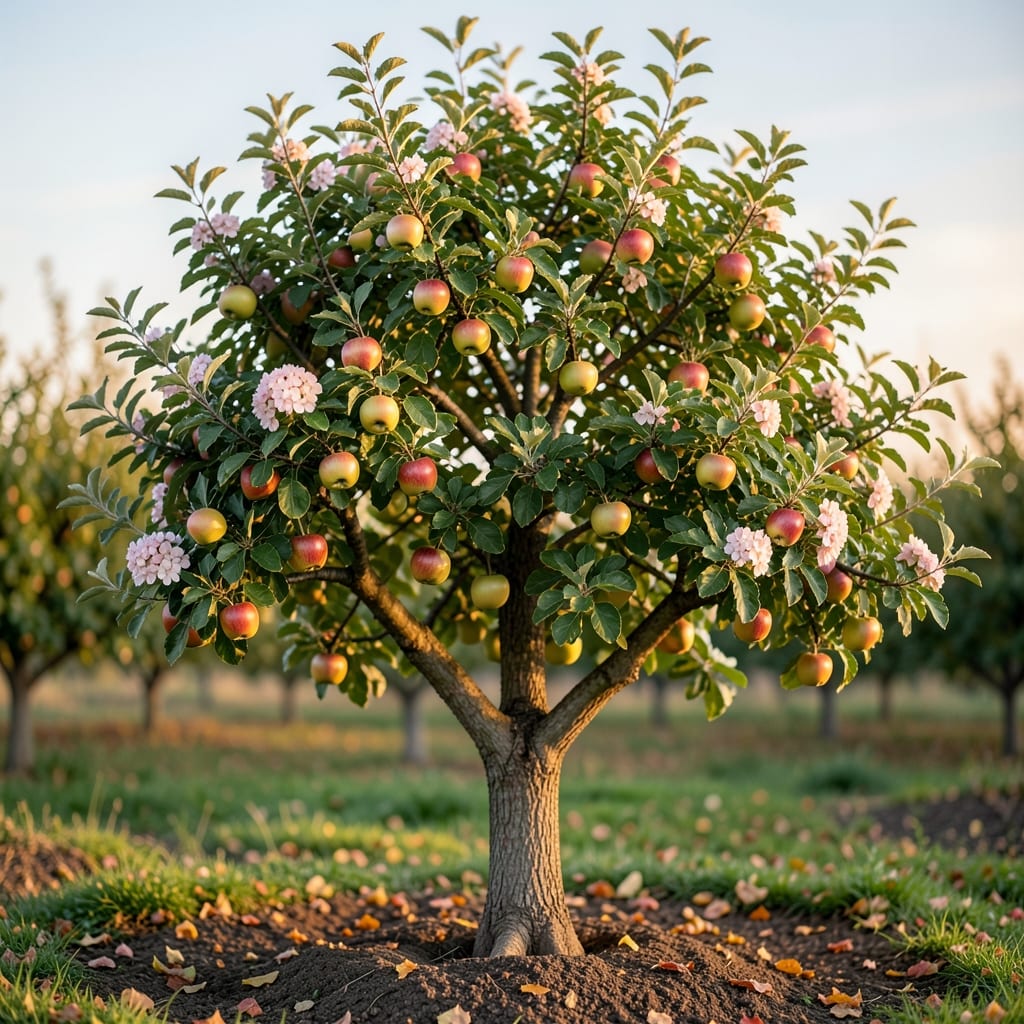
Want to know how tall apple trees grow before you plant one? The answer isn’t just about the variety—it’s all about the rootstock beneath your 🍎. That’s the secret to whether your tree will stay compact enough for a city backyard or stretch toward the sky like a backyard giant.
Most gardeners assume apple trees just grow tall, but the truth is, you can control their height with the right rootstock. A dwarf variety on M.9 rootstock might top out at just 6 feet, while the same apple grafted onto a standard rootstock could reach 25 feet or more. That’s a game-changer for space planning!
In this guide, I’ll break down the exact heights you can expect from different rootstock types—from dwarf to standard to giant—so you can pick the perfect size for your garden. Plus, I’ll share how pruning and care can fine-tune your tree’s growth over time.
Whether you’re dreaming of a backyard orchard or just one ornamental tree, knowing these details will save you years of frustration. Let’s get started!

Apple tree height by rootstock type: dwarf to standard to giant sizes
Apple tree height isn’t one-size-fits-all—it’s all about the rootstock you choose. This underground part determines whether your tree stays compact enough for a patio or stretches toward the sky like a backyard giant. Let’s break down the four main categories: dwarf, semi-dwarf, standard, and giant rootstocks, with their mature heights and best uses.
If you’re working with limited space—like a city balcony or suburban yard—dwarf rootstocks are your best bet. These trees typically reach 6 to 12 feet at maturity, making them perfect for container growing or small orchards. On the other end, standard rootstocks can tower over 20 to 30 feet, ideal for rural properties or large estates.
Here’s the key: the same apple variety (like Honeycrisp or Fuji) can grow dramatically different heights depending on its rootstock. For example, a Honeycrisp on M.9 rootstock might stay under 8 feet, while the same variety on MM.111 rootstock could reach 25 feet. That’s a game-changer for space planning!
Dwarf rootstocks like M.9 or B.9 are the top choices for urban gardeners. They produce fruit quickly—often within 2–3 years—and stay small enough for container growing or tight spaces. However, they’re less cold-hardy, so they’re best for USDA Zones 5–8. If you live in a colder climate, consider MM.111, a semi-dwarf rootstock that handles Zone 4 winters and grows to 12–18 feet.
For traditionalists or those with ample space, seedling rootstocks (like those used for heirloom varieties) can reach 20–30 feet or taller. These trees take longer to bear fruit—often 5–7 years—but they’re more disease-resistant and long-lived. If you’re planting for future generations, a standard rootstock might be worth the wait!
One common misconception is that dwarf trees produce smaller fruit. That’s not true! The scion variety (the top part of the tree) determines fruit size, not the rootstock. A dwarf Honeycrisp will yield the same-sized apples as a standard Honeycrisp—just on a smaller tree. This makes dwarf varieties perfect for high-density orchards or urban farming.
Before you plant, check your local climate zone and soil type. Some rootstocks, like M.26, struggle in heavy clay soils, while others, like MM.106, thrive in well-draining conditions. Always match your rootstock to your garden’s conditions for the best results. 🌱
Pro tip: If you’re unsure which rootstock to choose, start with a semi-dwarf like MM.111. It offers a balance of manageable size and cold hardiness, making it versatile for most home gardens. Plus, it’s easier to prune than a giant tree! ✂️
Now that you know the height ranges, the next step is understanding how rootstock affects growth rate and tree lifespan. That’s
How rootstock affects growth rate and lifespan of apple trees
Apple tree rootstock doesn’t just control height—it dictates growth speed, fruit production timing, and even how long your tree will bear fruit. For example, the M.9 rootstock produces trees that mature in just 3-5 years, while MM.111 can take 8-10 years to reach full size. This means faster rewards for impatient gardeners but also earlier decline in productivity.
Fast-growing rootstocks like B.9 or M.26 are perfect for commercial orchards where quick returns matter. These trees can produce fruit in 2-3 years but often have shorter overall lifespans (15-20 years). In contrast, Antonovka or Northern Spy on standard rootstock may take 6-8 years to bear fruit but can live for 50+ years with proper care.
Climate also plays a role—cold-hardy rootstocks like MM.106 or MM.111 thrive in USDA Zones 4-6 but grow slower due to their genetic resistance to winter stress. Meanwhile, dwarfing rootstocks like Colt or Budagovsky grow quickly in warm climates but may struggle in freezing winters without protection.
Here’s how rootstock impacts your apple tree’s lifespan and productivity at each stage:
| Rootstock Type | Mature Height | Years to Fruit | Lifespan | Best For |
|---|---|---|---|---|
| Dwarf (M.9, B.9) | 3-6 ft | 2-3 years | 15-20 years | Urban gardens, containers |
| Semi-Dwarf (MM.106) | 12-18 ft | 4-5 years | 25-30 years | Backyard orchards |
| Standard (MM.111) | 20-30 ft | 6-8 years | 50+ years | Rural properties, landscapes |
| Giant (Antonovka) | 30+ ft | 8-10 years | 60+ years | Historical orchards |
If you’re growing apples for quick harvests, dwarf rootstocks like M.26 or B.9 are ideal—they’ll fruit in just 2-3 years but require more frequent pruning to maintain size. For long-term investments, standard rootstocks like MM.111 or Northern Spy offer decades of fruit production with minimal upkeep.
One often-overlooked factor is rootstock compatibility with your apple variety. For example, Granny Smith thrives on M.9 but may struggle on MM.111 due to differing growth habits. Always check scion-rootstock pairings when selecting trees to avoid poor yields or stunted growth.
Pro tip: If you’re in a warm climate, consider hybrid rootstocks like G.41 or G.935, which combine dwarfing genes with disease resistance for faster, healthier growth. These can reduce your wait time for fruit by up to 2 years while keeping trees manageable.