
How To
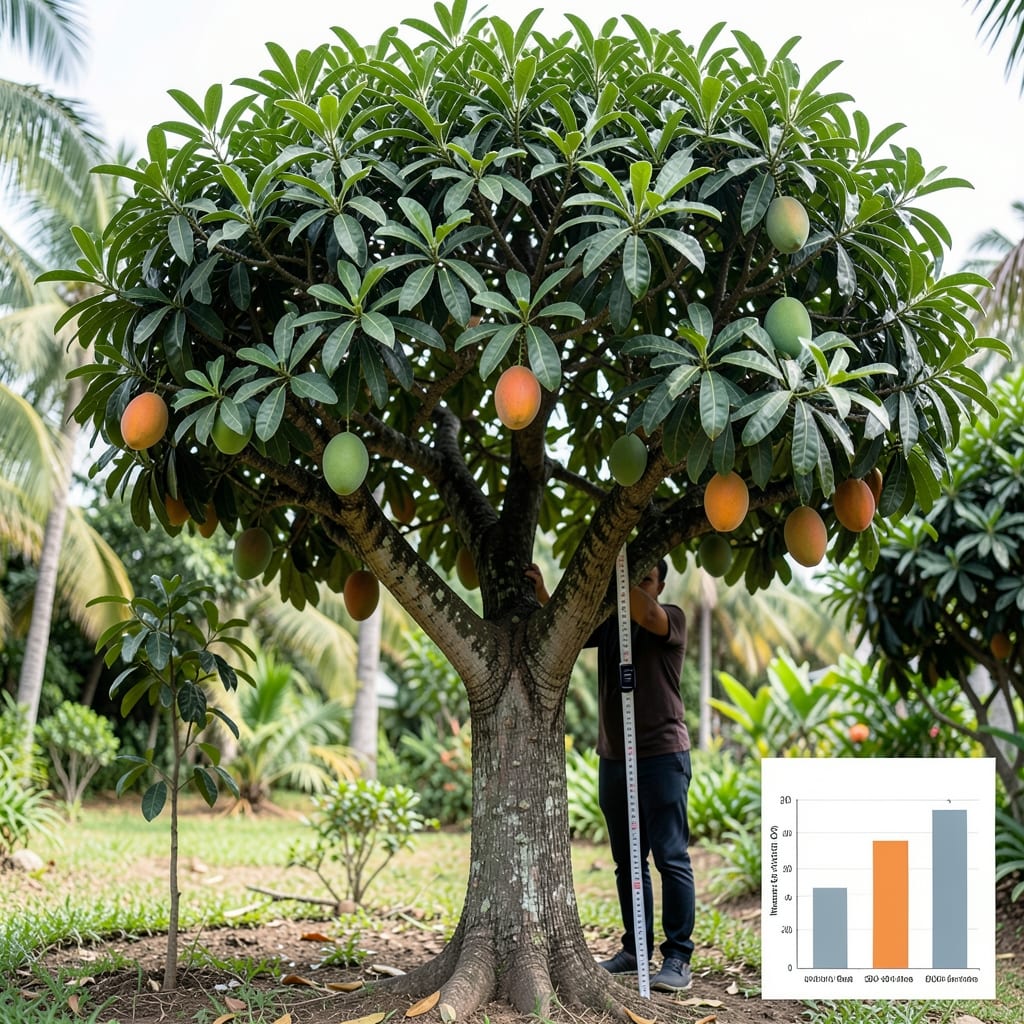
If you’ve ever wondered how tall can a mango tree grow, the answer might surprise you—especially if you’re picturing a manageable backyard tree. Some varieties of the 🥭 mango tree can reach 100 feet or more, towering over your house like a tropical skyscraper, while others stay compact enough for containers or small gardens.
But here’s the catch: your mango tree’s height depends on more than just its variety. Climate plays a huge role—whether you’re in frost-free Florida or a cooler subtropical zone like California’s coastal areas. Even the way you prune (or don’t prune) can turn a 50-foot giant into a 10-foot dwarf with a little effort.
For home gardeners, knowing these details is the key to planning your space—and avoiding a backyard jungle you can’t manage. Whether you’re dreaming of a small patio tree or a full-size tropical giant, I’ll break down the real heights by variety, climate, and care tips so you can grow the perfect mango tree for your yard.
Let’s dive into what determines your mango tree’s height and how to keep it at your ideal size—without sacrificing those juicy, sweet fruits you’re craving.

Mango tree height by variety: dwarf vs. standard vs. giant species
When planning your mango tree adventure, the first question is almost always: how tall can a mango tree grow? The answer varies dramatically depending on the variety and rootstock. Standard mango trees (Mangifera indica) can reach 60–100 feet in tropical climates, while dwarf varieties stay between 10–20 feet—making them perfect for containers or small yards. The difference lies in the rootstock used during grafting, which controls growth hormones and final height.
For home gardeners, dwarf varieties are game-changers. Grafted onto dwarfing rootstock like 'Cogshall' or 'Julie', these trees maintain manageable heights while still producing high-quality fruit. Even better, they often fruit earlier (as young as 3 years) compared to standard trees, which can take 5–7 years to bear fruit. If space is limited, dwarf varieties are your best bet for enjoying homegrown mangoes without sacrificing your lawn.
Standard varieties, like the 'Keitt' or 'Alphonso', are the giants of the mango world. These trees thrive in tropical climates and can soar to 80–100 feet if left unpruned. They’re stunning in large estates or orchards but require regular pruning to keep them under control in residential areas. Without pruning, their sprawling canopies can block sunlight for nearby plants and even damage roofs or power lines.
Now, let’s talk about the giant species like Mangifera altissima or Mangifera foetida, which can exceed 100 feet in their native habitats. These aren’t typically grown in home gardens due to their aggressive growth and specific climate needs, but they’re fascinating for those with large properties in tropical regions. If you’re dreaming of a shade-providing mango giant, these are the varieties to research—but be prepared for a long-term commitment to pruning and maintenance.
🌱 Mango Tree Height Comparison by Variety
| Variety | Rootstock Type | Mature Height | Best For |
|---|---|---|---|
| 'Cogshall' | Dwarfing | 10–15 ft | Containers, small yards |
| 'Keitt' | Standard | 60–80 ft | Orchards, large properties |
| 'Alphonso' | Standard | 70–100 ft | Tropical climates |
| 'Julie' | Dwarfing | 12–18 ft | Urban gardens, patios |
| 'Haden' | Semi-dwarf | 25–35 ft | Medium yards, pruned shapes |
Choosing the right variety isn’t just about height—it’s also about fruit quality and climate suitability. For example, the 'Carrie' variety is a semi-dwarf that stays around 20–25 feet and thrives in USDA Zones 9–11, making it ideal for Florida or California gardens. Meanwhile, the 'Kent' mango, another semi-dwarf, is cold-hardy enough for Zone 9b and reaches 20–30 feet, perfect for coastal areas with mild winters.
If you’re growing mangoes in containers, stick to dwarf varieties like 'Ice Cream' or 'Osteen', which max out at 10–15 feet. These are container-friendly and can be moved indoors during cold snaps in frost-prone areas. Just remember: container size matters. A 5-gallon pot will stunt growth, while a 15–20 gallon container gives roots enough room to support a dwarf tree’s needs.
For those with ample space and a love for bold statements, standard varieties like 'Irwin' or 'Glenn' offer exceptional flavor and can reach 70+ feet. These trees are monstrously productive but require aggressive pruning to manage their size. If you’re not up for the maintenance, consider topiary training to shape the tree into a manageable form while still enjoying its tropical beauty.
One final tip: pruning young mango trees can significantly influence their mature height
Climate zones and mango tree growth: how latitude affects height
Your mango tree’s final height isn’t just about its variety—it’s also heavily influenced by climate zones. In tropical regions like Southeast Asia, Central America, or parts of Africa, mango trees grow unrestrained, often reaching 80–100 feet without pruning. The warm, humid conditions and year-round growing season fuel rapid growth, turning mango trees into towering giants that dominate the landscape. If you’re in these zones, expect your standard varieties to soar unless you intervene with pruning.
In subtropical climates like Florida, Hawaii, or coastal California (USDA Zones 9–11), mango trees still thrive but may grow slightly shorter—typically 50–80 feet for standard varieties—due to slightly cooler winters. These areas offer the best balance for home gardeners, allowing you to grow both dwarf and standard varieties successfully. The key is choosing cold-hardy varieties like 'Carrie' or 'Kent', which tolerate brief dips below freezing better than tropical giants.
For those in cooler subtropical zones (like Zone 9b in Southern California or Arizona), height is often stunted by winter chills. Mango trees here rarely exceed 30–50 feet unless they’re heavily pruned or grown as container plants. The cold stress limits their growth potential, but it also makes them more manageable for smaller yards. Just be prepared to protect young trees during unexpected cold snaps with frost cloth or indoor relocation.
🌱 Mango Tree Height by Climate Zone
| Climate Zone | USDA Zone | Standard Height | Dwarf Height | Best Varieties |
|---|---|---|---|---|
| Tropical | 10–11+ | 80–100 ft | 10–20 ft | Alphonso, Keitt, Irwin |
| Subtropical | 9–11 | 50–80 ft | 10–25 ft | Carrie, Julie, Haden |
| Cooler Subtropical | 9b | 30–50 ft | 8–15 ft | Kent, Ice Cream, Osteen |
| Temperate (with protection) | 8b–9a | 20–30 ft | 6–12 ft | Cogshall, Glenn (container) |
If you’re pushing the limits in temperate zones (like parts of Texas or Australia’s cooler regions), mango trees will struggle to grow tall unless you provide year-round warmth. In these areas, even standard varieties rarely exceed 20–30 feet unless grown in large containers and moved indoors during winter. The limiting factor is the number of frost-free days—mango trees need at least 300 days above 50°F to thrive, so microclimates (like near heat-retaining walls) can make a huge difference.
One surprising factor is elevation. Even in tropical climates, mango trees at higher elevations (like 3,000+ feet in Hawaii or Mexico) grow shorter and slower due to cooler nights. In these cases, dwarf varieties are almost a necessity, as standard trees may only reach 40–60 feet instead of their full potential. The soil type also plays a role—well-draining, fertile soil encourages faster growth, while clay-heavy or waterlogged soil can stunt height by limiting root development.
For home gardeners in USDA Zone 10 or warmer, the best strategy is to choose the right variety for your microclimate. If you’re in a coastal area with mild winters, you can grow taller varieties like 'Glenn' or 'Carrie' and still enjoy manageable heights. But if you’re inland with colder nights, stick to dwarf or semi-dwarf varieties and pair them with winter protection to maximize growth potential. The right climate match can turn a 50-foot monster into a 10-foot beauty—or vice versa!