
Size
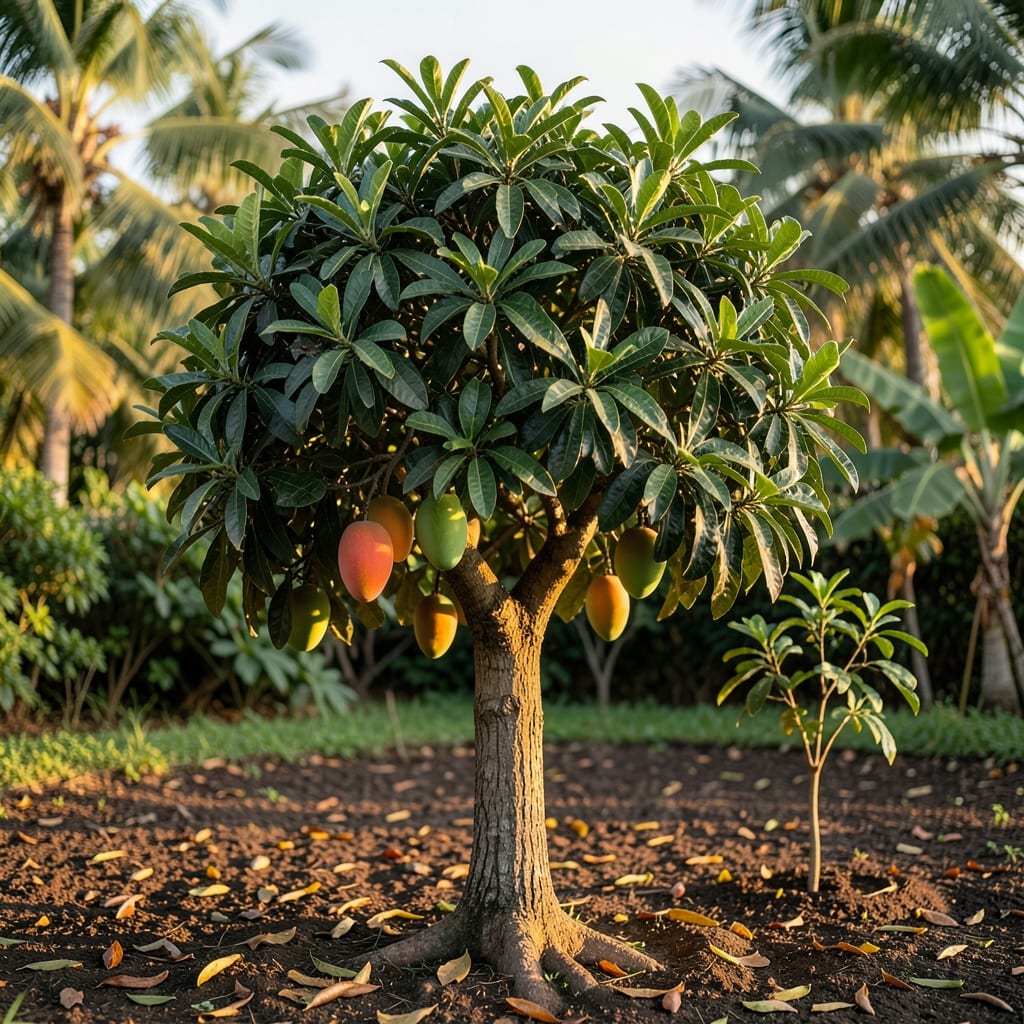
If you’re imagining a mango tree in your yard, you might be wondering: how tall can mango trees grow before they start feeling like they’ve taken over? The answer isn’t just about space—it’s about the variety you choose and where you live.
Some tropical varieties, like the towering Alphonso, can reach heights of 100 feet or more in ideal conditions, while dwarf varieties like Cogshall stay a manageable 15-25 feet. Whether you’re in USDA zones 10-11 or a slightly cooler subtropical area, the right care can help you control how big your 🥭 mango tree becomes.
Pruning, soil quality, and even container growing can make a huge difference in managing height. If you’re dreaming of fresh mangoes but worried about space, we’ll show you how to keep your tree at the perfect size—without sacrificing fruit.
Let’s break down the factors that determine a mango tree’s height and how you can shape its growth to fit your space—whether that’s a sprawling backyard or a cozy container.


Mango tree height by variety: from dwarf to giant species
Choosing the right mango tree variety is the first step in controlling its height. Some varieties are bred to stay compact, while others grow into majestic giants. For example, the Cogshall mango is a popular dwarf variety that tops out at 15-25 feet, making it perfect for backyards or even large containers. On the other end of the spectrum, the Alphonso variety can reach heights of 100 feet in ideal tropical conditions.
The height of a mango tree also depends on its rootstock. Grafting a desired variety onto a dwarfing rootstock can keep the tree significantly smaller than its standard counterpart. This technique is commonly used in commercial orchards to make harvesting easier. If you’re growing mangoes in a suburban yard, dwarf or semi-dwarf varieties are your best bet for managing space.
Here’s a quick comparison of popular mango varieties and their mature heights:
If you’re growing mangoes in containers, dwarf varieties like Cogshall or Julie (another compact option) are ideal. These trees can thrive in large pots, provided they get enough sunlight and proper drainage. Just remember that container-grown mango trees will need regular fertilizing and pruning to stay healthy and productive.
For those in cooler climates, varieties like Keitt or Kent are more hardy and can tolerate slight temperature drops. However, even these varieties may struggle in frost-prone areas, so winter protection (like moving containers indoors) is essential. The key is to match your variety to your USDA zone and growing conditions.
One common misconception is that all mango trees grow into massive giants. In reality, with the right variety and care, you can enjoy a fruit-bearing mango tree that fits perfectly in your space—whether that’s a 15-foot dwarf in a pot or a 40-foot semi-dwarf in your backyard.
Next, we’ll explore how your climate zone affects mango tree growth and what you can do to ensure your tree thrives where you live.
🌱
Climate zones and their impact on mango tree growth height
Your mango tree’s height potential isn’t just about the variety—it’s heavily influenced by your climate zone. In USDA zones 10-11, where frost is rare and humidity is high, mango trees can reach their full 100-foot glory. But in cooler subtropical zones, like parts of Florida or California, growth slows, often capping heights at 20-30 feet.
Tropical climates with year-round warmth and high humidity (like Hawaii or Puerto Rico) create ideal conditions for rapid vertical growth. Meanwhile, in marginal zones (e.g., zone 9b), trees may struggle to exceed 15-20 feet without extra care, like winter protection or dwarf rootstock.
🌡️ Temperature swings are the biggest height killers. Even a single light frost can stunt growth or kill young trees entirely. In Florida’s subtropical climate, mango trees often hit 20-30 feet by maturity, while in California’s coastal zones, they rarely surpass 15 feet due to cooler nights.
| Climate Zone | Mature Height | Growth Rate | Key Considerations |
|---|---|---|---|
| Tropical (Zones 10-11) | 50–100 ft | Rapid (3–6 ft/year) | Year-round growth, minimal winter stress |
| Subtropical (Zone 9b) | 15–30 ft | Moderate (1–3 ft/year) | Needs winter protection; slower growth |
| Marginal (Zone 8b) | 10–15 ft | Slow (0.5–1 ft/year) | Dwarf varieties recommended; high risk of frost damage |
Humidity plays a surprising role too. In high-humidity zones, like South Florida, mango trees grow taller and denser because they’re less stressed by water loss. But in drier subtropical areas, like Arizona, trees may grow shorter and leggier unless you water deeply and mulch heavily.
If you’re in a cooler zone, choose dwarf varieties like ‘Cogshall’ or ‘Julie’, which thrive in zone 9a and stay under 15 feet. For standard varieties, plant near sheltered walls or use row covers in winter to protect young trees from chilly nights.
Even in ideal climates, poor soil drainage or nutrient deficiencies can stunt height. Always plant in well-draining, slightly acidic soil (pH 5.5–6.5) and fertilize with citrus/mango-specific blends to encourage strong, upward growth.