
Size
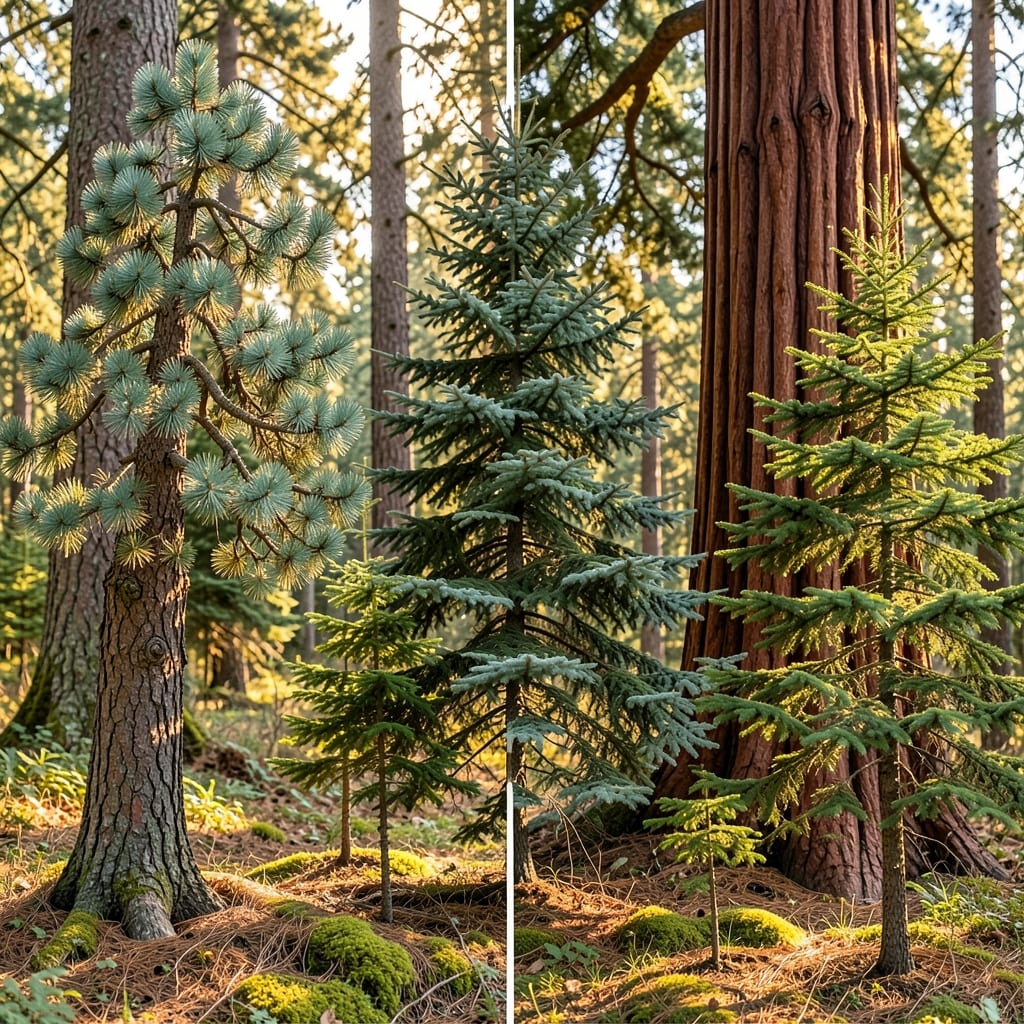
If you’ve ever gazed up at a towering 🌲 evergreen tree and wondered how tall evergreen trees can grow, the answer might surprise you. Some of these giants stretch over 300 feet—taller than a 30-story building—while others grow at a snail’s pace, taking decades to reach even modest heights.
But what if you want to grow one of these sky-scraping beauties in your own yard? The key lies in choosing the right species and understanding their growth habits. Whether you’re dreaming of a fast-growing pine that hits 100 feet in record time or a slow-and-steady spruce that takes centuries to mature, we’ve got the details.
In this guide, I’ll break down the tallest evergreens on the planet, their growth rates, and how climate, soil, and pruning can shape their height. Plus, I’ll share practical tips for growing these giants—even if your backyard isn’t exactly a redwood forest.
Ready to discover which evergreens can reach for the sky and how to nurture them? Let’s dive in.


Tallest evergreen trees in the world: species that exceed 100 feet
Evergreens aren’t just backyard staples—they’re architectural marvels that can dwarf skyscrapers. The tallest species, like coast redwoods and giant sequoias, reach heights that defy imagination. These giants thrive in specific climates and soil conditions, making them rare in home gardens but fascinating to study. Their vertical growth rates can surprise even seasoned gardeners, with some adding 3-5 feet per year under ideal conditions.
If you’re planning a landscape project or simply curious about nature’s tallest trees, understanding these species is key. Coast redwoods hold the world record, while Douglas firs and noble firs also climb past 100 feet. But before planting one, consider your space, climate, and long-term maintenance. These trees aren’t just tall—they’re living monuments that require patience and care to flourish.
🌲 Comparison Table: Tallest Evergreen Trees
The coast redwood isn’t just the tallest evergreen—it’s the tallest tree on Earth. Hyperion, the current record-holder, stands at a staggering 380 feet. These trees thrive in California’s foggy coastal regions, where high humidity and mild temperatures create the perfect growing environment. Their ability to grow so tall is partly due to their shallow but extensive root systems, which anchor them against wind.
Giant sequoias, while slightly shorter, are equally impressive. Their thick, fire-resistant bark allows them to survive wildfires, which actually help regenerate their ecosystem. These trees grow best in well-draining soil and cool summers, making the Sierra Nevada their ideal home. Unlike coast redwoods, sequoias prefer drier conditions, which is why they’re often found inland.
For gardeners in cooler climates, Douglas firs are a fantastic alternative. They grow rapidly and adapt well to varied soil types, including clay and loam. Their pyramidal shape makes them a favorite for windbreaks and privacy screens. However, their height means they’re best suited for large properties or rural settings where they won’t obstruct views or power lines.
If you’re looking for a slower-growing but still towering option, noble firs are worth considering. Their fragrant needles and upright growth habit make them popular for Christmas trees, but they can also reach 250 feet in ideal conditions. Their delicate branches mean they need protection from strong winds, so they’re best planted in sheltered areas.
Finally, western hemlocks offer a shade-tolerant option for gardeners with wooded properties. While they grow more slowly, their long lifespan (often exceeding 500 years) makes them a rewarding choice. Their ability to thrive in partial shade sets them apart from other tall evergreens, which typically require full sun.
Before planting any of these giants, consider your local climate and property size. Even the fastest-growing species take decades to reach their full height, so choose
Fastest-growing evergreens that reach 100+ feet: growth rates compared
If you’re short on time but still want a 100-foot evergreen, focus on fast-growing species like the Leyland cypress or lodgepole pine. These giants can grow 3-5 feet per year under ideal conditions, making them perfect for ambitious gardeners with patience.
The Leyland cypress is a hybrid powerhouse, combining the hardiness of Monterey cypress with the fast growth of Nootka cypress. In optimal climates, it can reach 60-70 feet in just 10 years, though it typically matures between 60-90 feet.
For pine lovers, the lodgepole pine is a top contender. Native to western North America, it grows 2-3 feet annually in wild conditions, though cultivated varieties can hit 100 feet in 30-40 years. The ponderosa pine isn’t far behind, with a growth rate of 1-2 feet per year and mature heights of 150-200 feet.
Growth Rate Comparison (Feet/Year)
To maximize growth, prioritize well-draining soil and full sun exposure. Evergreens like Douglas firs thrive in cool, moist climates, while cypress hybrids prefer warmer, coastal regions. Mulching with organic matter and deep watering during dry spells can boost vertical growth by 20-30%.
Pruning is key—avoid heavy topping, as it stresses the tree and slows growth. Instead, focus on structural pruning in early spring to encourage upward energy. Just remember: patience is a virtue. Even the fastest-growing evergreens take decades to reach their full height.
For smaller spaces, consider semi-dwarf cultivars like the ‘Green Giant’ arborvitae, which grows 3-5 feet per year but tops out at 40-50 feet. Perfect for urban gardens!