
How To
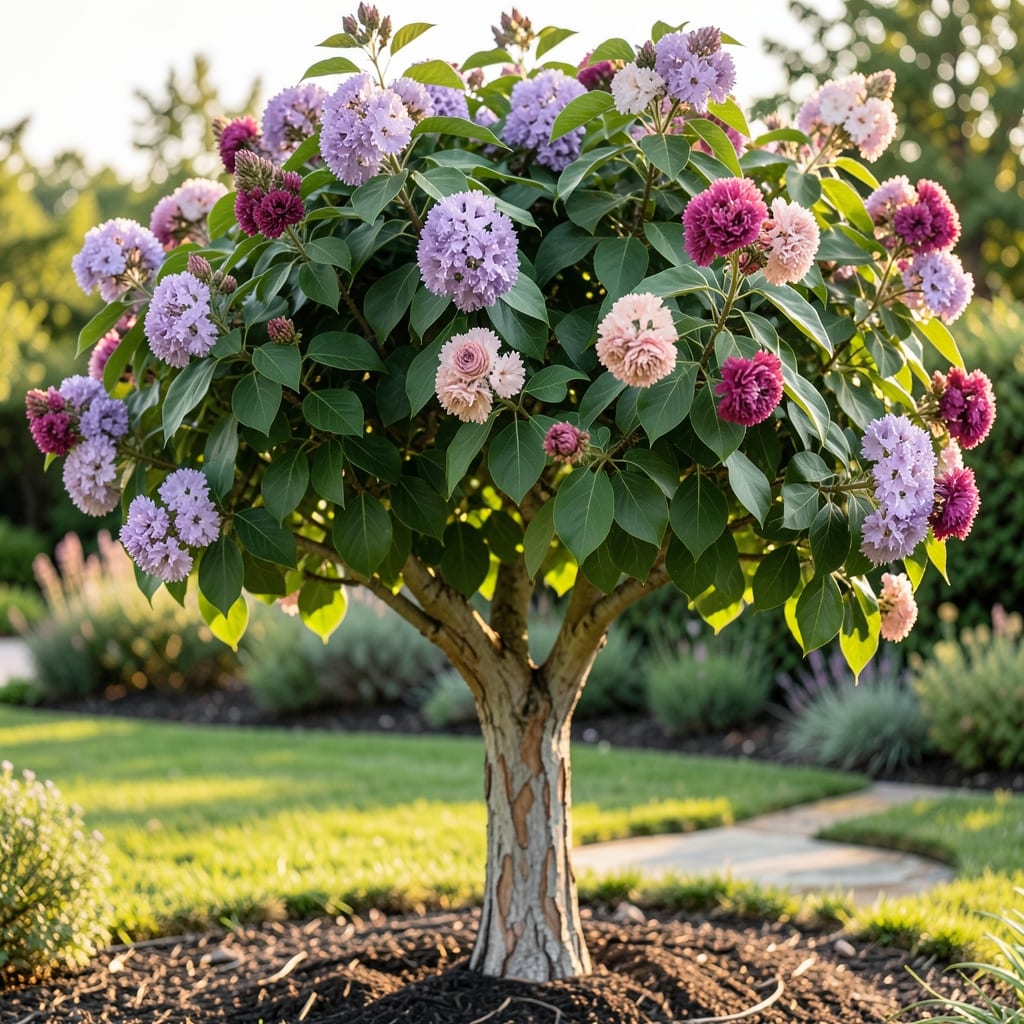
Wondering how tall crepe myrtle grow before you plant one in your yard? These stunning 🌸 trees can range from compact shrubs to towering giants—depending on the variety you choose.
If you're dreaming of a 6-foot privacy screen or a 30-foot shade provider, knowing the right size matters. Some varieties stay small enough for urban gardens, while others need room to stretch their branches wide.
In this guide, I’ll break down the height differences between dwarf, semi-dwarf, and standard crepe myrtles—plus the care tips to help them reach their full potential. Let’s make sure your planting plan fits your space perfectly!
Whether you're working with limited yard space or a sprawling landscape, choosing the right height variety is the first step to a beautiful, low-maintenance tree. Ready to find your match?


Crepe myrtle height by variety: smallest to tallest options
Crepe myrtles come in stunning variety, and their mature heights can differ by 24 feet or more! Whether you need a 6-foot privacy hedge or a 30-foot shade giant, choosing the right variety is key. Below, I’ve organized the most popular types by height—from the smallest dwarf varieties to the tallest standard trees—so you can pick the perfect fit for your space.
For urban gardens or small yards, dwarf varieties like 'Arapaho' or 'Tonto' stay under 8 feet, making them ideal for containers or tight spaces. Meanwhile, standard varieties like 'Natchez' or 'Catawba' reach 20-30 feet, perfect for large landscapes or as focal points. Let’s dive into the details so you can visualize which size will work best for your needs.
🌱
| Variety | Mature Height | Canopy Width | Best For |
|---|---|---|---|
| Arapaho | 6-8 ft | 5-7 ft | Small yards, containers |
| Tonto | 7-9 ft | 6-8 ft | Urban gardens, patios |
| Muskogee | 10-12 ft | 8-10 ft | Medium landscapes |
| Sioux | 12-15 ft | 10-12 ft | Privacy screens |
| Natchez | 20-30 ft | 15-20 ft | Shade trees, large yards |
| Catawba | 25-30 ft | 18-22 ft | Focal points, streetscapes |
| Tuscarora | 20-25 ft | 15-18 ft | Shade and color |
If you’re planting in containers, stick to dwarf varieties like 'Arapaho' or 'Tonto', which thrive in 15-20 gallon pots. For privacy screens, 'Sioux' or 'Muskogee' create a 10-12 foot barrier in just a few years. And if you want a statement tree, 'Natchez' or 'Catawba' will give you that 30-foot wow factor.
Pro tip: Always check the canopy width too—some varieties spread twice as wide as they grow tall! For example, a 10-foot 'Muskogee' might have an 8-foot spread, while a 30-foot 'Natchez' can stretch 20 feet wide. Plan accordingly to avoid overcrowding.
🌿
One common mistake is assuming all crepe myrtles grow 20+ feet. Many gardeners end up with overgrown trees because they didn’t account for the variety’s mature size. For instance, planting a 'Natchez' too close to your house could mean pruning headaches later. Always measure your space and choose a variety that fits—height isn’t the only factor!
For urban gardens with limited space, consider multi-stemmed varieties like 'Tonto', which grow in clusters instead of a single trunk. This creates a fuller, bushier look in smaller areas. If you’re unsure,
How to choose the right crepe myrtle height for your space
Choosing the right crepe myrtle height for your space isn’t just about fitting it into your yard—it’s about creating a harmonious balance between the tree’s mature size and your landscape goals. Whether you’re working with a small urban patio or a sprawling backyard, the wrong choice can lead to overcrowding, pruning nightmares, or even structural damage to your home. Let’s break down how to match the perfect variety to your space with confidence.
Start by measuring your available planting space. For dwarf varieties like 'Arapaho' (6-8 ft tall), a 5-foot radius around the tree is ideal. But for standard varieties like 'Natchez' (20-30 ft tall), you’ll need at least a 15-foot clearance in all directions—especially if you want to avoid constant pruning. Pro tip: Always check the canopy width, which can be just as wide as the tree is tall or even wider!
🌳
Key Takeaway: Space Planning for Crepe Myrtles
- 📏 Small Yards (Under 1,000 sq ft): Choose dwarf varieties like 'Arapaho' or 'Tonto' (6-9 ft tall). Plant near patios or walkways for easy access.
- 🏡 Urban Gardens (1,000-3,000 sq ft): Opt for semi-dwarf types like 'Muskogee' (10-12 ft) or 'Sioux' (12-15 ft). Keep at least 8 feet from structures.
- 🌳 Large Yards (Over 3,000 sq ft): Standard varieties like 'Natchez' (20-30 ft) thrive here. Plant 20+ feet from buildings to prevent root conflicts.
- 🏡 Near Structures: Always maintain 3-5 feet of clearance between the tree’s mature canopy and your house, fence, or driveway.
Remember: Crepe myrtles have aggressive root systems. Planting too close to foundations can cause cracks or drainage issues over time.
For privacy screens, focus on height-to-width ratios. A 12-foot-tall 'Sioux' with a 10-foot spread creates a dense, impenetrable barrier in just a few years. If you’re planting multiple trees for a screen, space them 6-8 feet apart to ensure they fill in quickly. For shade trees, prioritize canopy width—a 25-foot 'Catawba' with a 20-foot spread will cover a huge area with dappled sunlight.
Another critical factor is your yard’s layout. If you have power lines or overhead utilities, avoid tall varieties like 'Natchez' or 'Catawba'. Instead, opt for 'Muskogee' (10-12 ft), which stays well below most power lines. For sloped yards, plant taller varieties on the lower side to prevent erosion and provide natural support with their wide root systems.
💡 Finally, consider future growth. Even dwarf varieties can outgrow their space if not pruned properly. If you’re unsure, start with a smaller variety and prune strategically to control height. For example, heading back (cutting back) the main branches in late winter can reduce height by 2-3 feet without harming the tree. This is especially useful if you accidentally plant a taller variety in a small space.
By matching your yard size, layout, and goals to the right crepe myrtle variety, you’ll avoid common mistakes like overcrowding or unmanageable growth. Take your time to measure, research, and visualize how the tree will fit into your space—your future self (and your neighbors!) will thank you.