
How To
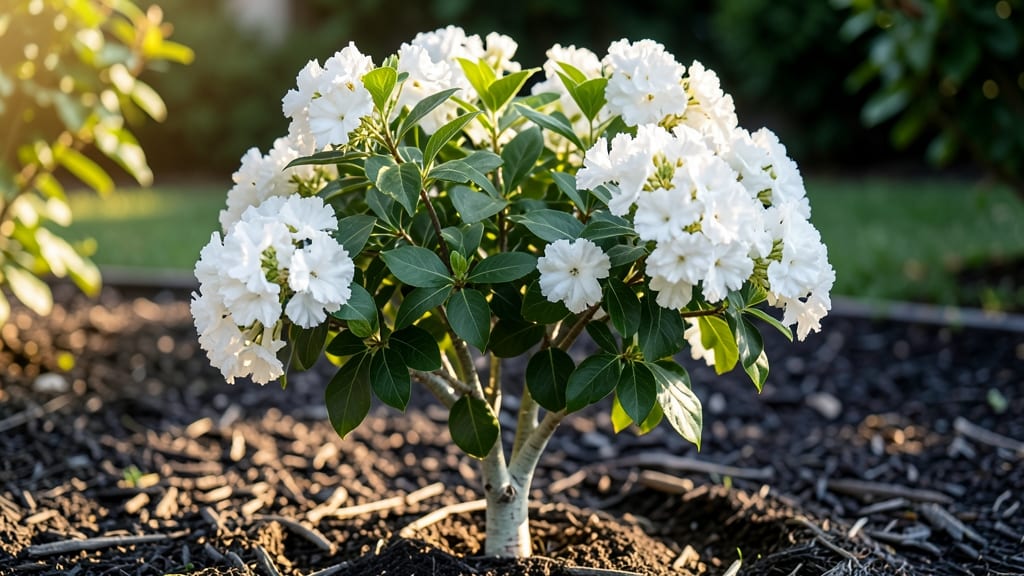
If you're eyeing that perfect low-maintenance shrub for your garden but want to skip the towering crepe myrtles, dwarf varieties are your answer—but how tall do they really grow?
The truth is, these compact beauties typically mature between 3 and 6 feet, making them ideal for small spaces or containers.
What sets dwarf crepe myrtles apart is their predictable growth pattern, unlike their standard counterparts that can reach 15 to 25 feet. Whether you're planning a cozy patio border or a container garden, knowing their exact height range helps you visualize their potential before planting.
Plus, their manageable size means less pruning and more blooms.
But here’s the catch: not all dwarf varieties grow the same. Some stay closer to 3 feet, while others stretch toward 6 feet.
The key is choosing the right variety for your space—and we’ll break down the exact differences so you can pick the perfect fit for your garden.
Ready to transform your outdoor space with these easy-care, flower-packed shrubs? Let’s dive into the specifics so you can plant with confidence and enjoy years of vibrant blooms.


Dwarf crepe myrtle height ranges by popular variety (exact measurements)
Dwarf crepe myrtles are the perfect compact solution for small gardens, containers, and urban spaces—but not all varieties stay the same height.
While most mature between 3 to 6 feet, some varieties like 'Arapaho' or 'Tonto' top out at just 3 feet, making them ideal for patio planters. Others, like 'Natchez', can reach 6 feet if given ideal conditions.
Understanding these differences helps you plan spacing and avoid overcrowding.
Crepe myrtles grow 1 to 2 feet in their first year, then 12 to 24 inches annually until they reach maturity—typically by year 3 or 4. Their growth rate slows after reaching full height, which is why they’re so low-maintenance.
For example, 'Catahoula' grows 4 to 5 feet tall, while 'Sioux' stays under 4 feet. These distinctions matter when pairing them with other plants or designing garden beds.
Here’s the key: dwarf varieties rarely exceed 6 feet, but their width can be just as impressive—often 3 to 5 feet wide. This means they need 3 to 5 feet of clearance on all sides for airflow and sunlight penetration.
If you’re planting near a fence or wall, choose a narrower variety like 'Pocomoke', which matures at 4 feet tall and 3 feet wide.
🌸
🌱 Dwarf Crepe Myrtle Height Guide
| Variety | Mature Height | Width | Growth Rate | Best For |
|---|---|---|---|---|
| Arapaho | 3–4 ft | 3–4 ft | Slow | Containers, small patios |
| Tonto | 3–4 ft | 3–4 ft | Moderate | Foundation planting |
| Natchez | 4–6 ft | 4–5 ft | Fast | Privacy screens |
| Catahoula | 4–5 ft | 4–5 ft | Moderate | Mixed borders |
| Sioux | 3–4 ft | 3–4 ft | Slow | Urban gardens |
| Pocomoke | 4 ft | 3 ft | Moderate | Narrow spaces |
| Centennial | 5–6 ft | 4–5 ft | Fast | Large containers |
All heights are approximate and may vary based on growing conditions, pruning, and soil quality.
When selecting a variety, consider your garden’s sunlight exposure. Most dwarf crepe myrtles thrive in full sun (6+ hours daily), but varieties like 'Centennial' tolerate partial shade better than others.
If your space gets less than 4 hours of sun, opt for 'Tonto' or 'Arapaho', which handle lower light better while still blooming.
Pruning plays a huge role in maintaining height. Dwarf varieties benefit from light pruning after flowering to encourage bushier growth. Avoid heavy pruning in late winter, as this can stimulate rapid spring growth that may exceed your desired height.
For example, if your 'Natchez' starts to outgrow its space, prune back 1/3 of the tallest stems in early spring to control its height.
Pro tip: Mulch around the base with 2–3 inches of organic mulch (like pine straw or shredded bark) to slow root competition and reduce water stress. This helps keep growth compact and controlled, especially in hot, dry climates where crepe myrtles can grow faster.
Always water deeply but infrequently—dwarf varieties are drought-tolerant once established, but consistent moisture in their first year ensures steady growth.
If you’re planting multiple dwarf crepe myrtles, space them 3 to 5 feet apart to allow for airflow and prevent disease. For example, a 4-foot-tall variety like 'Catahoula' needs 4 feet of clearance
How to choose the right dwarf crepe myrtle for your garden space
Selecting the perfect dwarf crepe myrtle depends on more than just height—your garden’s space constraints, sunlight exposure, and maintenance preferences all play a role. Compact varieties like 'Arapaho' or 'Natchez' thrive in containers or tight urban spaces, while semi-dwarf types like 'Tonto' offer a balance for small yards.
Let’s break down how to match your space to the right variety.
For containers or patios, prioritize varieties that stay under 4 feet tall at maturity. 'Arapaho' (3–4 ft) and 'Natchez' (3–4 ft) are ideal choices, as they fit snugly in 15-gallon pots while still producing stunning blooms.
These varieties also respond well to regular pruning, making them perfect for shaping into small trees or hedges.
- 'Arapaho' – Best for containers, blooms in pink
- 'Natchez' – White flowers, drought-tolerant
- 'Catahoula' – Purple blooms, slow-growing
- 'Tonto' – Versatile for small yards, lavender blooms
- 'Muskogee' – Red flowers, thrives in heat
- 'Centennial' – White blooms, disease-resistant
If your garden has partial shade (3–6 hours of sun), opt for light-adaptable varieties like 'Centennial' or 'Muskogee'. These handle moderate shade better than full-sun varieties while still delivering vibrant blooms. Just avoid placing them in deep shade, where they may produce fewer flowers and grow leggy.
For urban gardens or small front yards, 'Tonto' is my go-to recommendation. It reaches 4–6 feet tall but stays proportionally narrow, making it perfect for foundation plantings or as a privacy screen along fences. Its lavender flowers also attract pollinators, adding ecological value to your space.
When planting in containers, use a well-draining potting mix and upgrade your pot size by 2–3 inches every 2 years to accommodate root growth. Dwarf crepe myrtles in pots need consistent moisture—water when the top 1–2 inches of soil feel dry.
Avoid overwatering, which can lead to root rot.
Finally, consider your pruning goals. If you want a neat, manicured look, varieties like 'Natchez' respond well to light pruning after blooming. For a more natural, bushy habit, let 'Arapaho' or 'Tonto' grow freely and prune only to remove dead wood.
Always use sterilized shears to prevent disease spread.
With the right variety and care, your dwarf crepe myrtle will thrive for years—adding color, texture, and curb appeal to your garden without overwhelming your space. 🌸