
Trees
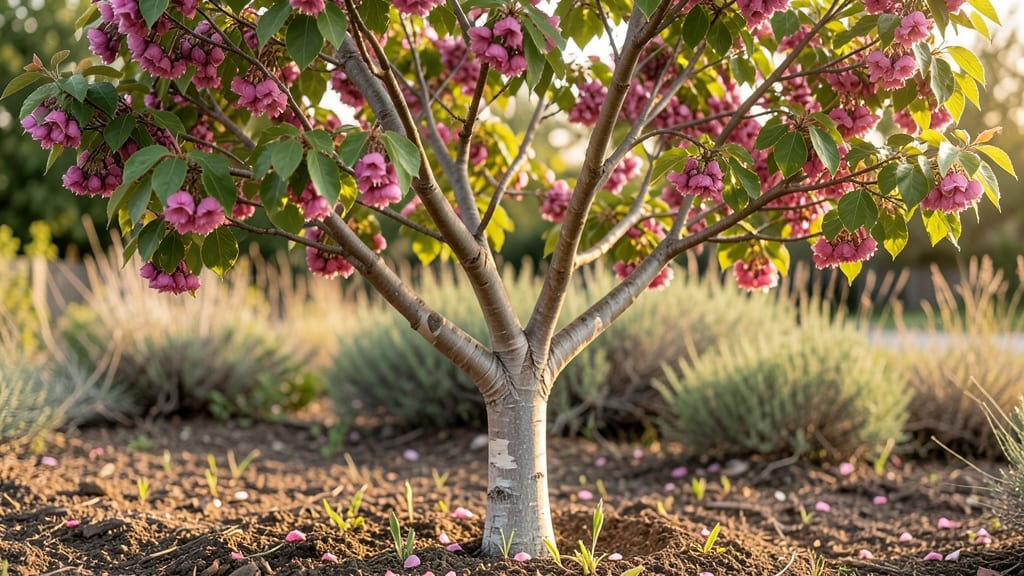
If you're planning your garden and wondering "how tall do Eastern Redbud trees grow", you're not alone—this small but showstopping tree can reach 15 to 30 feet at maturity, depending on growing conditions.
The Eastern Redbud 🌸 isn't just a pretty face; it's a versatile tree that thrives in USDA Zone 6a and beyond, making it a top pick for homeowners who want both beauty and practicality.
What makes this tree so appealing is its adaptability—whether you have a cozy backyard or a larger landscape, the Eastern Redbud can fit right in. It grows at a moderate pace, so you won’t have to wait decades to see those stunning pink blooms.
Plus, its compact size means it won’t overwhelm smaller spaces, making it perfect for urban gardens or suburban yards.
But here’s the thing: its height isn’t the only factor to consider. Sunlight, soil quality, and even pruning habits can influence how tall it grows. If you’re thinking of planting one this spring, you’ll want to know how to encourage healthy growth while keeping it at your desired height.
Let’s break down what you need to know to make the most of this charming tree.
From understanding its growth habits to learning how to prune it effectively, you’ll discover everything you need to ensure your Eastern Redbud thrives—without taking over your garden. Ready to get started?


Eastern Redbud tree height: mature size ranges by growing conditions
The Eastern Redbud (Cercis canadensis) typically reaches a mature height of 15 to 30 feet, making it a versatile choice for both small and medium-sized gardens. However, its final height depends heavily on growing conditions like sunlight, soil quality, and regional climate.
In ideal settings, these trees can grow taller, while restricted conditions may keep them shorter, even as a large shrub.
For home gardeners, understanding these variations helps you choose the perfect spot. A 20-foot Eastern Redbud fits well near patios or as a focal point, while smaller varieties (like dwarf cultivars) stay under 12 feet—ideal for tight spaces or container gardening.
Let’s break down how these factors influence height so you can plan accordingly.
| Growing Condition | Height Range | Notes |
|---|---|---|
| Full Sun (6+ hours/day) | 20–30 ft | Fastest growth, upright form |
| Partial Shade (3–6 hours/day) | 15–25 ft | Slower growth, denser canopy |
| Poor Soil/Drainage | 10–18 ft | Stressed growth, may become shrub-like |
| Rich, Well-Draining Soil | 25–30 ft | Optimal conditions for max height |
| Dwarf Cultivars (e.g., 'Covey') | 8–12 ft | Genetically compact, ideal for small yards |
In USDA Zones 4–9, Eastern Redbuds thrive, but their height varies by region. For example, in the southeastern U.S., they often reach 25–30 feet due to warmer climates and longer growing seasons.
Meanwhile, in cooler northern zones (like Zone 4), they may max out at 15–20 feet unless given extra care.
Soil quality plays a critical role too. Eastern Redbuds prefer moist, well-draining soil with a slightly acidic to neutral pH (6.0–7.5). If planted in clay-heavy or waterlogged soil, their roots struggle, stunting growth. Amending the soil with compost or sand before planting can encourage healthier, taller growth over time.
Sunlight exposure directly impacts both height and bloom production. While Eastern Redbuds tolerate partial shade, they grow 10–15% taller in full sun. This is because sunlight fuels photosynthesis, which drives vertical growth. If your yard has limited sun, consider planting near a south-facing wall to maximize light exposure.
Pruning also influences height. If left unpruned, Eastern Redbuds develop a rounded, vase-like shape with a single trunk. However, regular pruning (especially in early spring) can encourage a bushier, shorter form—perfect for hedges or small landscapes.
Just avoid heavy pruning after flowering, as this can reduce next year’s pink bloom display.
For urban gardens or small yards, choose dwarf varieties like 'Covey' or 'Ruby Falls' (weeping form). These stay under 12 feet while still delivering stunning spring flowers. Even standard Eastern Redbuds can be kept smaller with annual pruning and proper spacing at planting.
Pro tip: When planting, dig a hole twice as wide as the root ball but only as deep. This encourages root expansion horizontally, which supports taller growth over time. Mulch the base with 2–3 inches of organic mulch to retain moisture and regulate soil temperature—both critical for optimal height development.
If you’re unsure whether your space can accommodate an Eastern Redbud, start with a smaller cultivar or plant it near a fence or wall to contain its spread. With the right conditions, even a 30-foot Eastern Redbud can become a breathtaking centerpiece in your landscape.
Eastern Redbud tree height: mature size ranges by growing conditions
The Eastern Redbud tree (Cercis canadensis) typically reaches a mature height of 15 to 30 feet, though its exact size depends heavily on growing conditions.
In ideal settings—like well-draining soil and full sun—you’ll often see trees on the taller end of this range, while cooler climates or shaded spots may keep them shorter. Understanding these variations helps you plan for their long-term placement in your yard.
For example, in USDA Zones 6-9, where Eastern Redbuds thrive, a tree planted in full sun might hit 25-30 feet in 15-20 years. In partial shade or less fertile soil, expect 15-20 feet.
Regional differences also play a role—Northern states often yield shorter trees compared to Southern climates, where growth is more vigorous.
| Condition | Mature Height Range | Growth Rate |
|---|---|---|
| Full Sun + Rich Soil | 20–30 feet | Fast (1–2 ft/year early on) |
| Partial Shade | 15–20 feet | Moderate (6–12 inches/year) |
| Poor Soil/Drought | 10–15 feet | Slow (3–6 inches/year) |
| Urban/Container (Dwarf Varieties) | 8–12 feet | Controlled (pruning required) |
Soil quality is another critical factor. Eastern Redbuds prefer well-draining, slightly acidic soil (pH 6.0–7.0). Amending clay or sandy soil with compost can boost growth by 20–30%, helping trees reach their full height potential faster.
If your yard has compacted soil, consider planting in raised beds to encourage deeper root systems and taller growth.
Pruning also influences height. While Eastern Redbuds naturally grow as small trees, aggressive pruning in early spring can limit height to 10–15 feet, making them ideal for smaller yards.
However, avoid heavy pruning after flowering, as this can reduce next year’s pink bloom display, which is one of their most prized features.
For landscape planning, visualize the tree’s spread too—Eastern Redbuds have a rounded canopy 25–35 feet wide. In tight spaces, consider the 'Covey' cultivar, a dwarf variety that maxes out at 8–12 feet while still producing vibrant blooms. This makes it perfect for patios or foundation plantings.
If you’re unsure whether your space can accommodate an Eastern Redbud, measure the area where you’d like to plant it. Remember: 30 feet of height requires at least that much clearance above power lines, roofs, or other structures.
When in doubt, opt for a semi-dwarf variety (12–18 feet) to balance beauty and practicality.