
Companion Plants
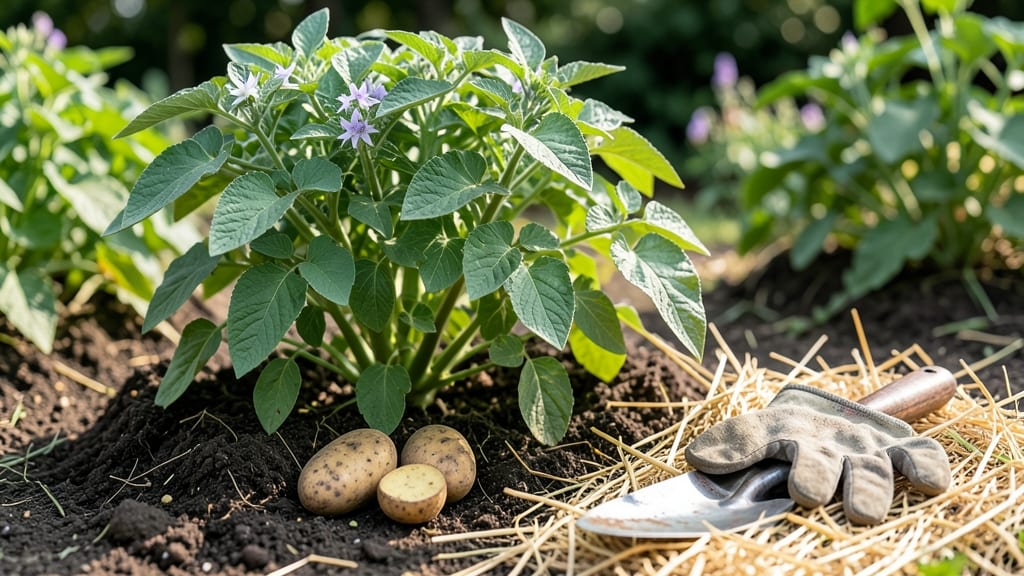
If you’ve ever wondered when to plant potatoes in Texas, the answer isn’t as simple as checking a national calendar—because Texas’s climate varies wildly from the Panhandle to the Rio Grande Valley.
Plant too early, and your 🥔 will rot in cold, damp soil; too late, and you’ll miss the sweet spot for harvest before summer’s brutal heat kicks in.
Here’s the game-changer: North Texas gardeners (Zones 8a-8b) should get their seed potatoes in the ground by mid-February, while South Texas growers (Zones 9a-10b) can start as early as October for a winter harvest.
The key? Timing it so the soil hits 45°F—cold enough to prevent sprouting but warm enough to avoid stunted growth.
But it’s not just about dates—it’s about your microclimate. Urban heat islands in Dallas or Houston can push planting back a week or two, while high-altitude areas like Lubbock might need an earlier start.
We’ll break down how to adjust for your specific corner of the Lone Star State, so you’re not guessing whether your potatoes will thrive or wither.
Ready to dig in? Let’s map out the exact weeks before last frost for your region, plus the best varieties to beat Texas’s heat and humidity. Your first harvest could be just 90 days away—if you plant at the right moment.
Texas potato planting Zones: exact weeks before last frost by region
Texas’s diverse climate zones mean your potato planting window depends heavily on where you live. In North Texas (USDA Zones 7b-8a), like Dallas and Fort Worth, the last frost date typically falls around February 15.
Aim to plant 4-6 weeks before that date—so mid-January to early February—when soil temperatures hit 45°F or warmer.
For Central Texas (Zones 8a-9a), including Austin and San Antonio, the last frost usually arrives by February 1.
Here, you can start planting as early as late January if your soil warms up quickly. South Texas (Zones 9a-10a), like the Rio Grande Valley, has a longer growing season and even allows for fall planting—think October to November for a winter harvest.
Cold-sensitive potato varieties like Yukon Gold or Red Pontiac need warmer soil to thrive, while heat-tolerant types such as Purple Viking can handle Central and South Texas’s hotter springs. Always check your local frost dates using the Texas A&M AgriLife Extension for precision.
🌱
If you’re in Zone 8a or colder, prioritize early-maturing varieties like Red LaSoda (70-80 days to harvest) to avoid summer heat stress.
In Zones 9a-10a, you can stretch your season with fall planting—just ensure tubers form before first frost, which can hit as early as November 1 in South Texas.
Pro tip: Use black plastic mulch to warm soil faster in North Texas, or shade cloth in South Texas to protect plants from intense afternoon sun. Both tricks help extend your planting window by 1-2 weeks.
For urban gardeners, container-growing potatoes work well in Central Texas if you start seeds indoors by late January and transplant after last frost. Just ensure your pots are at least 12 inches deep to accommodate tuber growth.
Always chit your seed potatoes (sprout them indoors) 4-6 weeks before planting—this gives you a head start in Texas’s short growing windows. Place them in a bright, cool spot (around 50°F) to encourage strong sprouts before soil is ready.
🌿
How to adjust planting for Texas microclimates: heat, rain, and soil factors
Texas’s extreme heat and variable rainfall demand smart adjustments to your potato planting plan. Unlike cooler climates, Texas gardeners must account for urban heat islands, sandy soils, and flash floods—all of which can derail your harvest if ignored.
For example, Dallas’s concrete jungles can be 10°F hotter than rural areas, while South Texas’s clay soils bake hard in summer. Let’s break down how to adapt your approach.
First, shade strategies become critical in North Texas’s 100°F+ summers. Use row covers or lightweight shade cloth (30-50% shade) during peak heat to protect young plants. In Central Texas, where humidity spikes in July, prioritize well-draining soil to prevent rot.
Amend clay with compost or sand to improve aeration, and plant on raised beds if your yard floods easily.
🔍 Texas-Specific Adjustments
DO:
- Plant in elevated beds for drainage
- Use mulch (straw) to retain moisture
- Choose heat-tolerant varieties (Yukon Gold)
- Water deeply in mornings
DON'T:
- Plant in low-lying areas (flood risk)
- Overwater without drainage (root rot)
- Use cold-sensitive varieties in South Texas
- Skip soil tests (pH 5.0-6.5 ideal)
For South Texas gardeners, fall planting offers a cooler harvest window, but timing is tighter. Aim to plant 8-10 weeks before the first frost (typically October-November). Here, irrigated containers work well if your soil is too dense.
Add vermiculite to potting mixes to improve moisture retention during dry spells. In contrast, North Texas can handle early spring plantings (February-March) if you chit your seed potatoes (sprout them indoors) to jumpstart growth.
Soil type plays a huge role in Texas. Sandy soils (common in East Texas) dry out fast, while clay soils (West Texas) compact easily. Test your soil’s drainage rate by digging a 12-inch hole, filling it with water, and timing how long it takes to drain.
If it’s slower than 4 hours, amend with organic matter. For sandy soils, mix in peat moss to hold moisture longer. Never skip this step—potatoes hate soggy feet!
Watering in Texas requires precision. Drip irrigation is your best friend, delivering 1-2 inches of water weekly directly to roots. Avoid overhead watering, which can spread blight in humid conditions.
In urban areas, where pavement amplifies heat, water twice daily (early morning + late afternoon) during 90°F+ stretches. Pro tip: Use a soil moisture meter—potatoes prefer consistent dampness, not soggy soil.
Finally, variety selection can make or break your Texas potato harvest. Early maturing varieties (like Red Pontiac) thrive in North Texas’s shorter springs, while heat-tolerant types (such as Purple Viking) handle South Texas’s long summers.
Always check the days to maturity on seed packets—aim for 90-day varieties or less to avoid summer’s wrath. With these adjustments, you’ll outsmart Texas’s quirks and enjoy a bountiful harvest! 🌱