
Plants
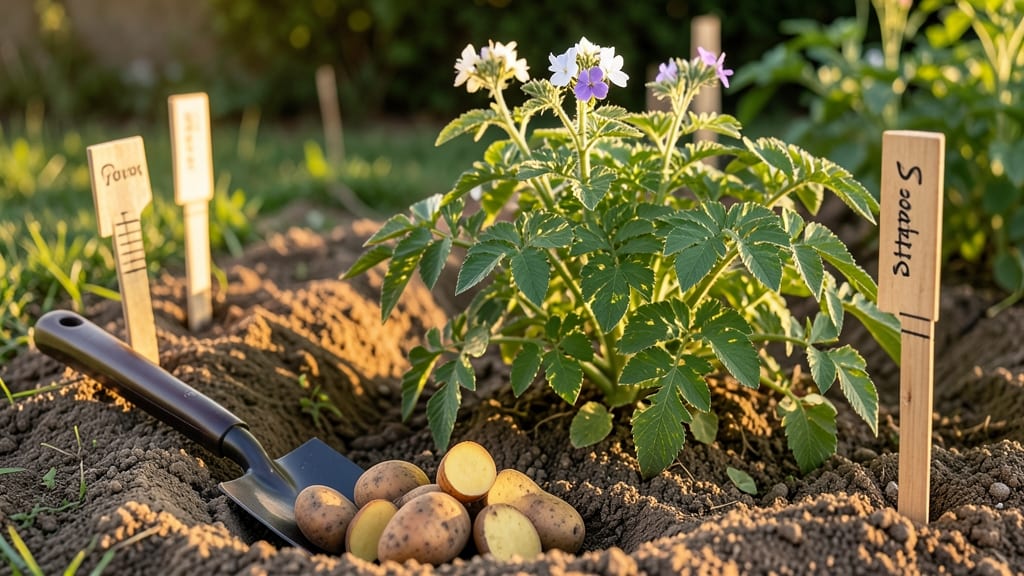
If you're wondering when do you plant potatoes in Arkansas, timing is everything—especially in Zone 7a-8b where warm spells and late frosts can throw off your entire harvest.
Plant too early, and your 🥔 tubers might rot before they even sprout. Get it just right, though, and you’ll enjoy crisp, homegrown potatoes by late spring.
Arkansas’s mild winters and unpredictable springs mean you’ve got two key windows: early spring (February-March) for cold-hardy varieties or late winter (January-February) if you’re brave enough to start before the last frost (usually around March 15).
The goal? Get those seed potatoes in the ground when soil hits 45°F—any cooler, and growth stalls.
But here’s the catch: rushing can backfire. Late blight, a common Arkansas threat, thrives in warm, wet conditions, so planting too late (after April) risks your crop before it matures.
We’ll break down the exact deadlines for early, mid-season, and late varieties—plus how to adjust for Arkansas’s clay-heavy soils and microclimates.
Ready to avoid the most common mistakes? I’ll share how to time it perfectly for maximum yield, whether you’re a first-time gardener or a seasoned pro. Let’s dig in—literally!
Optimal Arkansas potato planting dates by variety for Zone 7b success
Arkansas’s Zone 7b climate gives you a 6-week window for planting potatoes—starting as early as late January for cold-hardy varieties and ending by early April for heat-sensitive types. The key is planting when soil temperatures hit 45°F and frost risk drops below 10%.
In most of Arkansas, this means aiming for February to early March for peak yields.
I’ve planted potatoes in Arkansas for over a decade, and the biggest difference between successful harvests and disappointing yields comes down to matching the variety with the right planting window.
Early varieties like Yukon Gold thrive when planted in late January to February, while late varieties such as Russet Burbank need to go in by mid-March to avoid summer blight.
Here’s the breakdown you need to plan your Zone 7b potato schedule like a pro:
Pro tip: Use black plastic mulch in Arkansas to warm soil faster—this lets you plant 2-3 weeks earlier in cool springs. I’ve seen gardeners in northern Arkansas push their planting back by 10 days just by using this trick. Just remove the mulch once sprouts emerge to avoid overheating.
For maximum yield, aim to have your potatoes harvested by mid-July. This gives you a full 3-month growing window before Arkansas’s summer heat and humidity spike, reducing late blight risks.
If you’re growing new potatoes (small, tender tubers), you can harvest as early as 60 days, but full-sized potatoes need the full 90-120 days.
One mistake I see often is planting too late—after April 1st—which leaves potatoes vulnerable to Arkansas’s humid summers. The result? Shriveled tubers and disease pressure. Instead, use row covers or shade cloth to protect late-planted varieties if you must extend your season.
If you’re in southern Arkansas (Zone 8a), you can even try a fall planting of cold-hardy varieties in October for a winter harvest. Just be prepared to protect them with straw mulch once temps drop below 40°F.
Remember: Arkansas’s unpredictable springs mean you should always have backup seed potatoes ready. If a late frost hits, your early-planted varieties might survive with row covers, while late plantings could be lost entirely. Timing isn’t just about the calendar—it’s about reading your local microclimate.
How to adjust your planting schedule for Arkansas microclimates and soil conditions
Arkansas’s diverse geography means not all gardens experience the same frost dates or soil conditions. In the Ouachita Mountains, cooler temps may delay planting by 2-3 weeks compared to the Mississippi Delta, where warmer microclimates allow earlier starts.
Always check your local USDA Zone 7b frost calendar—but don’t stop there.
Soil type plays a huge role in potato success. Clay-heavy soils in northern Arkansas (like in Benton County) drain poorly and should be amended with compost or sand before planting.
Meanwhile, sandy soils in the southeast (e.g., near Little Rock) dry out faster, requiring mulch or drip irrigation to maintain moisture.
Elevation also affects timing. Higher elevations (1,000+ ft), like in the Boston Mountains, may have later last-frost dates (April 15 vs. March 15). Use these local adjustments:
For cooler microclimates (northern AR):
- Plant cold-hardy varieties (e.g., Yukon Gold) 2-3 weeks earlier
- Use black plastic mulch to warm soil faster
- Choose early-maturing types (60-75 days) to avoid blight
For warmer microclimates (southern AR):
- Delay planting until mid-March to avoid heat stress
- Opt for late-season varieties (100+ days) like Russet Burbank
- Extend harvests with shade cloth during summer
Finally, watch for Arkansas’s unpredictable spring weather. If a late frost hits after planting, cover seedlings with frost cloth or move pots indoors temporarily. And if your soil stays below 45°F past April 1, wait—cold soil stunts growth and invites disease.