
Plants
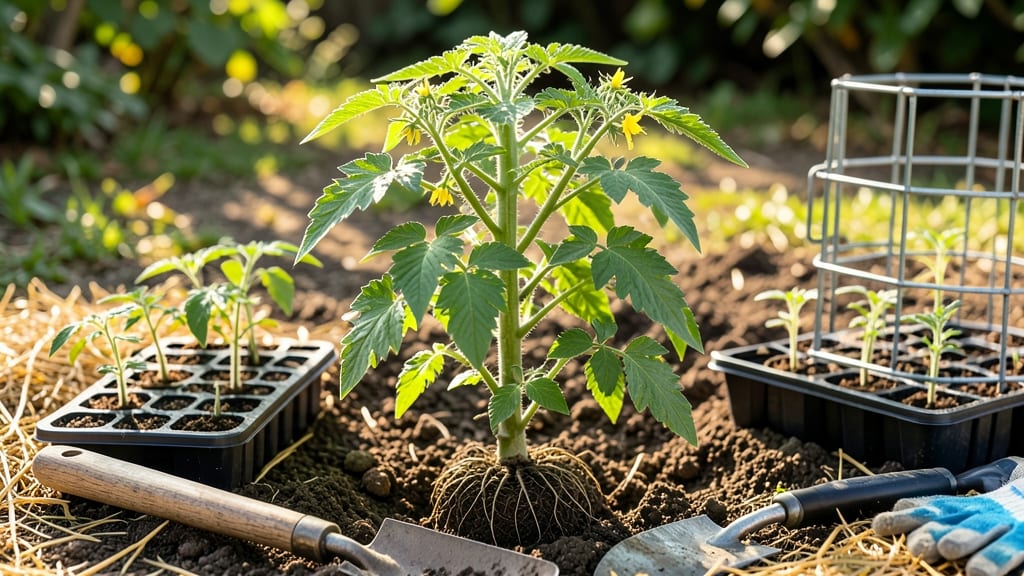
Timing when you plant tomatoes in Illinois isn’t just about checking the calendar—it’s about waiting for that perfect moment when soil temperatures and frost risks align for perfect germination and growth.
With USDA zones 5-6, Illinois gardeners face unique challenges like unpredictable spring weather and varying microclimates that can make or break your 🍅 harvest.
You’ve probably heard the rule: plant after the last frost. But in Illinois, that’s not enough—your tomatoes need soil that’s warmed to at least 60°F to thrive. That’s why mid-April to late May becomes your sweet spot, balancing frost-free windows with ideal growing conditions.
Getting this right means the difference between lush vines and stunted plants.
Whether you’re starting seeds indoors or transplanting seedlings, understanding these regional nuances is the key to a bountiful harvest. I’ll walk you through exactly what to watch for—soil temps, transplant timing, and even container vs. in-ground planting tips tailored to Illinois gardens.
Let’s make sure your tomatoes get the best possible start.
Ready to avoid common mistakes and maximize your yield? From testing soil warmth to adjusting for late springs, I’ve got the science-backed strategies that actually work for Illinois growers. Let’s get those seeds in the ground at the perfect time.
Illinois tomato planting timeline by region: frost dates and soil temperature guide
Planting tomatoes in Illinois requires careful timing—northern and southern regions have different frost dates and soil temperature thresholds that determine success. In USDA Zones 5-6, your planting window shifts 2-3 weeks earlier in southern Illinois compared to northern areas.
Let’s break down the exact last frost dates and ideal transplant windows for each region.
For northern Illinois (e.g., Chicago, Rockford), the average last frost date is May 15, but soil must reach 55°F+ for seeds and 60°F+ for seedlings.
Southern Illinois (e.g., St. Louis, Carbondale) sees last frosts by April 20, allowing earlier starts. Always check your local microclimate—valleys and low-lying areas frost later.
Here’s how to align your planting with Illinois’ regional frost patterns and soil temperature rules:
If you’re starting seeds indoors, begin 6-8 weeks before your region’s last frost. For example, northern Illinois gardeners should start seeds by March 20, while southern Illinois can begin by March 1. Use a seedling heat mat to maintain 70-80°F soil temps for faster germination.
For direct-sown seeds, wait until soil temps consistently stay above 55°F—use a soil thermometer to verify. In northern Illinois, this often means late May, while southern Illinois can start as early as mid-April.
Seedlings, however, need warmer soil (60°F+) to thrive, so transplant them 2-3 weeks after seeds.
Pro tip: Use black plastic mulch to raise soil temps by 5-10°F, extending your planting window by 1-2 weeks. This is especially helpful in northern Illinois where late frosts are common. Pair it with row covers for extra protection against unpredictable spring temps.
Remember, Illinois’ growing season averages 165 frost-free days. Plant early-maturing varieties (60-70 days to harvest) in northern regions to maximize yield before the first frost in mid-October. Southern Illinois can handle longer-season varieties (70-90 days) with confidence.
🌱
5 Critical soil temperature rules for tomato success in Illinois gardens
Getting your tomato soil temperature right is the secret weapon for Illinois gardeners. Tomatoes are heat-loving plants that refuse to germinate in cold soil—even if the air feels warm.
In my USDA Zone 5-6 garden, I’ve learned the hard way that rushing planting can lead to poor germination or transplant shock. The ideal soil temperature range for tomatoes is 55-65°F, but understanding the nuances can save your harvest.
First, direct-seeded tomatoes need soil that’s at least 60°F for consistent germination. If you’re starting seeds indoors, you can begin 6-8 weeks before your last frost date (typically mid-March in Illinois), but outdoor planting waits until late April to early May when soil warms naturally.
For transplanted seedlings, soil should be 65°F+ to prevent shock—cold roots struggle to absorb water, leading to wilting even if you water properly.
🌱 Pro Tip: Use a soil thermometer (just $10 at garden centers) to check temps 1 inch deep in the morning. If it’s below 55°F, delay planting or use black plastic mulch to warm the soil faster.
I’ve seen a 10°F difference between bare soil and mulched beds—game-changer for early starts!
- 🌱 Rule 1: Direct-seeded tomatoes need 60°F+ soil to germinate. Test daily if temps fluctuate.
- 🌱 Rule 2: Transplants thrive at 65°F+ soil. Cooler temps cause root stress and fungal diseases.
- 🌱 Rule 3: Nighttime temps below 50°F stunt growth. Use row covers if needed.
- 🌱 Rule 4: Cold soil delays nutrient uptake. Fertilize only after soil warms to 60°F.
- 🌱 Rule 5: Black plastic mulch raises soil 5-10°F faster than bare earth. Lay it 2 weeks before planting.
If your soil is still too cold when you’re ready to plant, don’t panic. I’ve used cold frames and mini greenhouses to extend the season by 3-4 weeks.
For example, in Northern Illinois, where last frost can hit May 15, I start seedlings indoors in March and transplant them into a low tunnel by early May. The protected environment lets me control soil warmth and avoid late-season pests like hornworms.
Another trick? Plant fast-maturing varieties like ‘Early Girl’ or ‘Stupice’ if you’re pushing the timeline. These 50-60 day tomatoes can handle cooler soils better than heirlooms.
I’ve also had success with container gardening—pots warm up faster than ground soil, and you can move them to sunnier spots if temps drop unexpectedly.
Finally, watch for soil temperature swings after planting. A 10°F drop overnight can shock young plants. If frost is forecasted, cover seedlings with frost cloth or a lightweight blanket.
In my Southern Illinois garden, where last frost is often April 15, I’ve planted 2 weeks earlier than neighbors in Chicago’s Zone 5—and reaped a longer harvest window as a result.