
Companion Plants
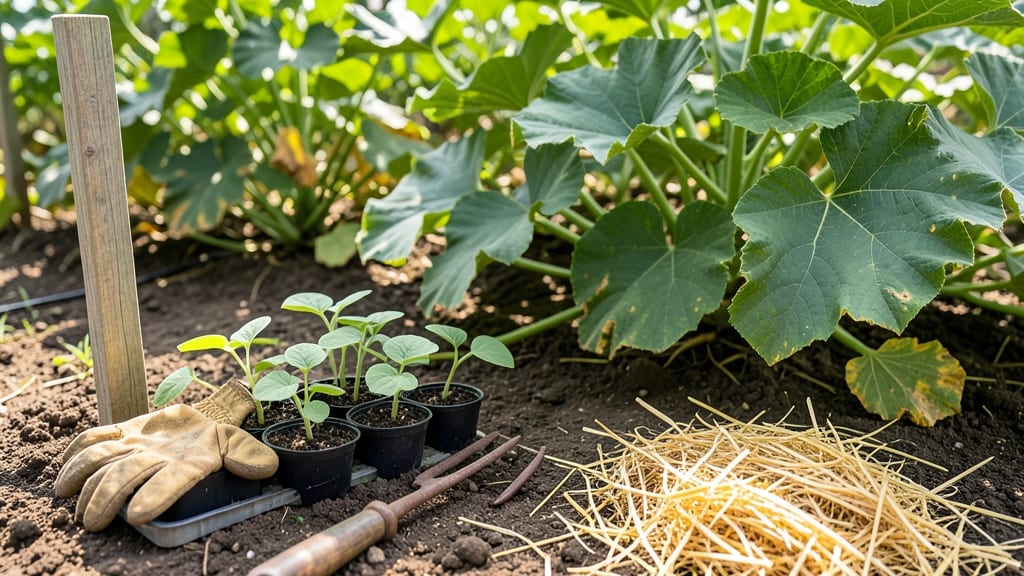
Timing your pumpkin planting in Michigan can make or break your harvest—get it wrong, and you’ll end up with wilted vines or underripe fruit.
The key lies in waiting for that perfect moment when soil warmth and frost-free days align, giving your 🎃 the best shot at thriving through Michigan’s unpredictable 5b-6b climate.
Most gardeners in your region rush to plant too soon, only to watch their seeds rot in cold soil. But with the right cues—like soil temperatures hitting 60°F and counting back from your first frost date—you can time it just right for a bumper crop.
I’ll walk you through the exact window and what to watch for, so you can avoid common mistakes and maximize your garden’s potential.
Whether you’re growing sugar pies or giant jack-o’-lanterns, knowing when to plant isn’t just about dates—it’s about understanding your local microclimate.
From extending the season with row covers to choosing fast-maturing varieties, I’ve got the strategies to help you beat Michigan’s short growing season and still bring in a harvest by fall.
Ready to turn your pumpkin patch into a success story? Let’s dive into the science and secrets behind planting pumpkins at the perfect time—so you can enjoy fresh, homegrown 🎃 from vine to table.
Michigan pumpkin planting timeline: soil temperature & frost-free date guide
Pumpkins thrive in warm soil and long summer days, but Michigan’s cool springs and early frosts demand precision timing. The key is waiting until your soil hits 55°F+ for germination and planting 2-3 weeks after your last frost date.
For most of Michigan (USDA zones 5b-6b), this means late May to early June for direct sowing.
If you’re using transplants (started indoors), wait until soil is 60°F+ and harden them off first. Michigan State University Extension recommends checking your local frost-free date—southern Michigan (like Detroit) averages May 10-20, while northern areas (like Traverse City) may wait until June 1-10.
🌱
🎃 Michigan Pumpkin Planting Summary
| Stage | Action | Notes |
|---|---|---|
| Soil Prep | Test soil pH (6.0-7.0) | Amend with compost |
| Planting Window | After last frost | Southern MI: May 15-June 1 |
| Direct Sowing | 1 inch deep, hills 4-6 ft apart | Soil temp: 60°F+ |
| Transplants | Acclimate 7-10 days before planting | Northern MI: June 1-15 |
| Harvest Goal | Before first frost (Oct 15-Nov 1) | Check rind hardness |
For northern Michigan, where summers are shorter, opt for fast-maturing varieties (like 'Sugar Pie' at 75 days) and plant as soon as soil warms. Use a soil thermometer to confirm—pumpkin seeds need consistent warmth to sprout reliably.
If your soil stays below 60°F past early June, consider raised beds or black plastic mulch to warm it faster.
Pro tip: Use Michigan’s frost-free date calculator (MSU Extension tool) to pinpoint your exact window. For example, in Grand Rapids, the average last frost is May 15, so I plant by June 1 to ensure a 120-day growing season before frost.
If you’re in southern Michigan (like Kalamazoo), you can push planting to late May for varieties needing 110+ days. But always have row covers ready—late frosts in June can still damage young vines.
I’ve lost entire patches to unexpected cold snaps, so I never plant before Memorial Day weekend as a safety measure.
For urban gardeners with limited space, choose bush varieties like 'Jack Be Little' (80 days) and plant in containers. These thrive in smaller plots and still produce 4-6 lb pumpkins. Just ensure your container has 10+ gallons of soil and drains well.
🌿
Remember: Pumpkins need space—each vine sprawls 10-20 feet, so plan your garden layout carefully. I once tried squeezing three hills into a 4x4 ft bed and ended up with stunted, diseased vines. Now, I dedicate entire sections to pumpkins, using trellises for small varieties to save space.
Finally, mark your planting date on a calendar and count back from your first frost date. For most of Michigan, that’s 120 days—so if frost hits October 15, plant by June 15 to guarantee a harvest.
Adjust for your specific variety’s days to maturity (e.g., 'Cinderella' needs 110 days, so plant by June 25).
☀️
Michigan pumpkin planting timeline: soil temperature & frost-free date guide
Michigan’s USDA zones 5b-6b mean pumpkin seeds need soil temperatures above 55°F to germinate—waiting for 60°F+ ensures faster sprouting. The last frost date (mid-April to early May) sets your window, but soil warmth is the real deadline.
Use a soil thermometer to check depth (2 inches down). In southern Michigan (zone 6b), you can plant as early as late April to early May, while northern Michigan (zone 5b) gardeners should wait until mid-May to early June for safety.
| Stage | Action | Notes |
|---|---|---|
| Soil Prep | Test soil pH (6.0-6.8) | Add compost for fertility |
| Zone 6b (South) | Plant seeds May 1-15 | Soil ≥60°F, frost risk low |
| Zone 5b (North) | Plant seeds May 15-June 1 | Wait for consistent 60°F+ |
| Transplants | Start indoors 2-3 weeks before last frost | Hardens off at 55°F soil |
| Harvest Window | Late August-October | Before first frost (mid-Oct) |
For direct sowing, plant 3-4 seeds per hill, spacing hills 4-6 feet apart in full sun. Thin to the strongest vine after sprouts appear. Transplants give you a head start—start seeds indoors 2-3 weeks before your last frost date using biodegradable pots to avoid root disturbance.
Use Michigan State University’s frost date map to pinpoint your exact window. For example, Detroit (zone 6b) can plant April 25-May 10, while Traverse City (zone 5b) should wait until May 15-June 1. Always plant after Memorial Day for the safest bet.
Pro tip: Mark your calendar for 90 days after planting—this is your harvest deadline. If your variety takes 110+ days, opt for smaller varieties like 'Jack Be Little' (75 days) to avoid frost damage.
Remember, soil warmth > calendar dates. A cold snap in May can delay germination for weeks—patience is key! 🌱