
Lawn
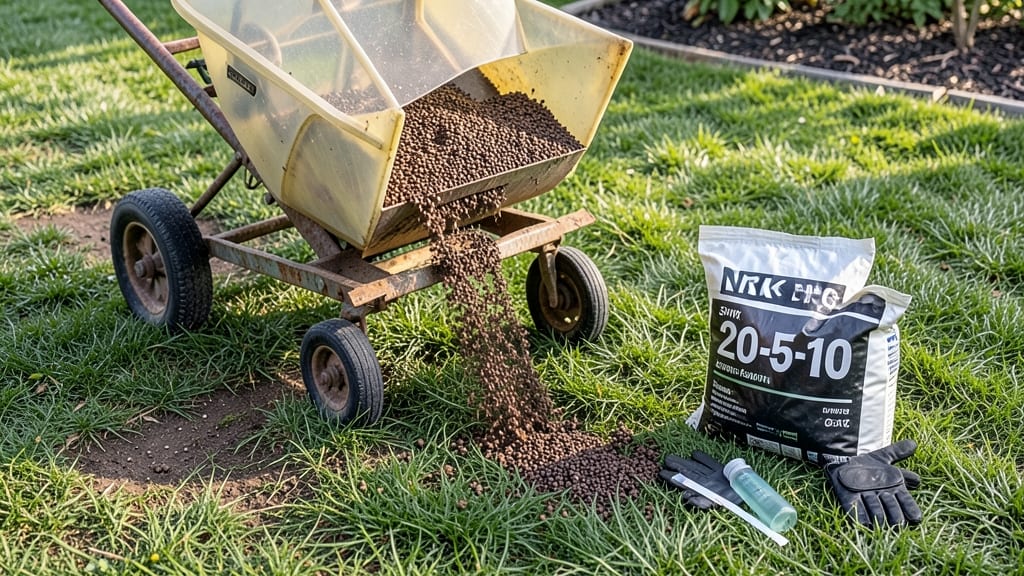
When to fertilize lawn in spring is the difference between a vibrant, lush green lawn and one that struggles to recover. If you've ever wondered without risking wasted money or grass burn, you're not alone—many homeowners get this critical step wrong.
The key lies in understanding your grass type and local climate, especially in zones like 6a. Cool-season grasses need feeding as soon as soil warms to 55°F, while warm-season varieties wait until after the last frost. Skipping this step can leave your lawn weak and patchy all season.
I’ll walk you through a simple 3-step test to determine the exact window for your lawn, plus common mistakes that even experienced gardeners make. By the end, you’ll know exactly when to apply fertilizer for perfect results—no guesswork required.
Ready to transform your lawn from dull to dazzling? Let’s dive into the science and strategies that make all the difference in spring fertilization.

The 3-Step test to determine your lawn’s spring fertilization window
Timing your spring lawn fertilization isn’t a guessing game—it’s a science. The wrong timing can burn your grass, waste fertilizer, or even invite weeds. Instead of following generic calendar dates, use these three key tests to pinpoint the perfect moment for your lawn.
Start by checking your soil temperature, which is the most critical factor for cool-season grasses like Kentucky bluegrass and fescue.
Warm-season grasses like Bermuda and Zoysia have different triggers, so knowing your grass type is step one. For example, cool-season grasses need fertilizer when soil temps hit 50-55°F, while warm-season grasses wait until 65-70°F.
Grab a soil thermometer (they’re cheap!) and check the temperature 6 inches deep, where roots are active.
Next, observe your lawn’s growth patterns. If grass is actively growing—new blades appear within 7-10 days after mowing—it’s ready for fertilizer. Look for vibrant green color and dense growth as signs.
If your lawn is still dormant or patchy, wait. Fertilizing dormant grass is like feeding a hibernating bear—it won’t use the nutrients efficiently.
Finally, consider your local climate zone. Northern regions (USDA zones 3-6) can fertilize as early as late February, while Southern zones (7-10) should wait until March or April.
Even within the same zone, microclimates matter—shady spots stay cooler longer, delaying fertilization by 1-2 weeks.
🌱 Your Spring Fertilization
The 3-Step test to determine your lawn’s spring fertilization window
Timing your spring lawn fertilization correctly can mean the difference between a vibrant green lawn and wasted fertilizer. The key is understanding your grass type, soil temperature, and regional climate zone.
Cool-season grasses like Kentucky bluegrass wake up early, while warm-season grasses like Bermuda need warmer soil to activate. Let’s break down the exact steps to find your perfect window.
First, check your soil temperature—it should reach 55°F (13°C) for cool-season grasses or 65°F (18°C) for warm-season varieties. Use a soil thermometer to test 2-3 inches deep. If it’s too cold, fertilizer can burn roots instead of nourishing them. This is your first critical checkpoint before applying anything.
Next, observe your grass growth stage. For cool-season grasses, look for new green shoots emerging after winter dormancy—this signals it’s time to feed. Warm-season grasses, however, won’t show signs until soil warms further.
Pro tip: If your lawn is still brown or dormant, wait at least 2-3 weeks before fertilizing.
| Step | Action | Ideal Timeframe |
|---|---|---|
| 1 | Test soil temperature | Cool-season: 55°F+ | Warm-season: 65°F+ |
| 2 | Check grass growth | Cool-season: New shoots | Warm-season: Active green-up |
| 3 | Apply fertilizer | Cool-season: Early March-April | Warm-season: Late April-May |
Finally, align your timing with your climate zone. In the Northern U.S. (Zones 3-5), fertilize by late April to avoid early frost damage. In the Southern U.S. (Zones 7-10), wait until mid-April to May when warm-season grasses are ready.
For example, Tennessee (Zone 6) lawns typically get their first feeding in early April, while Arizona (Zone 9) lawns wait until late April.
Miss the window? Don’t panic. If you fertilize too early, your grass may go dormant again. If you’re late, growth will slow as summer heat arrives. The goal is to give your lawn a growth boost before weeds take over.
For most regions, this means acting within 2-3 weeks of your grass’s first active growth spurt.
Once you’ve nailed the timing, choose a slow-release fertilizer with a high nitrogen ratio (30-0-4) for cool-season grasses or a balanced formula (16-4-8) for warm-season types.
Apply it on a dry, calm day in the early morning to prevent runoff. Water lightly afterward to activate the nutrients without washing them away.
By following these three steps—soil temp check, growth stage observation, and climate zone alignment—you’ll fertilize at the perfect moment for a lawn that stays lush all season long. 🌿