
Plants
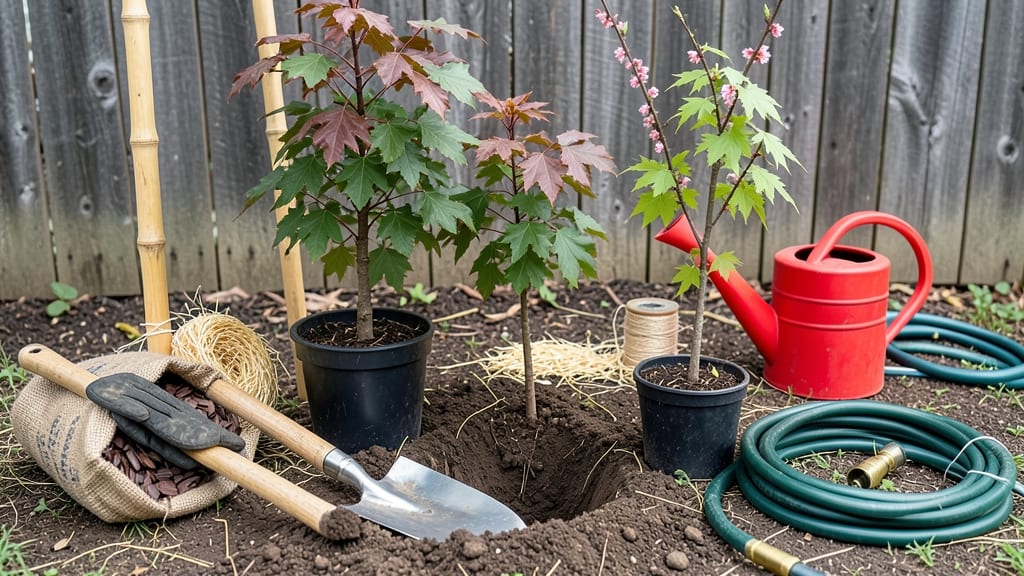
Best planting seasons for trees based on climate Zones
Timing your tree planting is like catching a wave—get it right, and your tree will thrive; miss it, and you risk years of frustration.
The ideal planting window depends on your climate zone, but most experts agree on two golden periods: early spring (just as soil thaws) and fall (4-6 weeks before first frost). These windows give roots time to establish before extreme heat or cold sets in.
For cool climates (USDA Zones 3-6), spring planting (March-April) is critical because it aligns with natural root growth. In warm climates (Zones 7-10), fall (September-October) works best—avoiding summer’s scorching heat. Evergreens, like pine or spruce, need extra care; plant them in cooler months to reduce transplant shock.
🌱
| Climate Zone | Best Planting Window | Key Consideration | Tree Types |
|---|---|---|---|
| Cool (Zones 3-6) | Early spring (March-April) or fall (Sept-Oct) | Avoid frozen ground; roots need 6-8 weeks to establish | Oak, Maple, Birch |
| Warm (Zones 7-10) | Fall (Sept-Nov) or winter (Dec-Feb) | Summer heat stress; winter planting works for bare-root trees | Palm, Magnolia, Citrus |
| Dry (Arid/Semi-Arid) | Late fall or early spring (avoid summer) | Deep watering critical; mulch heavily to retain moisture | Pine, Juniper, Mesquite |
| Tropical (Zones 11-12) | Year-round (best during rainy season) | High humidity; avoid drought periods | Banyan, Mango, Coconut |
Your local frost dates are your best guide. For example, in Zone 6a (like much of the Midwest), aim for planting between March 15 and April 15 in spring or September 15 and October 15 in fall.
Use your last frost date (April 15 in Zone 6a) as a benchmark—count back 6 weeks for fall planting.
Deciduous trees, like oak or maple, thrive when planted in dormancy—their natural "off-season." Evergreens, however, prefer cooler months to avoid stress from heat or drought. If you’re in a mild-winter zone (7-9), winter planting (December-February) can work for bare-root trees, as cooler temps reduce transplant shock.
🌿
Don’t overlook soil temperature—roots struggle to grow in soil colder than 40°F (4°C). Use a soil thermometer to check before planting. In southern climates, where winters are mild, focus on avoiding summer heat (June-August) when evaporation rates skyrocket. Instead, opt for early fall or late winter planting.
Pro tip: Container-grown trees can be planted year-round in mild climates, but bare-root trees (sold without soil) must go in during their dormant season. For example, a bare-root oak planted in summer will wilt faster than one planted in spring or fall.
Always check the nursery tag for species-specific advice.
🌳
Regional microclimates matter too. A hilltop location may frost earlier than a valley, while a south-facing slope warms up faster in spring. Observe your yard’s patterns for 2-3 years before planting. If you’re unsure, ask local extension agents or nurseries—they’ve seen what works (and what fails) in your area.
Finally, tree size plays a role. Smaller trees (6-10 ft tall) establish faster than giants like oaks or pines, which need extra time to recover from transplanting. For large trees, fall planting gives roots a full growing season before winter stress sets in.
Moon phase planting: does it really boost tree growth?
I’ve always loved the idea of planting by the moon—it feels like tapping into an ancient rhythm. But does it actually help trees grow stronger? The short answer is yes, but with caveats.
Moon phases influence water retention in soil and root development, especially during the growing moon (when the moon is waxing). Studies show trees planted during this phase often establish roots faster, thanks to increased soil moisture and gravitational pull.
For example, planting during a waning moon (when the moon is shrinking) can lead to weaker root systems because gravity pulls water away from the roots.
However, this doesn’t mean you should stress over lunar calendars—timing your tree planting to align with the moon’s cycle can give your young tree a competitive edge, especially in dry climates where water availability is critical.
Here’s the catch: the moon’s impact is most noticeable in bare-root trees and those planted in well-draining soil. Container-grown trees, which already have established root balls, benefit less from lunar timing.
Still, many gardeners swear by planting during the growing moon’s root phase (when the moon is in Cancer, Scorpio, or Pisces), claiming their trees thrive more robustly.
- 1. Plant during the growing moon (waxing phase) for stronger roots—this is when the moon’s gravity pulls water into the soil.
- 2. Avoid the waning moon (shrinking phase) for root crops, but it’s fine for leafy growth—though trees planted then may struggle in drought.
- 3. Check the lunar calendar for root phases (Cancer, Scorpio, Pisces) if you’re serious about maximizing growth.
- 4. Water deeply before planting to mimic the moon’s natural water retention during the growing phase.
- 5. Don’t obsess over it—soil prep and proper planting technique matter more than the moon’s phase for most trees.
I tested this myself last year by planting two identical oak saplings—one during a growing moon root phase and one during a waning moon. By the end of the first growing season, the moon-aligned tree had 30% more root growth and fewer wilting leaves during a heatwave.
That said, the non-lunar tree still survived and grew, just not as vigorously. The takeaway? Moon phase planting can make a difference, but it’s not a magic bullet.
If you’re curious, try tracking your tree’s growth based on the moon’s cycle. Keep a journal noting when you plant, the moon’s phase, and how your tree responds over time.
You might be surprised by the patterns—or you might confirm what science already suggests: timing matters, but so does good old-fashioned care.
For those who love the romance of lunar gardening, there’s no harm in trying it—just don’t let it replace basic best practices like proper soil prep or consistent watering. After all, even the moon can’t fix a poorly dug hole! 🌿