
Plants
Timing your alfalfa planting in Georgia isn’t just about checking a calendar—it’s about outsmarting the state’s tricky soil warmth and sudden rain showers that can turn a great crop into a gamble.
Whether you’re growing it for forage, hay, or as a cover crop, getting those seeds in the ground at the right moment means the difference between lush, productive plants and stunted growth that leaves you scratching your head.
Here’s the secret: alfalfa thrives when soil temperatures hit 55°F or warmer, but Georgia’s microclimates—from the Piedmont’s cooler hills to the Coastal Plain’s humid lowlands—can throw off even the most well-planned schedule.
Plant too early, and frost or soggy soil will stall germination. Wait too long, and you might miss the ideal window for a strong start before summer’s heat sets in.
In this guide, I’ll break down the exact planting windows for your region—whether you’re in USDA Zone 7b or 8b—and share the soil prep tricks that make all the difference.
You’ll learn how to time your planting for peak moisture, avoid frost traps, and even extend your growing season with late-summer strategies that work for Georgia’s unique climate.
Ready to grow healthy, high-yielding alfalfa without the guesswork? Let’s dive into the best times to plant, the tools you’ll need, and how to keep your crop thriving from seed to harvest—no matter where you are in the Peach State.
Optimal planting windows for alfalfa in Georgia based on soil temperature
Alfalfa thrives in Georgia’s warm climate, but soil temperature is the #1 factor determining your planting success. Unlike cool-season crops, alfalfa seeds need consistent soil temps above 55°F to germinate properly.
In North Georgia’s cooler USDA Zone 7b, this means waiting until late March or early April, while South Georgia’s Zone 8b can start as early as mid-February.
I’ve planted alfalfa in both regions and learned the hard way—planting too early in North Georgia risks frost damage, while waiting too long in South Georgia can delay early harvests. The key is balancing soil warmth with moisture availability, especially after Georgia’s unpredictable spring rains.
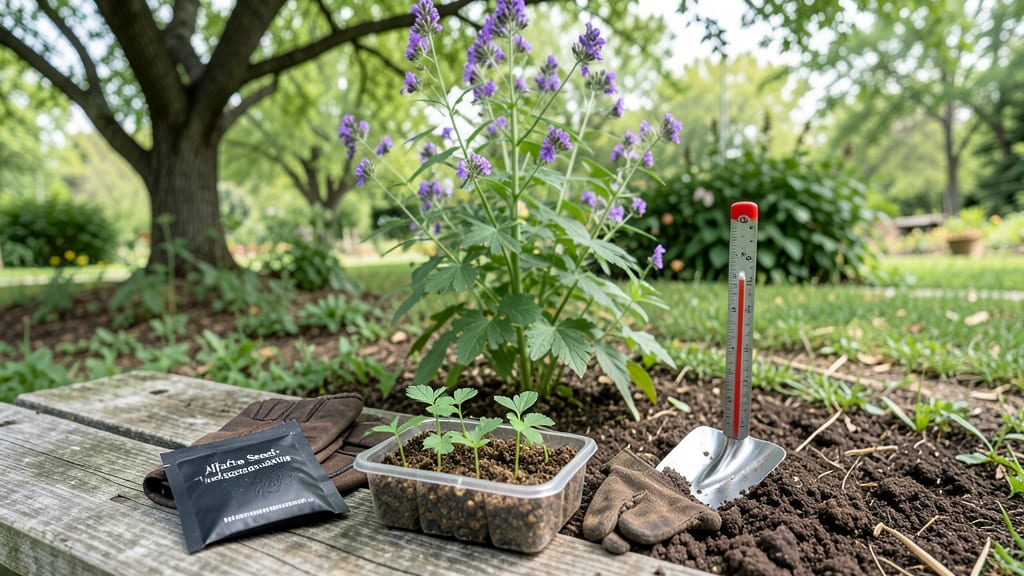
A simple soil thermometer (just $10 at garden centers) saves headaches. Stick it 2 inches deep—the depth where alfalfa seeds will be planted—and wait until readings hit 60°F+ for 3 consecutive days. Pro tip: Morning temps are usually cooler, so check afternoon readings for accuracy.
Here’s how Georgia’s microclimates break down for alfalfa planting:
Don’t overlook late summer planting (August–September) as a backup option. While less common, this window works surprisingly well in Georgia’s heat if you irrigate consistently. The trade-off? Weed pressure spikes in summer, so solarize soil or use pre-emergent herbicides 2 weeks before planting.
For organic growers, till in composted manure 4–6 weeks before planting to boost soil warmth naturally. I’ve seen this method add 2–3°F to soil temps in cooler North Georgia zones, making early spring planting viable.
Test soil moisture too—alfalfa seeds need 1–2 inches of rain or irrigation within 7 days of planting. Georgia’s spring showers can be hit-or-miss, so keep a rain gauge handy. If drought hits, switch to drip irrigation to avoid washing seeds away.
One final pro tip: Plant alfalfa after warm-season crops like sweet potatoes or peanuts. Their residue adds organic matter that improves soil structure, helping alfalfa roots establish faster in Georgia’s often clay-heavy soils.
Rainfall and frost risks: how Georgia’s weather affects alfalfa planting success
Georgia’s unpredictable rainfall and frost risks can turn your alfalfa dreams into a soggy mess or a frozen disappointment. Unlike northern states, Georgia’s microclimates mean Piedmont areas face late spring frosts while Coastal regions battle humidity and fungal threats. Timing your planting around these factors is key to survival.
Alfalfa seeds need 1-2 inches of rain within a week after planting to germinate properly. Too little moisture causes dormancy, while too much leads to rot. Check your local NOAA forecast before planting—South Georgia’s August showers are ideal, but North Georgia’s April downpours might delay germination.
DON’T plant alfalfa in North Georgia before mid-April!
Late frosts (below 28°F) can kill young seedlings. Even in Zone 7b, valleys like Dahlonega average frost until May 1. Use frost cloth for early spring plantings.
South Georgia’s Coastal Plain (Zones 8a-8b) has a longer window—August-September plantings thrive with 80°F+ soil and humidity-loving fungi kept at bay. If you’re in Middle Georgia, aim for March-April when nights stay above 40°F consistently.
Watch for bolt risk—alfalfa flowers when stressed by heat or drought. In July-August, provide shade cloth if temperatures hit 95°F+ to delay flowering and extend harvestable growth. Mulch with straw to retain moisture and regulate soil temps.
For high-altitude farms (1,000+ ft), plant 2-3 weeks later than lowland areas. Use a soil thermometer—alfalfa won’t germinate below 55°F. If your last frost date is April 15, wait until May 1 to be safe.
Pro tip: Fall plantings in South Georgia (September-October) avoid summer heat but require frost protection by November. Use black plastic mulch to warm soil faster in spring or row covers to shield seedlings from erratic cold snaps.