
Plants
Timing your grape planting in Zone 7 could mean the difference between a bountiful harvest and struggling vines—so let’s get this right from the start. 🍇 With last frosts lingering around April 15 and humid summers testing your patience, choosing the wrong window can stunt growth or invite pests.
The good news? Both early spring and late fall offer solid opportunities, but each comes with its own advantages (and pitfalls) for Zone 7 gardeners.
If you’ve ever watched your grapevines wilt under summer heat or freeze before establishing roots, you know how critical optimal planting windows are. Spring planting gives young vines a head start before the heat kicks in, while fall planting lets them settle into the soil before winter dormancy.
But which is better for your specific microclimate—coastal humidity or inland dryness? Let’s break down the best times and what to watch for in each season.
Zone 7’s 180 frost-free days give you a narrow but workable window to plant grapes without risking frost damage. Early spring (March to April) is ideal for varieties that need a long growing season, while late fall (October to November) works well for cold-hardy types.
We’ll cover how to prep your soil, pick the right variety for your climate, and keep your vines thriving once they’re in the ground.
Ready to avoid common mistakes and set your grapevines up for success? I’ll walk you through the exact steps—from soil prep to post-planting care—so you can enjoy a thriving vineyard year after year.
Best planting windows for grapes in Zone 7: spring vs fall timing
In Zone 7, planting grapes at the right time ensures strong root establishment and frost-free growth. The two best windows are early spring (March–April) and late fall (October–November), each offering unique advantages for your grapevines. Let’s break down the pros, cons, and ideal conditions for each.
Spring planting (March–April) aligns with soil warming and active root growth. This window gives vines 6–8 weeks before the last frost (around April 15 in Zone 7), reducing frost damage risks.
However, young vines may struggle if planted too late in spring, as they need time to harden off before summer heat arrives.
Fall planting (October–November) leverages cooler temperatures and dormancy benefits. Vines establish roots before winter, emerging stronger in spring. But timing is critical—plant too late, and roots won’t establish before first frost (around October 15), leaving vines vulnerable to cold stress.
Here’s how these windows compare for Zone 7 gardeners, including soil temps, frost risks, and care adjustments:
| Factor | Spring Planting (March–April) | Fall Planting (October–November) |
|---|---|---|
| Soil Temperature | 50–60°F (ideal for root growth) | 50–60°F (roots establish before dormancy) |
| Frost Risk | Low (plant after last frost) | Moderate (plant 4–6 weeks before first frost) |
| Watering Needs | High (weekly deep watering) | Moderate (reduce as temps drop) |
| Fertilizing | Light feed in spring, full feed in summer | Light feed in fall, none in winter |
| Best For | Fast-growing varieties (e.g., Concord) | Cold-hardy varieties (e.g., Norton) |
For Zone 7’s inland areas, spring planting often works best due to warmer soils and longer growing seasons. Coastal regions, however, may benefit from fall planting to avoid summer humidity and fungal diseases like powdery mildew.
Always check your local last frost date—delaying planting past April 15 increases frost risks.
If you choose fall planting, aim for October in most of Zone 7, but adjust for elevations—higher areas (e.g., Appalachians) may need earlier planting. Harden off bare-root vines by soaking roots for 1–2 hours before planting to reduce transplant shock.
Regardless of season, well-draining soil and full sun exposure are non-negotiable. In Zone 7’s humid summers, prioritize airflow by spacing vines 6–8 feet apart and training them on a trellis to prevent disease. Avoid planting in low-lying areas where cold air pools.
Both spring and fall offer success, but fall planting often yields stronger vines for Zone 7’s challenging summers. Start with a cold-hardy variety like Norton or Catawba if you’re unsure.
Monitor soil moisture closely—overwatering in spring or underwatering in fall can derail your vines before they even take root.
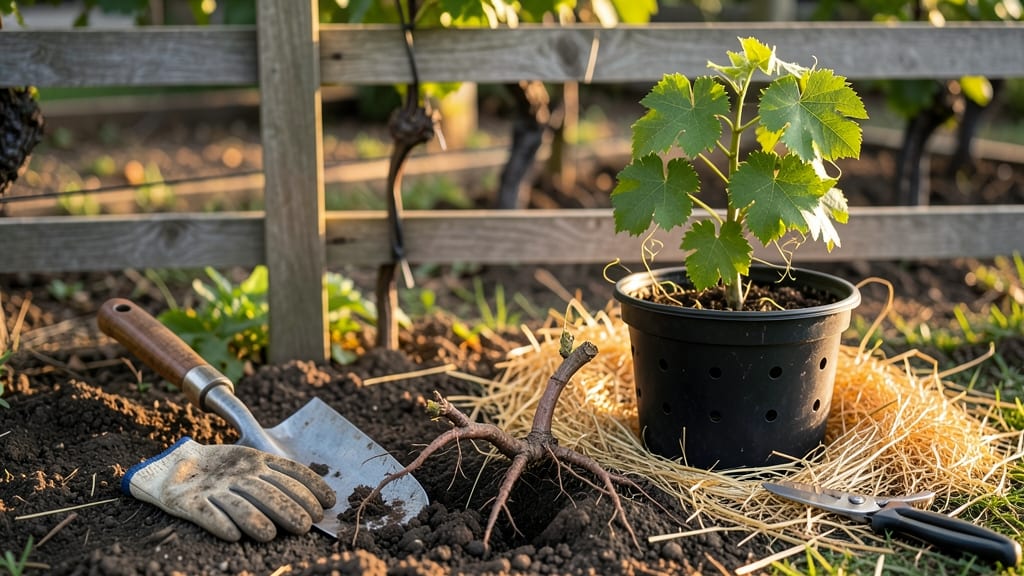
Ready to plant? Grab your garden gloves and trowel, and let’s get those grapes growing! Whether you choose spring or fall, timing and preparation are your best tools for a bountiful harvest. 🍇
Best planting windows for grapes in Zone 7: spring vs fall timing
In Zone 7, timing your grapevine planting can make or break your harvest. The ideal windows are early spring (late March to early April) or late fall (October to November), but each has unique advantages.
Spring planting aligns with soil warming, while fall planting leverages dormancy benefits. Let’s break down the best approach for your Zone 7 climate.
For spring planting, aim for when soil temperatures reach 50°F (10°C)—typically late March to early April in most of Zone 7. This timing ensures roots establish before summer heat arrives.
However, planting too early risks frost damage, while waiting too long may stress young vines during Zone 7’s humid summers. Coastal areas may have slightly later windows due to milder temperatures.
| Factor | Spring Planting (March-April) | Fall Planting (October-November) |
|---|---|---|
| Soil Temperature | 50-60°F (10-15°C) | 45-55°F (7-13°C) |
| Establishment Time | 6-8 weeks before summer | 6-8 weeks before dormancy |
| Frost Risk | Moderate (late frosts possible) | Low (vines dormant) |
| Watering Needs | Moderate (spring rains help) | Low (fall rains reduce stress) |
| Best For Varieties | Fast-growing (Concord, Niagara) | Cold-hardy (Norton, Catawba) |
Fall planting offers lower stress for vines, as cooler temperatures reduce transplant shock. Plant 6-8 weeks before first frost (typically by October 15 in Zone 7). This gives roots time to establish before winter dormancy. However, avoid planting too late—young vines need time to harden off before freezing temperatures arrive.
For Zone 7’s microclimates, adjust timing slightly. Inland areas with hot summers may benefit from earlier spring planting, while coastal regions can extend windows into late April or early May.
Always check your local last frost date—most Zone 7 gardeners experience it around April 15, but this varies by 1-2 weeks depending on elevation.
Pro tip: If you miss the ideal windows, bare-root vines can handle planting in dormant season (December-February), but they’ll need extra care during Zone 7’s wet springs. Always mulch heavily to retain moisture and regulate soil temperature.
Regardless of timing, full sun exposure (6+ hours daily) and well-draining soil are non-negotiable for grapes in Zone 7. With the right window, your vines will reward you with abundant harvests for years to come! 🍇