
Trees
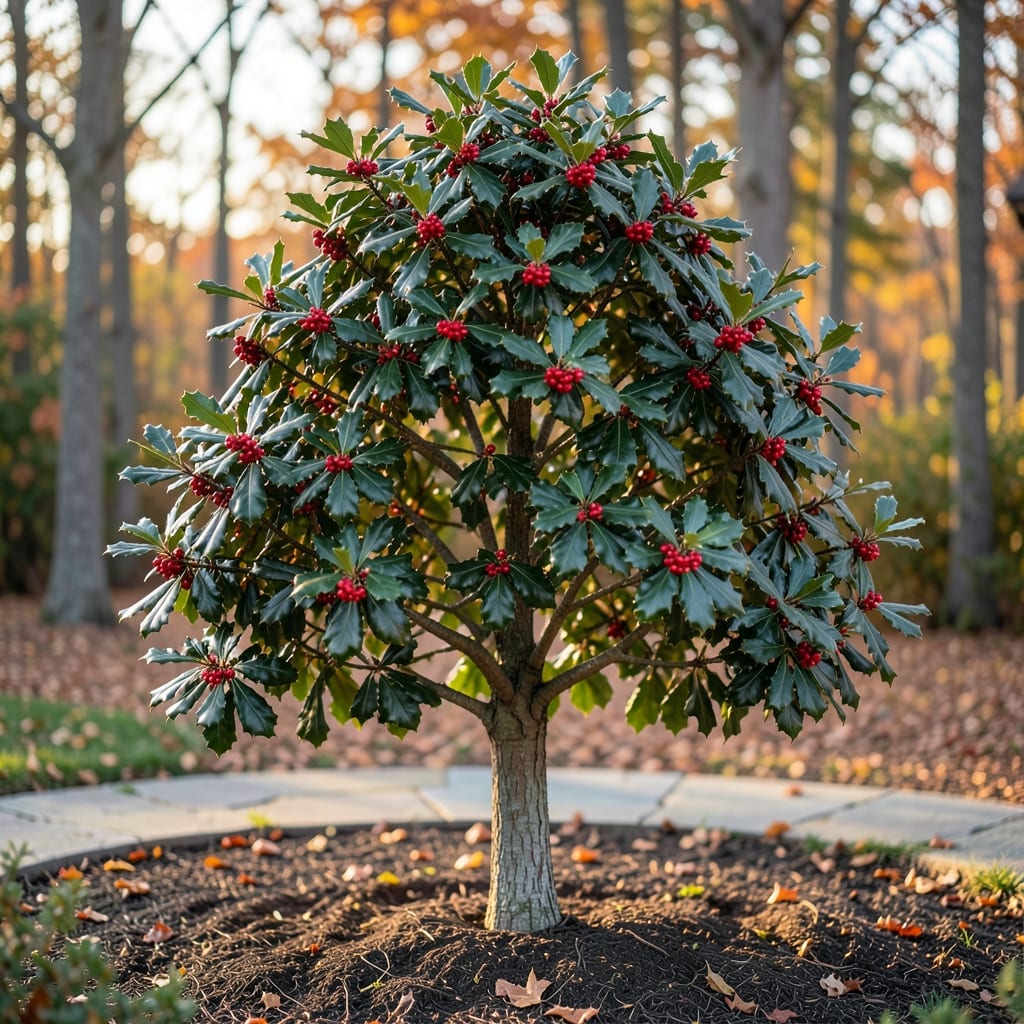
If you’ve ever wondered "how tall can a holly tree grow", the answer might surprise you—these evergreen beauties can stretch from compact shrubs to towering giants over 50 feet tall! Whether you’re dreaming of a 🌳Holly Tree as a striking focal point or a neatly trimmed hedge, knowing its mature size is key to planning your garden layout.
Not all holly trees reach for the sky—some stay perfectly manageable at just 3–5 feet, while others grow tall enough to shade your entire backyard. The difference often comes down to the species, your climate, and how you prune it. For example, American holly can soar to 30–50 feet, while dwarf varieties like ‘Blue Princess’ stay under 5 feet, making them ideal for small yards.
Your local growing conditions play a huge role too. Holly trees thrive in USDA Zone 6a and beyond, but factors like sunlight, soil acidity, and even pruning habits can influence their height. A holly planted in full sun might grow 20% taller than one in partial shade, so choosing the right spot—and variety—is the first step to getting the perfect-sized tree for your space.
Ready to pick the right holly for your garden? Let’s break down the heights by species and share tips to keep your holly tree at your desired size—whether you want a small accent plant or a grand statement tree.

Holly tree height by species: from dwarf varieties to towering giants
Holly trees come in a stunning range of sizes, from compact shrubs perfect for small gardens to towering giants that dominate landscapes. The American holly (Ilex opaca), for example, can reach an impressive 30–50 feet in ideal conditions, while the dwarf varieties like 'Blue Princess' stay a modest 3–5 feet tall. Choosing the right species depends on your space and vision for your garden.
Understanding these differences helps you plan spacing, sunlight exposure, and even wildlife habitats. A 60-foot English holly (Ilex aquifolium) needs ample room, while a 10-foot Chinese holly (Ilex cornuta) fits neatly into urban yards. Let’s explore the most popular varieties and their mature heights to help you make the best choice.
🌱 Holly Tree Height Guide by Species
| Species | Mature Height | Growth Rate | Best For |
|---|---|---|---|
| American Holly (Ilex opaca) | 30–50 ft | Slow to moderate | Large gardens, wildlife |
| English Holly (Ilex aquifolium) | 25–60 ft | Moderate | Hedges, formal gardens |
| Chinese Holly (Ilex cornuta) | 10–20 ft | Moderate | Urban yards, containers |
| Dwarf Holly (e.g., 'Blue Princess') | 3–5 ft | Slow | Borders, containers |
| Winterberry Holly (Ilex verticillata) | 6–12 ft | Moderate | Wet soils, wildlife |
| Burford Holly (Ilex × 'Burfordii') | 15–25 ft | Slow | Hedges, privacy screens |
The American holly is the tallest native variety, often reaching 50 feet in the wild but staying smaller with pruning. Its spiny leaves and red berries make it a favorite for wildlife, especially birds. If you’re short on space, the Chinese holly is a fantastic alternative, growing just 10–20 feet while still offering year-round interest.
For urban gardens or containers, dwarf varieties like 'Blue Princess' or 'Dwarf Burford' are ideal. These stay under 5 feet and thrive in small spaces, making them perfect for patios or foundation plantings. Their compact size also means less maintenance and easier pruning.
If you’re planning a privacy hedge or windbreak, consider the Burford holly, which grows to 15–25 feet and forms a dense, evergreen barrier. Its dark green leaves and red berries add color even in winter. Pair it with other holly varieties for a layered, textured look.
One often-overlooked species is the Winterberry holly, which can grow 6–12 feet but is deciduous, losing its leaves in fall. What it lacks in foliage, it makes up for with vibrant red berries that persist into winter, providing food for birds when little else is available.
When selecting a holly tree, consider not just its height but also its growth rate and climate needs. For example, American hollies thrive in USDA Zones 5–9, while English hollies prefer Zones 6–8. Matching your holly to your local climate ensures it reaches its full potential height without stress.
For fast-growing options, the English holly is a top choice, with some varieties growing 2–3 feet per year under ideal conditions. If you’re patient, the American holly offers a slower but more robust growth pattern, perfect for long-term landscape investments.
🌿
How growing conditions affect holly tree height: sunlight, soil, and pruning secrets
Did you know that a holly tree’s height can vary by 20–30% depending on sunlight alone? Holly trees thrive in partial shade to full sun, but too much shade stunts their growth, while excessive sun can stress them—especially in hot climates. For example, an American holly (Ilex opaca) in full sun might reach 40 feet, while the same tree in deep shade could max out at 25 feet. Balancing sunlight is key to achieving your desired height.
The soil pH plays an equally critical role. Holly trees prefer acidic soil (pH 4.5–6.0), and alkaline conditions can stunt growth or even kill the tree over time. If your soil tests higher than 6.5, amend it with sulfur or peat moss to create the ideal environment. Poor soil drainage also slows growth, so ensure your planting site has well-draining soil to avoid root rot.
🌱 Growing Conditions: Pros and Cons for Holly Tree Height
Promotes faster growth; ideal for American hollies in cooler climates.
Can scorch leaves; may reduce height by 10–20%.
Balances growth; ideal for English hollies in urban areas.
Stunts growth; may limit height to 50–70% of potential.
Optimal for nutrient uptake; supports full height potential.
Reduces growth by 30–50%; may cause yellowing leaves.
Pruning is another powerful tool to control height. If you want a compact holly tree, prune in late winter or early spring before new growth begins. For American hollies, remove 1/3 of the canopy to encourage bushier growth, while English hollies respond well to summer pruning to shape their height. Avoid heavy pruning in fall, as it can stress the tree before winter.
Watering habits also impact height. Young holly trees need deep watering weekly to establish strong roots, while mature trees tolerate drought once established. Overwatering, however, can lead to root rot and stunted growth. Aim for 1–2 inches of water per week, adjusting for rain. Mulching around the base with wood chips helps retain moisture and regulate soil temperature, promoting healthier growth.
Climate matters too. Holly trees in USDA Zones 6–9 grow faster than those in colder zones. For example, a Chinese holly (Ilex cornuta) in Zone 7 might reach 15 feet in 10 years, while the same tree in Zone 5 could take 15 years to reach that height. Choose varieties suited to your hardiness zone for optimal growth.
To maximize height, combine these strategies: plant in well-draining, acidic soil, provide 3–6 hours of sunlight daily, and prune strategically. If you’re growing a dwarf holly, focus on container gardening with regular pruning to maintain its compact size. For towering varieties like English holly, give it space and minimal interference to let it reach its full 50–60 feet potential.
🌳