
Trees
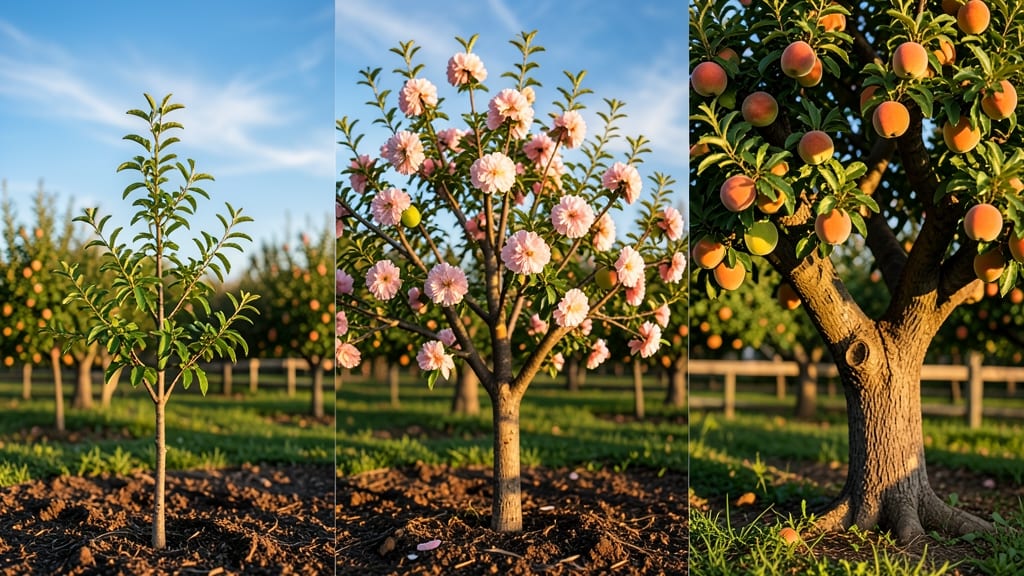
If you're dreaming of a backyard bursting with sweet, juicy peaches, understanding how tall peach trees grow is your first step to success. These trees aren't just decorative—they can reach towering heights of 15 to 25 feet, making them a serious commitment for even the most enthusiastic gardener.
But here's the good news: not all peach trees grow to the same height. Dwarf varieties stay manageable at just 8 to 12 feet, perfect for small spaces, while standard types can stretch toward the sky.
The variety you choose will determine everything from your tree's fruit production to how much space you'll need to give it room to thrive.
Whether you're planning a full orchard or just adding one tree to your yard, knowing these height differences is key. I'll walk you through the specifics—from fast-growing early years to mature heights—and show you how to pick the perfect peach tree for your space, no matter how big or small.
Ready to turn your backyard into a peach paradise? Let's dive into the details so you can grow the tree that's right for you—and enjoy those homegrown treats for years to come.


Peach tree height by variety: dwarf to standard growth ranges
If you're dreaming of a backyard peach orchard, the first question isn't just can you grow peaches—it's how much space will you need? Peach trees vary dramatically in height, from compact dwarf varieties perfect for small yards to towering standard trees that need room to stretch their branches.
Understanding these differences helps you choose the right tree for your space and climate.
The mature height of a peach tree directly impacts fruit production, sunlight exposure, and even pruning needs. For example, a standard peach tree like Elberta can reach 20–25 feet tall, while a dwarf variety such as Bonanza stays between 8–12 feet.
This variance isn't just about aesthetics—it affects how you space your trees and whether you can grow them in containers or small gardens.
Here’s the key: dwarf peach trees are bred to stay small, making them ideal for urban gardens or patios, while semi-dwarf varieties strike a balance, growing 12–18 feet tall. Standard trees, on the other hand, are built for large orchards or rural properties where space isn’t a constraint.
Your choice depends on your yard’s size, sunlight, and how much maintenance you’re willing to handle.
🌱
🍑 Peach Tree Height by Variety
| Variety Type | Mature Height | Growth Rate (First 3 Years) | Best For |
|---|---|---|---|
| Dwarf (e.g., Bonanza, Redhaven Dwarf) | 8–12 ft | 3–5 ft/year | Containers, small yards, urban gardens |
| Semi-Dwarf (e.g., Reliance, Contender) | 12–18 ft | 4–6 ft/year | Medium yards, backyard orchards |
| Standard (e.g., Elberta, Redhaven) | 20–25 ft | 5–8 ft/year | Large properties, rural orchards |
💡 Pro Tip: Dwarf trees require pollination partners (plant 2 varieties) for fruit production.
One common misconception is that dwarf peach trees produce less fruit than their taller counterparts. In reality, they often yield just as much—if not more—because their compact size makes them easier to care for and harvest.
However, they do require consistent pruning to maintain their shape and encourage airflow, which reduces disease risk.
Climate also plays a role in how tall your peach tree grows. In warmer USDA zones (7–9), peach trees tend to grow faster and reach mature height quicker than in cooler zones (5–6).
For example, a standard peach tree in California might hit 20 feet in 5–6 years, while one in the Midwest could take 7–8 years to reach the same height due to slower spring growth.
Popular varieties like Elberta and Redhaven are classic standard-height choices, perfect for traditional orchards. If you’re working with limited space, consider Bonanza or Honeycrisp dwarf varieties, which thrive in 5-gallon containers or raised beds. Just remember: container-grown trees need annual repotting to accommodate their roots.
Another factor to consider is the rootstock used to grow your peach tree. Dwarf varieties are often grafted onto stunted rootstocks like Lovell or Halford, which naturally limit height. Semi-dwarf trees might use half-dwarfing rootstocks like Nemaguard, while standard trees are typically grafted onto seedling rootstocks for maximum growth.
🌿
If you’re planning to grow multiple peach trees, spacing is critical. A standard peach tree needs 15–20 feet between it and its neighbors to avoid competition for sunlight and nutrients. Dwarf trees, however, can be spaced 8–10 feet apart, making them ideal for small orchards or mixed fruit gardens.
Poor spacing leads to overcrowding, which increases the risk of fungal diseases like peach leaf curl.
For those in small urban spaces, consider espaliering your peach tree—training it to grow flat against a fence or trellis. This technique works best with dwarf or semi-dwarf varieties and can reduce the tree’s width by up to 50% while still allowing it to reach its full height potential.
Just ensure the trellis is 10–12 feet tall to accommodate the tree’s mature size.
Optimal spacing and pruning tips for different peach tree heights
Peach trees need the right spacing and pruning to thrive, especially since their height varies dramatically. A standard peach tree (20–25 ft tall) requires 15–20 feet between trees, while dwarf varieties (8–12 ft) can be planted just 6–8 feet apart.
Proper spacing ensures airflow, reduces disease risk, and maximizes fruit production.
Incorrect spacing leads to overcrowding, which stunts growth and invites pests. For example, planting a semi-dwarf peach tree (12–18 ft) too close to a fence or another tree can block sunlight, causing poor fruit development. Always check your tree’s mature height before planting to avoid costly mistakes.
🌱 Pros & Cons of Pruning Peach Trees
- Improves airflow and sunlight
- Enhances fruit quality
- Reduces disease risk
- Can stress young trees if overdone
- Requires timing knowledge
- May reduce shade in hot climates
Prune your peach tree in late winter or early spring (before buds swell) to shape it and remove dead branches. Focus on open-center pruning—this creates a vase-like shape that allows sunlight to reach the center, where most fruit forms.
Avoid heavy pruning in summer or fall, as this can stimulate new growth that won’t harden before winter.
For dwarf peach trees, prune lightly to maintain their compact size, while standard varieties may need more aggressive pruning to control height. Always use sterilized tools to prevent bacterial infections like peach leaf curl, a common disease in peach trees.
Remember, consistent pruning is key. Even if your tree looks healthy, regular maintenance ensures it stays productive and disease-free. Start with 20–30% of branches in the first year, then adjust based on growth patterns.
With the right spacing and pruning, your peach tree will thrive—whether it’s a towering standard or a space-saving dwarf. Happy growing! 🪴