
Planting
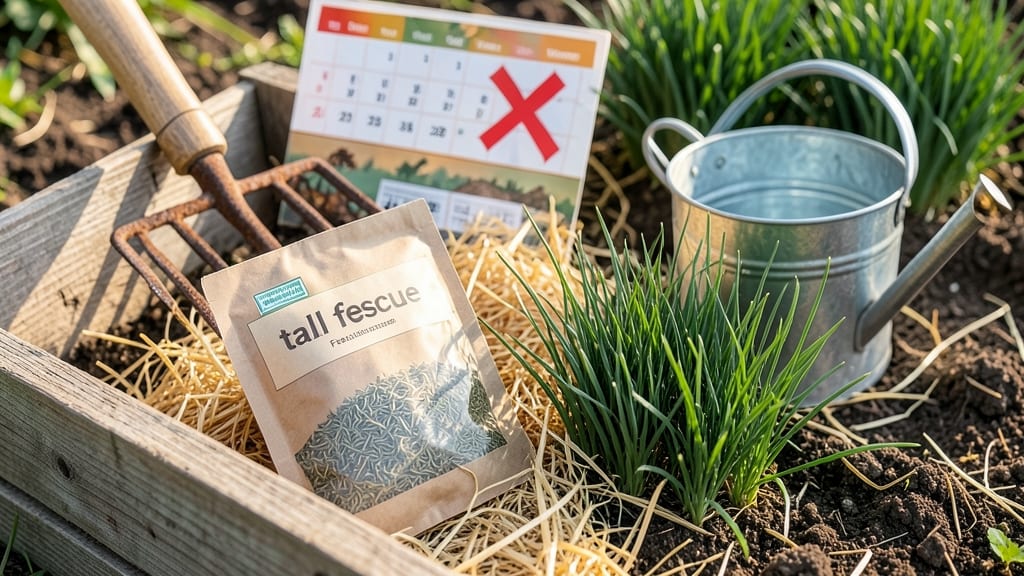
If you’ve ever wondered when it is too late to plant grass seed in Kentucky, you’re not alone—especially when staring at your patchy lawn in October. The answer depends on your microclimate, because what works in Northern Kentucky’s 6a zone might fail in Southern Kentucky’s milder 7a conditions.
Planting 🌱 turfgrass too late can leave your lawn struggling to establish roots before winter, but with the right timing and prep, you can still salvage a green spring. The key? Understanding soil temperatures, frost risks, and local deadlines that vary by just a few weeks across the state.
In this guide, I’ll break down the exact cutoff dates for fall planting in your region, plus what to do if you’ve already missed them. Whether you’re dealing with hard frost warnings or stubborn weeds, there are still ways to revive your lawn—even in late fall.
Let’s dive into the science behind Kentucky’s grass-seeding deadlines and how to make every seed count, no matter how late you plant.
Kentucky’s fall grass-seeding deadlines by microclimate zone
Kentucky’s diverse geography means your last chance to plant cool-season grass seed depends on where you live. Northern Kentucky’s colder winters demand earlier planting, while Southern Kentucky’s milder climate allows a later window.
The key is soil temperature—seed needs 60-75°F soil to germinate properly, and 4-6 weeks before the first frost to establish roots.
For most of Kentucky (USDA Zones 6a-7a), the ideal window is late August through mid-September. But if you’ve missed that, understanding your microclimate zone can save your lawn.
Northern Kentucky (e.g., Lexington, Louisville) has a harder frost risk by late October, while Southern Kentucky (e.g., Bowling Green, Paducah) can sometimes squeeze in seed until early November.
| Zone | Last Safe Planting Date | Soil Temp Threshold | Frost Risk | Grass Variety Recommendation |
|---|---|---|---|---|
| Northern KY (e.g., Lexington, Louisville) | Mid-September | 60-70°F | High (first frost: Oct 10-15) | Tall fescue, Kentucky bluegrass |
| Central KY (e.g., Frankfort, Bowling Green) | Late September | 60-75°F | Moderate (first frost: Oct 15-20) | Fine fescue, ryegrass mixes |
| Southern KY (e.g., Paducah, Hopkinsville) | Early November | 65-80°F | Low (first frost: Nov 1-10) | Bermuda grass, zoysia (warm-season) |
If you’re planting in October or later, prioritize warm-season grasses like Bermuda or zoysia, which tolerate heat better. For cool-season grasses, focus on fast-germinating varieties like ryegrass or annual ryegrass, which can establish roots before winter sets in.
Another critical factor is soil preparation. Late-season planting means compaction risks from heavy rain or foot traffic. Aerate your lawn 2-4 weeks before seeding to improve root penetration. Use a core aerator for best results—it removes small soil plugs, allowing seed to reach deeper, moister layers.
For Northern Kentucky, if you plant after September 20, germination rates drop sharply due to cooler nights. In Central Kentucky, you might push it to October 5, but expect slower growth.
Southern Kentucky’s milder climate lets you plant until November 1, but avoid planting after November 15—seed won’t germinate in cold soil.
Pro tip: Use a soil thermometer (available at garden centers for ~$10) to check temperatures. If soil is below 55°F, germination will be poor.
Pair this with a weather alert app (like Weather Underground) to track frost forecasts—you need 4-6 weeks of frost-free growth for roots to establish.
If you’re on the fence about timing, consider hydroseeding—it uses a slurry of seed, mulch, and fertilizer, which can germinate faster in cooler conditions. Just be prepared for higher upfront costs (~$0.10–$0.30 per sqft) compared to traditional seeding (~$0.05–$0.15 per sqft).
Finally, remember that late planting ≠ failure. Even if you miss the ideal window, spring overseeding in March-April can still yield a lush lawn. The key is patience and proper care—your grass will thank you with a thicker, greener result next season. 🌱
Signs your late grass seed planting is doomed (and how to fix it)
If you’ve planted grass seed in Kentucky past the ideal window, watch for these warning signs that your lawn may struggle to establish. Hard frost warnings within 4-6 weeks of planting are the biggest red flag—seedlings can’t survive freezing temperatures.
Even if germination starts, patchy yellowing or stunted growth means your grass won’t fill in before winter dormancy.
Another clue? Weed invasion before your grass reaches 50% coverage. Weeds like chickweed and crabgrass thrive in bare soil, outcompeting tender grass seedlings. If you see sparse germination (less than 50% of seeds sprouting), your soil might be too cold or compacted for proper root development.
🌱 Late Planting Red Flags
- Hard frost within 4-6 weeks of planting
- Patchy yellowing or stunted growth
- Weed takeover before grass fills in
- Sparse germination (<50% coverage)
- Soil compaction preventing root growth
💡 Fix It: Apply winter mulch (straw or leaves) to insulate seedlings and overseed in spring.
Don’t panic if you spot these issues—Kentucky gardeners can still salvage their lawns. Start by testing soil temperature with a soil thermometer. If it’s below 50°F, your grass won’t establish properly.
For immediate help, spread a thin layer of straw mulch (¼ inch) to protect seedlings from frost and retain moisture.
If weeds have already taken over, spot-treat with vinegar (5% acetic acid) or a natural pre-emergent like corn gluten meal.
For compacted soil, rent a core aerator to loosen the top 2-3 inches before reseeding in spring. UK Extension recommends waiting until soil temps hit 55°F for spring overseeding—usually mid-March in most of Kentucky.
For the best results, combine mulch with a light nitrogen fertilizer (like 10-0-0) to give seedlings a growth boost before winter. Even if your late planting fails, these steps ensure your spring overseeding will succeed. Patience is key—healthy grass takes time, but Kentucky’s climate rewards proactive care.
🌱 Remember: No lawn is lost forever. Even if this year’s planting struggles, a well-timed spring overseeding can transform a patchy lawn into a lush carpet by summer.