
Plants
Ohio grass-seeding timeline by hardiness zone: best months for cool-season vs. warm-season grasses
Ohio’s USDA hardiness zones 5a-6b create a 165-day frost-free window, but your exact planting dates depend on whether you’re growing cool-season grasses (like Kentucky bluegrass or tall fescue) or warm-season varieties (like Bermuda grass).
Cool-season grasses dominate Ohio lawns—covering 90% of new plantings—because they thrive in our spring and fall conditions. Warm-season grasses, while less common, need soil temperatures above 65°F to germinate, making them riskier for Ohio’s unpredictable summers.
For cool-season grasses, the ideal window is 4-6 weeks before your average last frost date (typically mid-March to early April in most of Ohio) and again in early fall (late August to mid-September). This gives seedlings time to establish 3-4 inches of roots before winter dormancy.
Warm-season grasses, on the other hand, should only be planted after consistent soil temps reach 65°F, usually late May to early June, and won’t survive Ohio’s winters—so they’re only viable as annual patches or in containers.
Here’s how Ohio’s six hardiness zones break down for planting:
Zone 5a (northeast Ohio) has the shortest growing season, so spring planting must wait until after April 15 to avoid frost damage.
Meanwhile, zone 6b (southern Ohio) can start as early as late March, but watch for unpredictable late frosts—especially near Lake Erie, where microclimates can delay spring by 2-3 weeks. For fall planting, aim to finish by mid-October so seedlings develop roots before consistent freezing sets in.
If you’re planting warm-season grasses (like Bermuda or Zoysia), soil temperature is your best guide. Wait until a soil thermometer reads 65°F for 5+ days—usually late May to early June in most of Ohio.
These grasses go dormant in winter, so they’re only practical for summer lawns or containers that can be moved indoors. For permanent lawns, stick with cool-season varieties like tall fescue, which handles Ohio’s winters far better.
Ohio’s microclimates can shift planting dates by 2-4 weeks. For example, areas near Lake Erie (like Cleveland) often see later springs due to lake-effect snow, while Appalachian foothills (like Athens) may have earlier frost-free dates.
Check your local USDA frost data or use a frost calendar app to fine-tune your schedule. A general rule: plant cool-season grass when forsythia blooms (signaling 50°F soil temps) and warm-season grass when daylilies bloom (signaling 65°F soil temps).
One critical mistake Ohio gardeners make is planting too late in spring—by June 1, summer heat can stunt germination and invite fungal diseases.
For fall planting, don’t wait past September 15 in northern Ohio or October 1 in the south, or seedlings won’t root deeply enough before winter. Test your soil pH (ideal: 6.0–7.0) and add compost or peat moss if needed—60% of Ohio lawns have compacted clay soil that needs aeration before seeding.
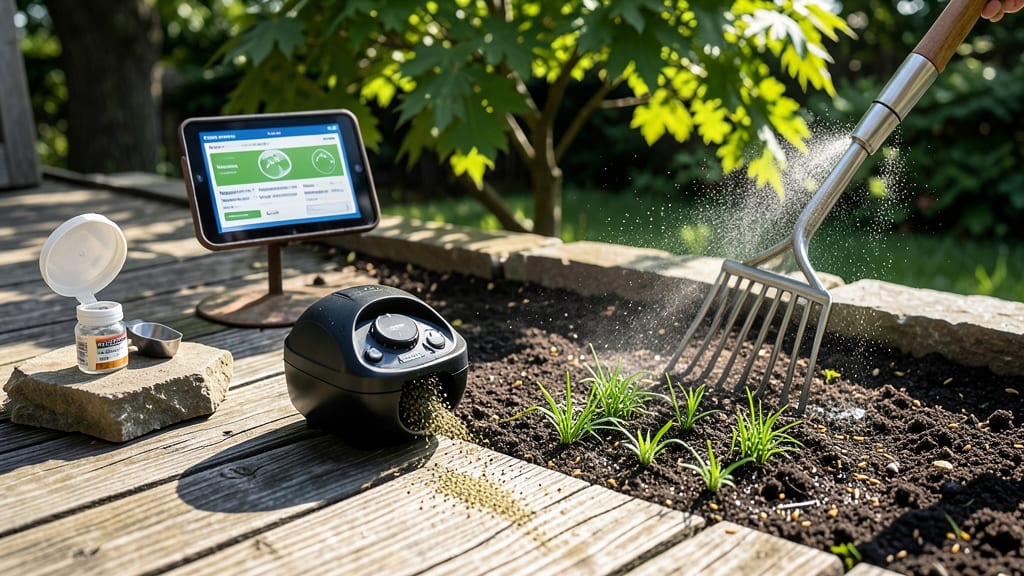
For best results, pair your planting date with proper seed depth: ¼ inch deep for fine grasses (like Kentucky bluegrass) and ⅛ inch deep for larger seeds (like tall fescue). Lightly
5 Critical factors that determine your Ohio grass-seeding success (beyond just dates)
Ohio’s grass seed germination success depends on more than just picking the right month—soil temperature, rainfall patterns, and even weed competition play starring roles. For example, Kentucky bluegrass thrives when soil stays between 50°F and 65°F, while Bermuda grass needs 70°F+ to sprout.
Ignoring these details can mean wasted seed and months of patchy lawn frustration.
Your local microclimate matters too. Areas near Lake Erie stay cooler longer than Appalachian foothills, shifting ideal planting windows by 2-3 weeks. Even within your county, a south-facing slope warms up faster than a north-facing yard, affecting seedling survival rates. Always test your specific spot’s conditions before seeding.
Use a soil thermometer—ideal ranges: 50-65°F for cool-season grasses, 70°F+ for warm-season. Plant when temps stay consistent for 7+ days.
Aim for 1 inch of rain weekly post-planting. In drought-prone areas like southwest Ohio, use drip irrigation to maintain moisture without washing seeds away.
Apply pre-emergent herbicide 2 weeks before seeding to block crabgrass. Post-emergent sprays can kill young grass—wait until blades reach 3 inches before treating.
Plant cool-season seeds ¼ inch deep in loose soil. Warm-season seeds need ½ inch depth to escape heat. Use a seed rake to avoid burying too deeply.
Apply starter fertilizer with high phosphorus (P) at planting. Avoid nitrogen-heavy blends—too much burns tender seedlings. Wait 6 weeks before full-strength feeding.
Ohio’s variable weather can turn a perfect planting day into a muddy mess overnight. Check the 7-day forecast for steady temps and minimal rain 48 hours post-seeding. If storms hit, cover seeds with straw mulch to prevent erosion and keep moisture locked in.
Pro tip: Test your soil pH 2 weeks before planting—ideal ranges are 6.0-7.0 for most grasses. Use lime to raise pH or sulfur to lower it. A $20 soil test kit from your local Ohio State University Extension office saves money by preventing failed lawns.
Remember, fall planting often outperforms spring in Ohio because cooler temps reduce weed competition and drought stress. If you missed spring, late August to early September is your second-best window for cool-season grasses like tall fescue.